ADVERTISEMENT
LIVE
Filtered By: Topstories
News

LIVE UPDATES: Conflict in the Middle East (March 29, 2026)


+
Add GMA on Google
Make this your preferred source to get more updates from this publisher on Google.
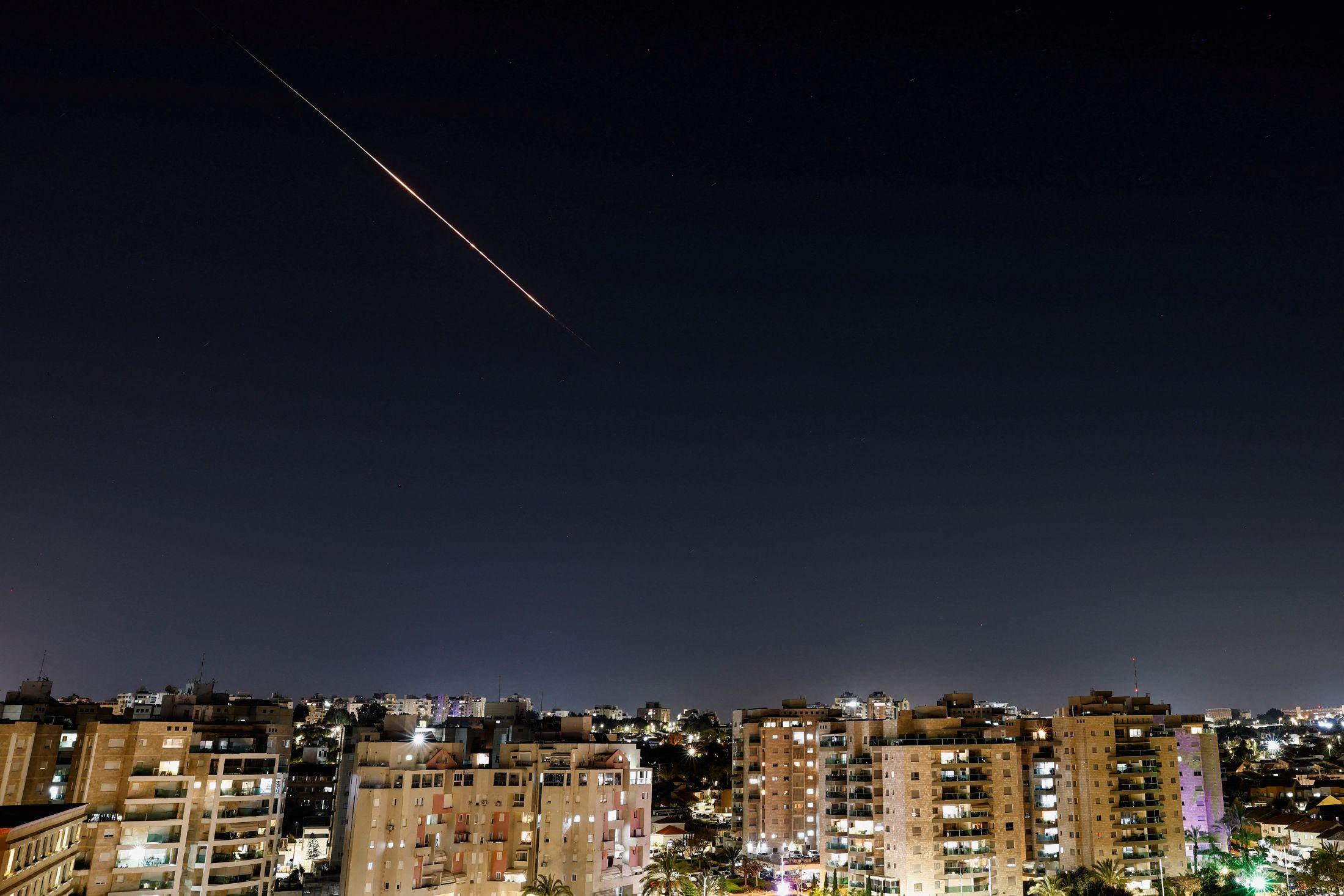
Missile intercepted as seen from Ashkelon, Israel
Auto-refresh

Pakistan hosts regional powers for Iran talks, with focus on Hormuz proposals

Pakistan hosted talks with Turkey, Egypt and Saudi Arabia on Sunday as part of its efforts to broker an end to the Iran war, with initial discussions focused on proposals to reopen the Strait of Hormuz to shipping, sources familiar with the matter said.

At the end of the first day of talks in Islamabad, Pakistan's Foreign Minister Ishaq Dar said foreign ministers from the regional powers had discussed "possible ways to bring an early and permanent end to the war in the region," and had been briefed on potential US-Iran talks in Islamabad.

The talks were held as Iran warned the US against launching a ground attack and global oil prices surged amid continued fighting between Iran, the US and Israel.

Iran warns US over ground attack as regional powers meet in Pakistan

Iran said it was ready to respond to a US ground attack, accusing Washington on Sunday of preparing a land assault even as it sought negotiations and as regional powers held talks in Pakistan to try to end the fighting.

The foreign ministers of Pakistan, Saudi Arabia, Turkey and Egypt were set to meet in Islamabad to discuss ways to halt the month-long US-Israeli war on Iran, which has killed thousands of people and caused the biggest-ever disruption to global energy supplies.

Iran's parliament speaker Mohammad Baqer Qalibaf accused the US of sending messages about possible negotiations while secretly planning to send in its ground forces.

338 more Filipinos repatriated from Middle East return to PH

A total of 338 Filipinos—comprising overseas workers, their relatives, and individuals stranded in the United Arab Emirates—arrived safely in the country on Sunday, March 29, via the government’s sixth chartered repatriation flight.

The flight landed at Villamor Air Base in Pasay City, where the returnees were received by officials from several government agencies.

Leading the reception were representatives from the Department of Migrant Workers (DMW) and the Overseas Workers Welfare Administration (OWWA), alongside the Department of Foreign Affairs (DFA), Presidential Management Staff (PMS).

What is Iran’s Kharg Island and what could happen if the US attacks it?

Kharg Island plays a major role in Iran’s economy, serving as the country’s primary hub for crude oil exports.

Dubbed the “Orphan Pearl of the Persian Gulf,” Kharg Island is located about 15 nautical miles off Iran’s coast.

Nearly 90% of Iran’s crude oil exports pass through the facility on the island.

Reports indicate that the island can store up to 30 million barrels of crude oil and currently holds around 18 million barrels.

Amid rising geopolitical tensions, there have been speculations that the United States could target Kharg Island as part of efforts to pressure Iran, particularly regarding the reopening of the Strait of Hormuz.

20% of Motorcycle Taxi Community Alliance members yet to receive cash aid

A motorcycle rider group said Sunday that about 20% of its members have yet to receive the P5,000 financial assistance, raising concerns that some non-qualified individuals may have been included among beneficiaries.

“Sa amin, siguro nasa 20% pa ang hindi nabibigyan (In our group, about 20% have not received),” said Romeo Maglunsod, chairman of the Motorcycle Taxi Community Alliance (MTCA), in an interview on Super Radyo dzBB.

“Dapat talaga i-scrutinize mabuti ang listahan ng mga benepisyaryo. Tingnan kung ang tao ay talagang bahagi ng industriya na dapat tulungan,” he added.

(The list of beneficiaries must be carefully scrutinized to ensure that recipients are truly part of the sector in need of assistance.)

On Saturday, motorcycle taxi riders in Metro Manila lined up as early as dawn to claim financial aid distributed by the Department of Social Welfare and Development (DSWD).

Among them was a rider whose wife is seven months pregnant. He had been unable to work for nearly three months following an accident and did not expect he would still qualify for the subsidy.

Despite the gaps in distribution, Maglunsod expressed gratitude that many members of their group were able to receive assistance.

“Nagpapasalamat kami kahit papaano. Nasama na ang hanay namin sa mabibigyan ng tulong mula sa gobyerno, at nagpapasalamat kami sa mga taxpayer,” he said.

(We are still thankful that our group was included among those receiving government assistance, and we are grateful to the taxpayers.)

However, he said riders continue to push for fare increases amid rising fuel prices.

“Sana maramdaman na ang pagbawas ng excise tax sa presyo ng petrolyo. Ang hiling talaga namin ay fare increase,” he said.

(We hope to feel a reduction in excise taxes on petroleum prices. What we are really asking for is a fare increase.)

Industry sources have offered mixed forecasts on fuel prices in the coming week, with some expecting a rollback of P1 to P2 per liter for gasoline, while others project a possible increase of up to P3 per liter.

Diesel prices, meanwhile, are expected to rise by P5 to P8 per liter.—Mariel Celine Serquiña/MCG, GMA Integrated News

DOLE looking into possible assistance for drivers via TUPAD program

The Department of Labor and Employment (DOLE) is checking what assistance can be extended to public utility vehicle drivers affected by the rising cost of fuel as a result of the war in the Middle East, its spokesperson said Sunday.

DOLE spokesperson Assistant Secretary Lennard Serrano, in an interview on Super Radyo dzBB, said DOLE is looking into the department's Tulong Panghanapbuhay sa Ating Disadvantaged/Displaced Workers or TUPAD program in this regard.

"Itong TUPAD ay isang social protection program ng DOLE na sumusuporta sa mga vulnerable at marginalized workers, kasama ang mga nawalan o mawawalan ng trabaho o kabuhayan tulad nitong energy emergency," he said.

(TUPAD is a social protection program of DOLE that supports vulnerable and marginalized workers, including those who lost are are about to lose their jobs or livelihood such as during this state of national energy emergency.)

"Ang TUPAD ay cash-for-work. Nagbibigay ng emergency employment, agarang assistance, temporary in nature para sa mga vulnerable, marginalized at displaced workers," Serrano added.

(TUPAD is cash-for-work. It gives emergency employment, assistance that is immediate and temporary in nature for vulnerable, marginalized, and displaced workers.)

"Itong programa natin ay inclusive. Nu'ng simula ng emergency nu'ng March, tinitignan, binabantayan na natin ang mga sektor na maaaring maapektuhan nitong pagtaas ng presyo ng langis at iba pang kaganapan dulot ng Middle East war," he said.

(This program is inclusive. Starting from the state of national energy emergency in March, we are looking at and monitoring sectors that may be affected by the increase in the prices of oil and other events due to the war in the Middle East.)

"Agaran tayong nakipagpulong sa ahensiya ng pamahalaan... na maaaring makapagbigay ng assistance at suporta sa ating mga driver," Serrano said.

(We immediately coordinated with other government agencies that can help in giving assistance and support to our drivers.)

The DOLE spokesperson said PUV drivers are one of the most affected by the fuel price increases.

"Mahalaga ang mga driver especially ngayon. Pero nakikita rin natin na sila talaga ang one of the most affected dahil sa pagtaas ng presyo [ng langis] kaya tinitignan natin, anong assistance ang maibibigay through the TUPAD program," he said.

(Drivers are especially valuable today. But we see that they are also one of the most affected due to the rise in the cost of fuel, so we are checking what assistance we can give through the TUPAD program.)

"Tinitignan natin sa ating pagpupulong, kung paano makatutulong ang ating TUPAD program. Nakapag-meeting na kami nu'ng Thursday and Friday at sa Monday magkikita ulit kami to finalize na. Hopefully after Holy Week, ma-implement na natin ito. Tinitignan naman natin kung paano makatulong itong TUPAD program, para magtuloy-tuloy ang pamamasada [ng mga tsuper]," Serrano added.

(In our meeting, we looked at how TUPAD program can help. We met on Thursday and Friday, and on Monday, we will meet again to finalize. Hopefully, after Holy Week, we can implement this. We are looking into how the TUPAD program can help so drivers can continue servicing their routes.)

Serrano said the fuel subsidy of P5,000 being given by the government to PUV drivers will only cover a few days' worth of diesel.

"Tinitignan natin kung sino pa ang pwedeng makasama rito... Tinitignan din natin--mga tricycle driver. Maaari pa ba silang makapasok, maging beneficiary sa ating programa?" he said.

(We are also looking at who else can be included in the program, such as tricycle drivers, and can they be beneficiaries of the program?)

"While we recognize that they might have been given ng ayuda from DSWD [Department of Social Welfare and Development], baka magandang ma-integrate para magtuloy ang kanilang pamamasada... Tuloy-tuloy sana ang pamamasada nila (maybe it would be best to integrate them into the program so they can continue plying their routes)," Serrano added.

Under the TUPAD program's existing guidelines, a TUPAD worker may be given 10 to 90 days work. 

"Tinitignan natin dito sa inaayos na framework kung ilang araw ang maaaring maibigay. Ang tinitignan natin as much as possible, mabigyan lahat," Serrano said.

(In the framework we are crafting, we are checking how many days may be given [for work]. We hope to give work to all beneficiaries.)

He added that the DOLE is coordinating with the Department of Transportation to get the list of PUV drivers who may be assisted via TUPAD. —KG, GMA Integrated News

Helplines buzz with alerts from seafarers trapped in war

LONDON, United Kingdom - Seafarers' helplines say they are overwhelmed with messages from crews stuck in the Gulf by the Middle East war, desperately seeking repatriation, compensation and onboard supplies.

"Writing to urgently inform you that our vessel is currently facing a critical situation regarding provisions and one crew health conditions," read an email from one seafarer on March 24 to the International Transport Workers' Federation (ITF)'s Seafarer Support team.

"Immediate supply of food, drinking water, basic necessities is required to sustain the crew," said the message to the team's helpline.

The ITF said it had received more than 1,000 emails and messages from seafarers stuck around the Strait of Hormuz and the wider region since the war erupted with US-Israeli strikes on Iran on February 28.

Bomb strikes

Some sought to clarify what their rights are while navigating a war zone, while others sent videos of bombings striking next to their ship and asked the federation for help to get off board, according to ITF documents seen by Agence France-Presse.

"It is an extraordinary situation, there is a lot of panic," Mohamed Arrachedi, ITF's Network Coordinator for the Arab World and Iran, in charge of handling requests from seafarers in the region, told AFP, describing the situation as "really shocking".

"I get calls from seafarers at two o'clock, three o'clock in the morning. They call me the minute they have access to the internet," Arrachedi said on Wednesday by telephone from Spain.

"One seafarer called in a panic, saying: 'We are here bombed. We don't want to die. Please help me, sir. Please get us from here."

About 20,000 seafarers are currently stuck in the Gulf, according to the UN's maritime body, known as the IMO, and at least eight seafarers or dock workers have died in incidents in the region since February 28.

All correspondence was shared with AFP on condition of anonymity, as the helpline guarantees confidentiality to seafarers.

War zone rights

The International Bargaining Forum (IBF), a global maritime labor body, has declared the area a war zone.

This normally gives seafarers exceptional rights, including repatriation at the company's cost and double pay for those working on ships covered by IBF agreements — around 15,000 vessels worldwide, according to the ITF.

Despite this, many seafarers — especially on ships without such labor agreements — are reporting difficulties with getting repatriated.

In one email sent to the ITF on March 18, a seafarer said the ship's operator was ignoring crews' requests to leave, arguing that there were no flights from Iraq and refusing alternative routes.

"They are forcing us to continue to do cargo operations and STS (ship-to-ship operations) even (when) we raise our concerns about our safety and we are in war like area. They are keeping us in a position with no options," read the email seen by AFP.

The International Seafarers' Welfare and Assistance Network (ISWAN), another organization operating a helpline, told AFP on Wednesday that it had seen "a 15-20 percent increase in calls and messages" since the start of the war, with a third relating to repatriation difficulties.

$16 a day

Another major concern is compensation.

"About 50 percent of emails we receive concern pay," Lucian Craciun, one of five members of ITF's support team processing requests at the organization's headquarters in London, told AFP.

He said many seafarers choose to stay on board despite the dangerous conditions because they cannot afford to leave.

One email seen by AFP came from a seafarer asking to confirm whether his salary would go from $16 a day to $32 because he was in a designated war zone.

The ITF says such low salaries indicate that the shipowners do not have labor agreements in place to ensure decent pay.

Seafarers working under such arrangements are particularly at risk because their contracts often do not cover operations in war zones, and owners tend not to respond to requests from organizations such as the ITF, according to the support team.

When that happens, the ITF reaches out to the flag states and, if that does not work, to the state port authority where the vessel is located.

Arrachedi said that many such cases in the Gulf are still unresolved, with seafarers desperately awaiting responses from operators. —Laetitia Commanay/Agence France-Presse

CAAP: Airports have enough fuel in case of power interruptions

Airports under the Civil Aviation Authority of the Philippines have enough reserve fuel in case of power interruptions, CAAP spokesperson Eric Apolonio said Sunday amid the surging fuel prices due to the ongoing conflict in the Middle East.

“May enough reserve fuel naman kami sa diesel. Bihira lang naman ginagamit 'yan. Lahat naka-ready 'yan just in case magkaroon ng power failure dun sa supplier namin sa labas,” Apolonio told Super Radyo dzBB.

(We have enough reserve fuel for diesel. We rarely use it. Everything is ready just in case there is a power failure from our supplier outside.)

Diesel is used to power generator sets that are used as backup electricity sources in airport facilities. 

CAAP has at least 44 commercially operated airports across the country.

Apolonio said many airlines have announced that they will reduce flights by late April to early May due to limited available routes and fewer passengers due to the Middle East war.

“Inexpect natin 'yan after April, dahil by the 100% ang itinaas ng fuel surcharge. Siyempre 'yung mga airline, kailangan kumita rin sila sa mga rutang liliparan nila,” he said.

(We expect fewer flights after April, because the fuel surcharge has been raised by 100%. Of course, the airlines also need to make money on the routes they fly.)

However, despite the oil crisis, airlines have enough fuel, Apolonio assured.

Local flag carrier Philippine Airlines earlier said it has enough  fuel supply to support its operations, including flights to its local and international destinations. —Mariel Celine Serquiña/RF, GMA Integrated News

Pentagon preparing for weeks of ground operations in Iran —report

The Pentagon is preparing for weeks of ground operations in Iran, the Washington Post reported Saturday, citing US officials.

The plans could involve raids by Special Operations and conventional infantry troops, the Post reported. 

Whether President Donald Trump would approve any of those plans remains uncertain, according to the Post.

The Trump administration has deployed US Marines to the Middle East as the war in Iran stretches into its fifth week, and also has been planning to send thousands of soldiers from the US Army's 82nd Airborne to the region. —Reuters

Yemen's Houthis enter Iran war with attack on Israel, while US Marines arrive in region

CAIRO/DUBAI - The risk of an expanded Iran war grew on Saturday as Yemen's Iran-aligned Houthis launched their first attacks on Israel since the start of the conflict, even as additional US forces reached the Middle East.

Speaking before the strike, Secretary of State Marco Rubio said the United States expected to conclude military operations within weeks, although a new deployment of US Marines started arriving in the region. The Houthis said they would continue their operations until the "aggression" on all fronts ended.

Iranian President Masoud Pezeshkian spoke to Pakistan's Prime Minister Shehbaz Sharif, whose government hosts a meeting with the Turkish and Saudi foreign ministers on Sunday to seek to ease regional tensions.

But there is no sign of an immediate diplomatic breakthrough and the war, launched with US and Israeli strikes on Iran on February 28, has spread across the Middle East, killing thousands and hitting the world economy with the biggest-ever disruption to global energy supplies.

On Saturday, Israel said it had carried out a wave of attacks on Tehran, targeting what the military said were infrastructure sites belonging to Iran's government.

Lebanese journalists, rescue workers hit

It also hit targets in Lebanon, where it has resumed its war against Iran-backed Hezbollah, killing three Lebanese journalists in a strike on a media vehicle, Lebanon's Al Manar TV reported, as well as a Lebanese soldier. A follow-up strike on the rescue workers sent to assist them also caused fatalities.

Israel's military said it had targeted one of the journalists, whom it called a "terrorist", accusing him of being part of a Hezbollah intelligence unit, and saying he had reported on locations of Israeli soldiers.

Iran kept up attacks on Israel and several Gulf states after hitting an air base in Saudi Arabia on Friday and wounding 12 US military personnel, two of them seriously, in one of the most serious breaches of US air defenses so far.

Washington has dispatched two contingents of thousands of Marines to the Middle East, the first of which arrived on Friday on an amphibious assault ship, the US military said on Saturday.

The US could achieve its aims without ground troops, Rubio said on Friday, but acknowledged it was deploying some to the region so Trump would have "maximum" flexibility to adjust strategy as needed.

The Pentagon is also expected to deploy thousands of soldiers from its 82nd Airborne Division.

Houthis can strike targets far from Yemen

Israel, which regularly faced missile attacks from the Houthis before the war, confirmed a missile had been fired at it from Yemen. There were no reports of casualties or damage.

The attack pointed to a potential new threat to global shipping, already hit by the effective closure of the Strait of Hormuz, the conduit for about a fifth of global oil and liquefied natural gas supplies.

Houthi military spokesperson Yahya Saree later said the group carried out a second attack on Israel in less than 24 hours using missiles and drones, and vowed to continue military operations in the coming days.

The Houthis have shown an ability to strike targets far beyond Yemen and disrupt shipping lanes around the Arabian Peninsula and the Red Sea, as they did in support of Hamas in the Gaza war.

On Friday, they said they were prepared to act if what they called an escalation against Iran and the "Axis of Resistance" continued in the war.

If the Houthis open a new front in the conflict, one target could be the Bab al-Mandab Strait off the coast of Yemen, a chokepoint for sea traffic towards the Suez Canal.

With midterm elections due in November, the increasingly unpopular war has weighed on President Donald Trump's Republican Party and he has appeared eager to end it soon, while also threatening escalation.

Demonstrators took to city streets across the US on Saturday in anti-Trump rallies described by organizers as a call to action against the war on Iran.

More strikes while Trump speaks of negotiations

Financial markets have reacted with alarm to signs the war may drag on. The Brent crude oil benchmark LCOc1 is up more than 50% since the war began.

Trump has threatened to hit Iranian power stations and other energy infrastructure if Iran does not open the Strait of Hormuz. But he has extended a deadline he had imposed for this week, giving Iran another 10 days to respond.

Iranian threats to attack ships in the strait have kept most oil tankers from attempting the waterway. A few vessels have traversed the strait without issue, including ships under the flags of Pakistan and India, after Iranian assurances of safe passage.

Iran has agreed to allow an additional 20 Pakistani-flagged vessels to pass through the strait, with two ships permitted to transit daily, Pakistan's Foreign Minister Ishaq Dar said.

Israel has targeted Iran's nuclear infrastructure, and the head of Russia's state nuclear corporation Rosatom, which has evacuated staff from the Bushehr nuclear power plant on the Gulf coast, said the attacks threatened nuclear safety.

Pezeshkian said Iran would "retaliate strongly if our infrastructure or economic centers are targeted".

Pakistan, Egypt and Turkey have relayed messages between the warring sides although Tehran has said it has not been negotiating with Washington. Two people familiar with the back-channel efforts expressed doubt that direct talks would happen soon.

Iranian attacks were reported in multiple areas across the Gulf, including Kuwait, the United Arab Emirates and Oman. An Iranian airstrike hit the Israeli village of Eshtaol, near Jerusalem. Seven people were hospitalized, Israel’s ambulance service said.

In Iran, media said at least five people were killed in a US-Israeli attack on a residential unit in the northwestern city of Zanjan and in Tehran, the Iran University of Science and Technology was struck. —Reuters