

 GMA Brandtalk
 Tracking
 Archives

Filipino religious devotion: How traditions evolve with generational shifts
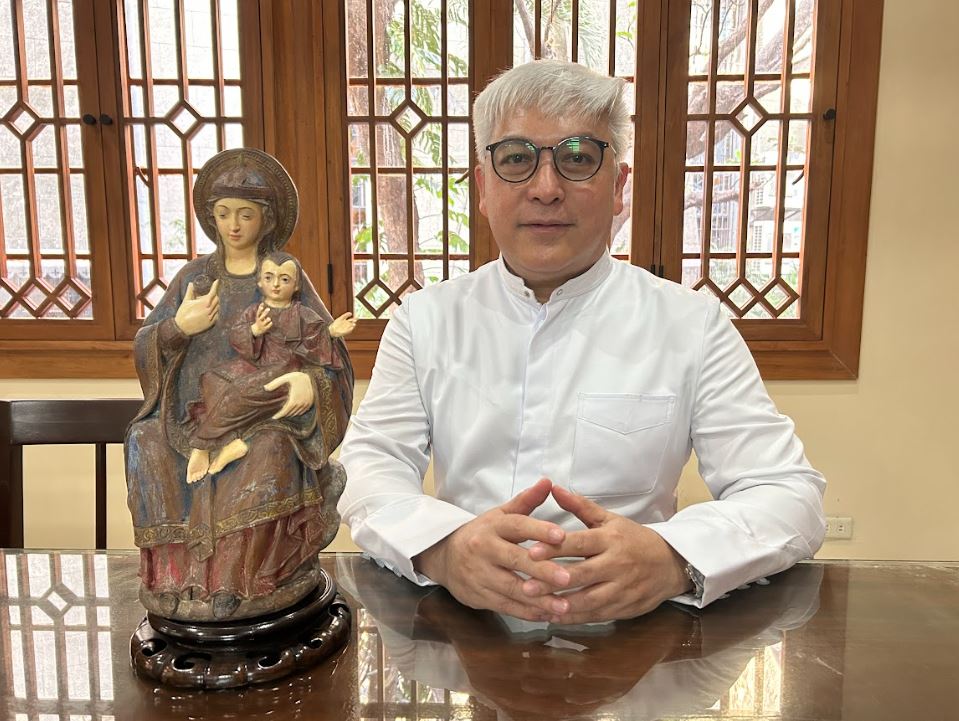
Filipinos have long been known for their deep religious devotion, vividly expressed in Holy Week traditions—from the Pabasa and Senakulo to Visita Iglesia, culminating in the solemn commemoration of the Lord’s Passion, Death, and Resurrection.
Yet as a new generation emerges and social media becomes ever more influential, questions arise: Do these traditions still hold the same meaning today? Or are Filipinos finding new ways to express their faith and devotion in a rapidly changing world?
Interviewed by GMA News Online, Monsignor John Bañas Brillantes from the Military Ordinariate of the Philippines and guest priest at the Cathedral Parish of Saint Andrew in Parañaque, said that the Catholic faith derives its traditions and practices from three sources: the Holy Scriptures, Sacred Tradition and Magisterium (the Church’s teaching authority).
Meanwhile, the traditions are the various theological, disciplinary, liturgical or devotional practices that are born in the local churches over time, according to the Catechism of the Catholic Church.
Brillantes said these rich traditions vary from time to time, from century to century and from culture to culture.
From the Jews, the Christian faith influenced Greco-Roman culture until it reached Spain. The Spaniards then brought to the Filipinos their experience of the Catholic faith and how it is lived through the fiestas, processions, and the Pabasa.
However, not all Catholic traditions and practices were preserved in the country, especially in the aftermath of the Second World War.
But with the age of the internet and social media, Brillantes observed that the younger generation has easier access to sources of information, inspiring their interest to revive and preserve the traditions of the past.
“So itong sa internet na ito, mas dali ang access sa information about religious practices sa other parts, not only in the Philippines, but other parts of the world, like Spain, like Rome. So they compare notes. They were able to see na ‘yung mga bagay na hinahanap nila, how to do it na nawala noong unang panahon sa kanila, na andu’n pala, present sa ibang parts of the Philippines,” he said.
(With the internet, it's easier to access information about religious practices in other parts, not only in the Philippines, but other parts of the world, like Spain, like Rome. So they compare notes. They were able to see that the things they were looking for were present in other parts of the Philippines.)
“Mabibigla ka sa next generations, because they have this enthusiasm, they have available information, and they have this desire talaga na i-cherish, i-celebrate ang faith,” he said.
(You will be surprised with the next generations, because they have this enthusiasm, they have available information, and they really have this desire to cherish and celebrate the faith.)
Brillantes stressed that carrozas or floats are grander today compared to when he was younger. He also recalled the Filipino community initiating the procession during Holy Thursday in Rome, a practice not observed there.
“Of course, gusto natin maganda, pabonggahan. So, ngayon makikita natin, kahit na Biyernes Santo, ang Mahal na Birhen parang reynang reyna. Ang Santo Cristo, pumapasan ng krus, burdado, punong puno ng mga expensive na bulaklak,” he said, pointing out that while giving their best to God is commendable, the Filipino faithful should also observe the Christian virtues of sobriety and simplicity.
(Of course, we want the celebration to be beautiful, to be grand. So, today we see, even on Good Friday, the Blessed Virgin Mary is dressed like a queen. The Holy Christ carries His cross but is embroidered, surrounded by expensive flowers.)
Brillantes also credited advanced means of transportation in the present time, with more vehicles and highways, so that “it's easier, it's more fun” to observe religious practices as Filipinos could visit different parts of the country to do their Visita Iglesia.
Despite the revived interest of the younger generation in the Lenten traditions and practices, Brillantes also took note of those who associate Holy Week with vacation and long weekend, reminding them not to waste the opportunity and allow themselves to be “touched by the spirit of the celebration.”
How do priests deal with modern-day temptations?
Brillantes, who has been serving for 30 years as a Catholic priest, says that just like the ordinary faithful, they are also not immune to temptations.
“Kung nagtititirik at andito ka lang naman sa [cathedral], ang temptation, siguro ‘yung pagkain,” Brillantes laughingly admitted, pointing out that Filipino parishioners love to pamper their priests.
(If you just remain here at the [cathedral], a common temptation is food.)
“I know that ‘yung parishioners, they love their priests, so they would like to invite you here and there. And, of course, they give you the best. So, kung hindi ka aware ng ganiyan, temptation ‘yan sa flesh, ‘yung pagkain,” he added.
(So, if you are not aware of that, food is a temptation of the flesh.)
Recognizing this temptation, Brillantes said, “I would try to moderate ‘yung pagkain (the food intake).”
“Aside from spiritual purpose, it’s also good for your health,” he added.
Further, while Catholic priests get their salaries from donations of parishioners, they are also tempted to accumulate wealth for themselves, including buying expensive cars.
“Sa akin, na-experience ko rito, basically for the first time, two years ago, nakakuha ako ng car. Hindi ako nagda-drive before dito, pero sabi ko sa Manila, pag nagpunta ka, mahirap ang walang kotse,” Brillantes said.
(I experienced it here, basically for the first time, two years ago, I got a car. I didn't drive before, but I said here in Manila, it is difficult not to have a car.)
“Pero temptation ‘yan. ‘O magbili ka na ganitong car,’ ‘Ito ang bagay sa iyo,’ ‘Galing ka sa ganito.’ ‘At your status, dapat ganito,’” Brillantes recalled as to what other people told him.
(But that's a temptation. 'Buy this car,' 'This is what you deserve,' 'You came from this background,' 'At your status, you should be like this.')
Resisting this “temptation of the world,” Brillantes said he opted to purchase a second hand car, his first after almost three decades as a Catholic priest.
He also acknowledged temptations through the internet.
“Kasi paminsan sa internet diyan, kahit mag-Facebook ka, may mga lumalabas yan. So, you have to be aware of the temptation of these things that you sometimes see there.
(Because sometimes on the internet, if you're on Facebook, things pop up.)
“So, stop being curious. Kasi, yung curiosity niyong mag-push sa iyo into something worse,” he said.
(Your curiosity will push you into something worse.)
For Brillantes, the best way to fight temptations is to contemplate the Gospel, which is the source of his inspiration for his homilies.
“Contemplating the Gospel, because every day I say the Mass. Even in the evening after prayers, I would just contemplate the Gospel. I usually would prepare for my homilies. So, you, the best way to do that is to contemplate the Gospel. The more you search for spirituality, how you live the Gospel, and then you discover the joy of the Gospel. And your homily is just a product of your prayer.”
Brillantes said that the Lenten season is a remembrance of Jesus Christ’s experience of 40 days in the desert, fighting temptations.
“So, He's also a true man. So, He embraced all humanity. He's true God and became a true man. He experienced everything, including temptation, except na hindi Siya nag-sin. So, ang ma-learn natin sa ating Panginoong HesuKristo is to face temptation and to address the temptation.”
(He experienced everything, including temptation, except that He did not sin. So, what we can learn from our Lord Jesus Christ is to face temptation and to address the temptation.)
To fight temptations this Holy Week, Brillantes advised the Catholic faithful to resort to more prayer, develop their trust, hope and dependence on God, and observe the Lenten practices of fasting, almsgiving, and performing corporal works of mercy.
These are sure ways to meaningfully go through Lent, no matter which generation one belongs to.—LDF, GMA News

