

 GMA Brandtalk
 Tracking
 Archives

DOE: Safe passage in Strait of Hormuz is risk management, won’t immediately bring down fuel prices
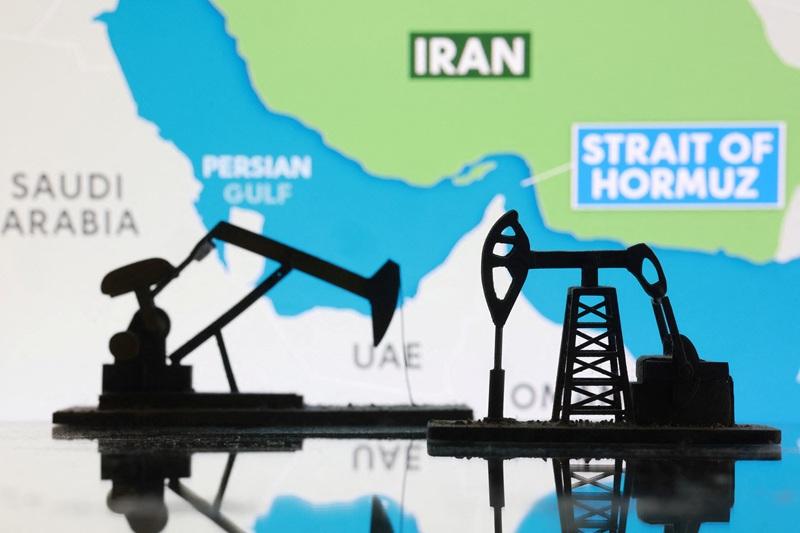
Iran's decision to allow energy supplies headed for the Philippines to safely cross the Strait of Hormuz was part of the government's risk management initiatives and would not immediately bring down domestic fuel prices, Department of Energy Secretary Sharon Garin said Saturday.
In a Facebook post, Garin said the Philippines had secured "a safe and preferential access" to the Strait of Hormuz, adding this would reduce the risk of oil supply disruptions, strengthen protection for Philippine-linked cargo, and improve the safety considerations for Filipino seafarers amid the US-Israeli war on Iran.
"This is Risk Management, because in a time of global tension, risk reduction is already a meaningful gain," she said.
"We also want to manage expectations: This development will not immediately bring down fuel prices, nor does it resolve our long-term structural challenges in energy. Those remain priorities that we continue to address," she added.
Garin said that questions and concerns about the scope and impact of the current arrangement are "part of a healthy and informed public discourse."
The Philippines was granted safe passage in the Strait of Hormuz—through which 20% of the world's oil and liquefied natural gas flow—following a phone conversation between Foreign Affairs Secretary Ma. Theresa Lazaro and Iranian Foreign Minister Seyed Abbas Araghchi.
Araghchi had "assured the Secretary that Iran will allow the safe, unhindered, and expeditious passage through the Strait of Hormuz of Philippine-flagged vessels, energy sources, and all Filipino seafarers," the Department of Foreign Affairs said on Thursday.
"FOR CLARITY: This is not a perfect solution, and it does not eliminate all risks," Garin said.
Based on Mean of Platts Singapore (MOPS) trading in the past four days (March 30 to April 2), an oil industry source said Friday that retail diesel prices could increase by P17 to P19 per liter next week.
These projections could push the price of regular diesel to as much as P165 and premium diesel past P170 a liter.
Gasoline prices, on the other hand, are expected to increase by P3 to P5 per liter, potentially bringing the prices of its super premium, premium, and regular varieties to about P120, P117, and P110 per liter, respectively.
Energy Department data showed that this week's price movements, the 13th for the entire year, resulted in a total net increase of P48.20 per liter for gasoline, P90.05 per liter for diesel, and P78.10 per liter for kerosene. —VBL, GMA News

