

 GMA Brandtalk
 Tracking
 Archives

Gov’t 'requires' Meta to crack down on fake news
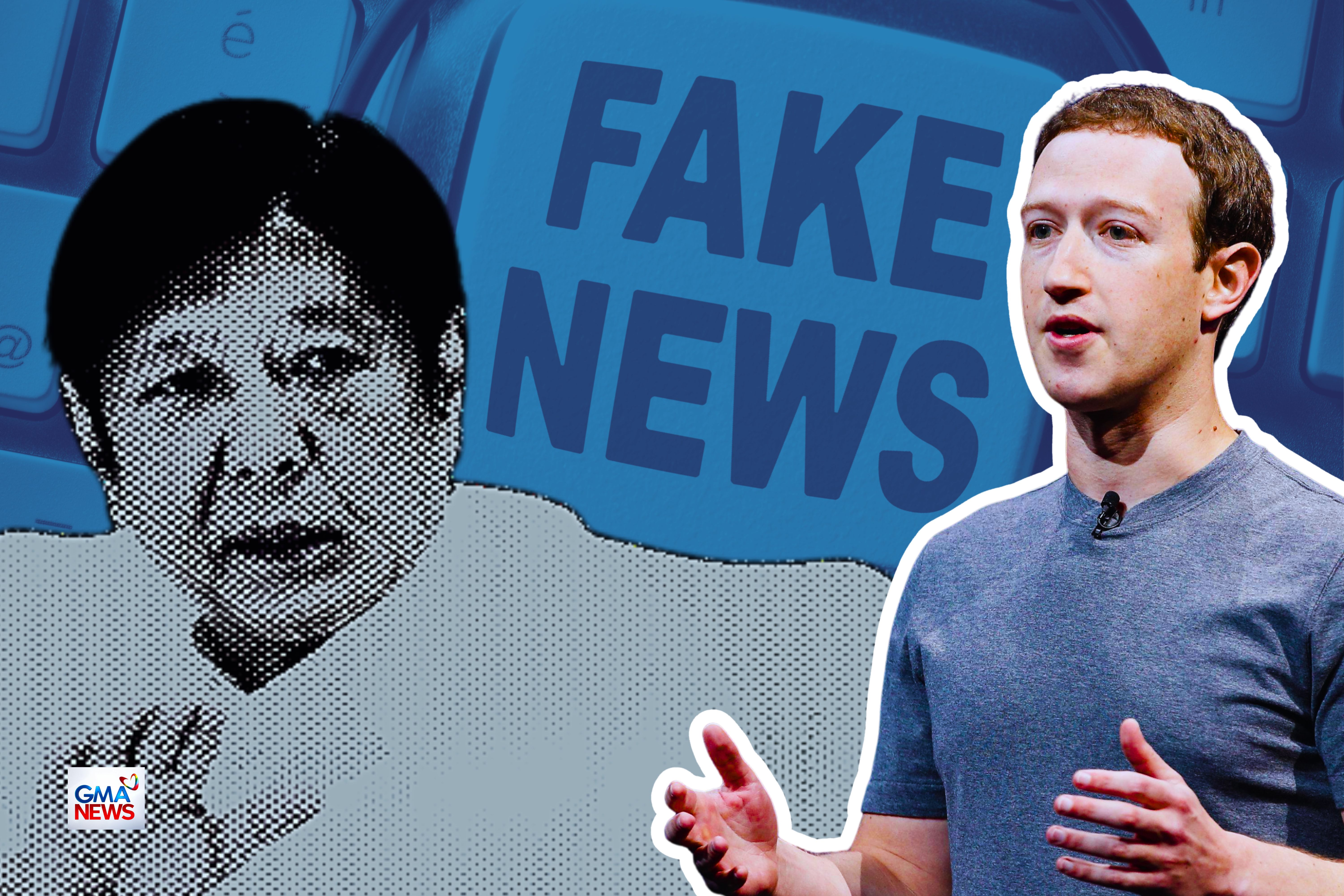
The Philippine government, through a letter addressed to Meta's CEO Mark Zuckerberg, has "required" Facebook to place measures against the supposed proliferation of fake news on its social media platforms that "threatens public order."
In a joint letter dated April 10, 2026, Department of Information and Communications Technology (DICT) Secretary Henry Aguda and Presidential Communications Office (PCO) Secretary Dave Gomez relayed to Zuckerberg that the Philippines is currently confronting heightened economic and public vulnerability driven by the ongoing global fuel crisis.
READ: The Department of Information and Communications Technology’s letter to Meta CEO Mark Zuckerberg calling for immediate measures to prevent the spread of fake news on social media. | via @Ted_Cordero
— GMA News (@gmanews) April 11, 2026
Visit https://t.co/T4xNFFr7iQ for more updates. pic.twitter.com/kLtxUgHfyh
“In this environment, the rapid proliferation of false, misleading, and panic-inducing content—particularly those relating to oil prices, economic disruptions, and government actions—poses a direct and escalating threat to public order, economic confidence, and national security,” the letter read.
“The scale and velocity of such content on Meta’s platforms significantly amplify these risks.”
The DICT and the PCO cited several categories of "high-risk" disinformation currently circulating, such as:
- Fabricated medical status claims regarding the health or death of senior officials, specifically the President
- Misleading advisories about "energy lockdowns," exaggerated price hikes, and supply disruptions designed to induce panic buying
- Financial disinformation targeting on banking institutions to undermine public trust
- Fabricated pronouncements about law enforcement or military operations
- Coordinated inauthentic behavior targeting the government and its officials
“The persistence of these content categories demonstrates that existing safeguards are not commensurate with the current level of public risk,” the letter read.
With this, the DICT and the PCO laid out a five-point requirement for the social media giant’s compliance:
- Enhanced proactive detection and suppression systems for "high-risk" disinformation, including coordinated bot activity
- Expedited government-flagging and takedown protocol for content affecting public safety and national security
- 24/7 coordination with designation of a senior-level focal point for real-time engagement on urgent cases
- Defined escalation pathways and enforceable response timelines for “high-risk” content
- Regular transparency reporting on enforcement actions taken in relation to harmful content affecting the country, among others
The joint letter cited Article 154 of the Revised Penal Code (Unlawful Use of Means of Publication) and the Cybercrime Prevention Act of 2012.
"Failure to take prompt and sufficient action shall constrain the Philippine Government to consider appropriate regulatory and legal measures, in coordination with the National Telecommunications Commission, Cybercrime Investigation and Coordination Center, and the Department of Justice, consistent with applicable laws and the state’s duty to protect public order and national security,” the letter read.
Meta was given 48 hours to confirm receipt of the letter and seven calendar days to submit a detailed implementation plan.
GMA News Online reached out to Meta’s Philippine office for comment, the story will be updated once a response is received. —VAL, GMA News

