ADVERTISEMENT
LIVE
Filtered By: Topstories
News

LIVE UPDATES: Conflict in the Middle East (April 12, 2026)


+
Add GMA on Google
Make this your preferred source to get more updates from this publisher on Google.
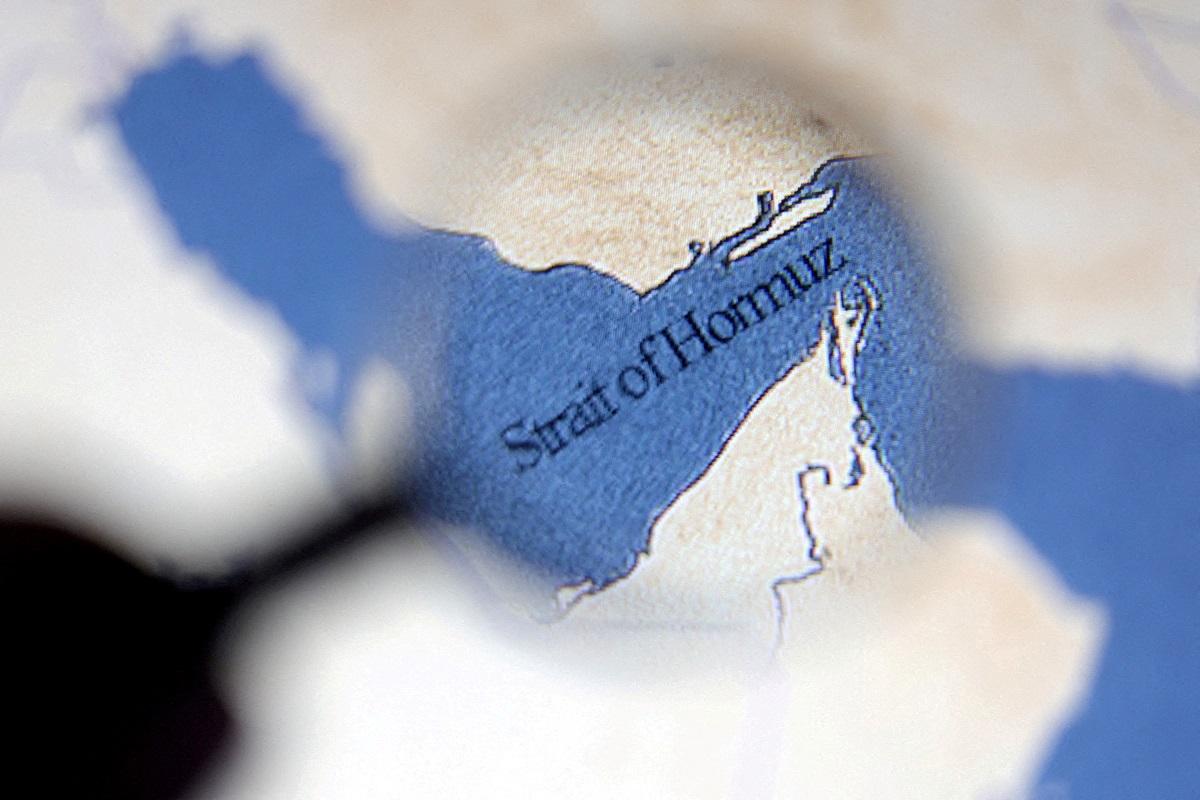
The Strait of Hormuz
Auto-refresh

Iran Guards threaten to trap enemies in ‘deadly vortex’ in Hormuz

The Revolutionary Guards said on Sunday that Iranian security forces had the Strait of Hormuz shipping bottleneck under their full control, warning that enemies would be trapped in a "deadly vortex" in the case of any miscalculation.

"All traffic... is under the full control of the armed forces," the Guards' naval command said in a Persian-language post on X after President Donald Trump ordered a US naval blockade of the Strait.

"The enemy will become trapped in a deadly vortex in the Strait if it makes the wrong move," it added, posting a video showing vessels in crosshairs.

World urges more negotiation after US-Iran talks end without deal

World figures urged the United States and Iran to keep negotiating after marathon Washington-Tehran talks in Islamabad ended on Sunday without a deal to end the war in the Middle East.

"It is imperative that the parties continue to uphold their commitment to cease fire," said Pakistan's foreign minister Ishaq Dar, whose government hosted the talks and acted as a mediator.

"Pakistan has been and will continue to play its role to facilitate engagement and dialogue between the Islamic Republic of Iran and the United States of America in the days to come," he said in a brief statement broadcast by state media.

Trump vows to blockade Strait of Hormuz after Iran peace talks stumble

US President Donald Trump said on Sunday the US Navy would immediately start blockading the Strait of Hormuz, raising the stakes after marathon talks with Iran failed to reach a deal to end the war, jeopardizing a fragile two-week ceasefire.

Trump also said in a post on Truth Social that the US would interdict every vessel in international waters that had paid a toll to Iran, and begin destroying mines that he said the Iranians had dropped in the strait, a choke point for about 20% of global energy supplies that Iran has blocked.

"Effective immediately, the United States Navy, the Finest in the World, will begin the process of BLOCKADING any and all Ships trying to enter, or leave, the Strait of Hormuz," he said.

President Ferdinand "Bongbong" Marcos on Sunday announced a "big" rollback in pump prices, confirming an earlier statement by the Department of Energy.

"Simula Martes, April 14, may malaking rollback sa presyo ng langis. Mahigit P20 ang ibababa sa diesel. Ang gasolina naman, may bawas na P4.43 kada litro. At sa kerosene, P8.50 kada litro ang ibababa," he said.

"Malaking tulong ito lalo na sa ating mga driver, sa mga commuter, at sa bawat pamilyang Pilipino na araw-araw naapektuhan ng mataas na presyo ng krudo," he said.

However, he added, "hindi pa ito sapat."

Fuel prices unlikely to return to P60 per liter, DOE Sec. Garin says

The prices of fuel products in the country may no longer return to P60 per liter due to structural damage caused by the Middle East conflict, Department of Energy (DOE) Secretary Sharon Garin on Sunday said.

Speaking to Super Radyo dzBB, Garin said the conflict remains unpredictable, and repairs to oil-related facilities could take a long time, even with de-escalation.

“Kung two weeks lang 'yung giyera, bababa. But the structural damage has already been done. It will take a long time to fix the facilities. Bababa man, hindi kasing bilis nu'ng pag-akyat [ng presyo]. Baka hindi na tayo aabot ng tulad ng dati na P60 pesos per liter ang diesel dito,” Garin said.

(If the war lasts only two weeks, oil prices might come back down. But the structural damage has already been done. It will take a long time to fix the facilities. Even if prices go down, it won’t be as fast as the increase. We may no longer return to the previous level of P60 per liter for diesel.)

In early March, Iran's huge Pars gas field was hit in the first reported strikes on Iranian energy infrastructure in the Gulf during the US-Israeli war.

Pars is the Iranian sector of the world's largest natural gas deposit, which Iran shares with Qatar across the Gulf. Iran's Fars news agency reported that gas tanks and parts of a refinery had been hit, workers had been evacuated to a safe location and emergency crews were trying to put out a fire.

The attack was widely reported in Israeli media to have been carried out by Israel with the consent of the United States.

Disruptions to petroleum shipments through the Strait of Hormuz, which is considered one of the world’s most crucial oil export routes, also prompted fuel prices in the country to increase for weeks.

However, for the first time since the Middle East conflict began in late February, the cost of diesel is expected to decrease by as much as P10.80 per liter and gasoline by as much as P1.50 per liter this week.

The anticipated reductions in pump prices came amid the two-week ceasefire agreed upon by the United States and Iran.

Fuel subsidy

With the right implementation, Garin also said the fuel subsidy for jeepney drivers may last for at least three to four months.

“'Yung programang discount for jeep (fuel subsidy), inaasahan namin na basta tama ang pagkaka-implement at projection ng budget, at least a minimum of 3 to 4 months ang discount na maibibigay sa jeep,” Garin said.

(We expect that the discount program for jeepneys (fuel subsidy), if properly implemented and the budget projections are accurate, could provide at least three to four months of fuel discounts for jeepney drivers.)

President Ferdinand Marcos Jr. earlier announced a P10-per-liter fuel subsidy for public utility vehicles. It would be capped at 150 liters per week, adding that it would be implemented for three months and would begin in Metro Manila. —Mariel Celine Serquiña/KG, GMA News

US negotiators leaving without a peace deal with Iran

ISLAMABAD - US Vice President JD Vance said on Sunday that his negotiating team was leaving Pakistan after not reaching a deal with Iran after 21 hours of negotiations.

Vance cited shortcomings in the talks and said Iran had chosen not to accept American terms, including to not build nuclear weapons.

"The bad news is that we have not reached an agreement, and I think that's bad news for Iran much more than it's bad news for the United States of America," Vance said. "So we go back to the United States having not come to an agreement. We've made very clear what our red lines are."

Vance said he talked with US President Donald Trump half a dozen times during the talks.

The talks in Islamabad were the first direct US-Iranian meeting in more than a decade and the highest-level discussions since the 1979 Islamic Revolution. The outcome could determine the fate of the fragile two-week ceasefire and the reopening of the Strait of Hormuz, a chokepoint for about 20% of global energy supplies that Iran has blocked since the war began. The conflict has sent global oil prices soaring and killed thousands of people.

In a post on X, Iran's government said that the talks had concluded and technical experts from both sides would exchange documents.

"Negotiations will continue despite some remaining differences," the post added, though it did not say when they would restart.

Vance, special envoy Steve Witkoff and Trump's son-in-law Jared Kushner met Iranian Parliamentary Speaker Mohammad Baqer Qalibaf and Foreign Minister Abbas Araqchi for two hours before a rest, according to a source from mediator Pakistan.

The Iranian delegation arrived on Friday dressed in black in mourning for late Supreme Leader Ayatollah Ali Khamenei and others killed in the war. They carried shoes and bags of some students killed during the US bombing of a school next to a military compound, the Iranian government said. The Pentagon has said the strike is under investigation but Reuters has reported that military investigators believe the US was likely responsible for it.

"There were mood swings from the two sides and the temperature went up and down during the meeting," another Pakistani source said in reference to the first round of talks.

For the US-Iran talks, Islamabad, a city of more than 2 million people, was locked down with thousands of paramilitary personnel and army troops on the streets.

Pakistan's mediating role is a remarkable transformation for a nation that was a diplomatic outcast a year ago.

Strait of Hormuz

As the talks started, the US military said it was "setting the conditions" to start clearing the Strait of Hormuz.

The Strait of Hormuz is central to the ceasefire talks. The US military said two of its warships had passed through the strait and conditions were being set to clear mines, while Iran's state media denied any US ships had transited the waterway.

Before the talks began, a senior Iranian source told Reuters the US had agreed to release frozen assets in Qatar and other foreign banks. A US official denied agreeing to release the money.

As well as the release of assets abroad, Tehran is demanding control of the Strait of Hormuz, payment of war reparations and a ceasefire across the region including in Lebanon, according to Iranian state TV and officials.

Tehran also wants to collect transit fees in the Strait of Hormuz.

Trump's stated goals have shifted, but as a minimum he wants free passage for global shipping through the strait and the crippling of Iran's nuclear enrichment program to ensure it cannot produce an atomic bomb.

US ally Israel, which joined the February 28 attacks on Iran that launched the war, has also been bombing Tehran-backed Hezbollah militants in Lebanon and says that conflict is not part of the Iran-US ceasefire.

Mutual distrust is high. —Reuters

Pope Leo leads Prayer Vigil for Peace amid Middle East conflict

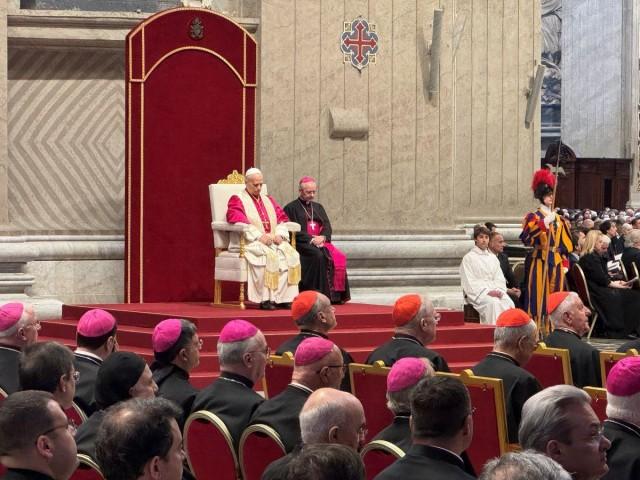
Thousands attend the Prayer Vigil for Peace led by Pope Leo XIV at the St. Peter's Basilica in the Vatican on Saturday, April 11, 2026. In his message, the pope urged world leaders to turn away from escalation and embrace dialogue and mediation as the only path toward lasting peace. PIA GONZALEZ-ABUCAY 

US-Iran talks pause for now, disagreements remain

ISLAMABAD - Negotiations between the United States and Iran appeared to have concluded for now, Iran's government said early on Sunday, after a series of talks in Pakistan to end the six-week war between Washington and Tehran.

The talks in Islamabad were the first direct US-Iranian meeting in more than a decade and the highest-level discussions since the 1979 Islamic Revolution. The outcome could determine the fate of the fragile two-week ceasefire and the reopening of the Strait of Hormuz, a chokepoint for about 20% of global energy supplies that Iran has blocked since the war began. The conflict has sent global oil prices soaring and killed thousands of people.

In a post on X, Iran's government said that after 14 hours, the talks had concluded and technical experts from both sides would exchange documents.

"Negotiations will continue despite some remaining differences," the post added, though it did not say when they would restart.

An Iranian state TV reporter said the talks would continue on Sunday.

US Vice President JD Vance, special envoy Steve Witkoff and President Donald Trump's son-in-law Jared Kushner met Iranian Parliamentary Speaker Mohammad Baqer Qalibaf and Foreign Minister Abbas Araqchi for two hours before a rest, according to a source from mediator Pakistan.

The Trump administration had not yet commented on whether the negotiations had concluded and what, if any, differences remain.

The Iranian delegation arrived on Friday dressed in black in mourning for late Supreme Leader Ayatollah Ali Khamenei and others killed in the war. They carried shoes and bags of some students killed during the US bombing of a school next to a military compound, the Iranian government said. The Pentagon has said the strike is under investigation but Reuters has reported that military investigators believe the US was likely responsible for it.

"There were mood swings from the two sides and the temperature went up and down during the meeting," another Pakistani source said in reference to the first round of talks.

For the US-Iran talks, Islamabad, a city of more than 2 million people, was locked down with thousands of paramilitary personnel and army troops on the streets.

Pakistan's mediating role is a remarkable transformation for a nation that was a diplomatic outcast a year ago.

Strait of Hormuz

As the talks started, the US military said it was "setting the conditions" to start clearing the Strait of Hormuz.

The Strait of Hormuz is central to the ceasefire talks. The US military said two of its warships had passed through the strait and conditions were being set to clear mines, while Iran's state media denied any US ships had transited the waterway.

Before the talks began, a senior Iranian source told Reuters the US had agreed to release frozen assets in Qatar and other foreign banks. A US official denied agreeing to release the money.

As well as the release of assets abroad, Tehran is demanding control of the Strait of Hormuz, payment of war reparations and a ceasefire across the region including in Lebanon, according to Iranian state TV and officials.

Tehran also wants to collect transit fees in the Strait of Hormuz.

Trump's stated goals have shifted, but as a minimum he wants free passage for global shipping through the strait and the crippling of Iran's nuclear enrichment program to ensure it cannot produce an atomic bomb.

US ally Israel, which joined the February 28 attacks on Iran that launched the war, has also been bombing Tehran-backed Hezbollah militants in Lebanon and says that conflict is not part of the Iran-US ceasefire.

Mutual distrust is high. —Reuters

Pope Leo urges end to 'madness of war' as US, Iran start talks

VATICAN CITY - Pope Leo on Saturday urged world leaders to end what he called the "madness of war," in an impassioned appeal as senior US and Iranian officials met in Pakistan to discuss ending the six-week conflict.

At a special prayer vigil in St. Peter's Basilica, the first US pope decried the use of religious language to justify war and said a "delusion of omnipotence that surrounds us ... is becoming increasingly unpredictable".

Making a direct appeal to world leaders, he said: "Stop! It is time for peace! Sit at the table of dialogue and mediation, not at the table where rearmament is planned."

Leo, who is known for choosing his words carefully, has emerged as an outspoken critic of the Iran war.

On Saturday, he used forceful language to denounce conflict, citing letters from children in war zones he said described "horror and inhumanity".

The pope also referenced the Church's opposition to the 2003 US-led invasion of Iraq, citing an appeal by the late Pope John Paul II made four days before the start of that conflict.

"Enough of the idolatry of self and money!" Leo said. "Enough of the display of power! Enough of war!"

The pope, who on March 30 said God rejects the prayers of leaders who start wars and have "hands full of blood," denounced again on Saturday the use of Christian language to justify war.

"The balance within the human family has been severely destabilized," said Leo. "Even the holy Name of God, the God of life, is being dragged into discourses of death."

The pope's earlier comments were interpreted by conservative Catholic commentators as aimed at US Defense Secretary Pete Hegseth, who has invoked Christian language to justify the joint US-Israeli strikes on Iran that initiated the war.

Saturday's special prayer service was announced by Leo last Sunday, in the pope's Easter message. —Reuters

US-Iran talks begin, Trump says Hormuz Strait 'clearing' underway

ISLAMABAD - US and Iranian negotiators held their highest-level talks in half a century on Saturday in Pakistan to try to end their six-week war even as President Donald Trump said his military was clearing the Strait of Hormuz.

"We're now starting the process of clearing out the Strait of Hormuz as a favor to Countries all over the World," Trump posted, saying 28 Iranian mine-dropping vessels had been sunk.

Iran's state-affiliated Nournews called that "false news" and Britain's Financial Times newspaper said the talks in Pakistan had hit a stalemate over the status of the strait.

Amid conflicting reports from the field, Iranian state TV said no US ships had crossed the strait, a crucial transit point for global energy supplies that Tehran has effectively blocked but Trump has vowed to reopen.

The waterway, which lies on Iran's southern coast, was one of the main points on the agenda in Islamabad for the first direct US-Iranian talks in more than a decade and the highest-level discussions since the 1979 Islamic Revolution.

Trump's Vice President JD Vance, special envoy Steve Witkoff and son-in-law Jared Kushner flew in on Saturday and met Iranian Parliamentary Speaker Mohammad Baqer Qalibaf and Foreign Minister Abbas Araqchi for two hours before a rest, according to a source from mediator Pakistan.

The Iranian delegation had arrived on Friday dressed in black in mourning for Supreme Leader Ayatollah Ali Khamenei and others killed in the six-week war. They carried shoes and bags of some students killed during the US bombing of a school next to a military compound, the Iranian government said.

"There were mood swings from the two sides and the temperature went up and down during the meeting," said another Pakistani source of the first round of talks.

French President Emmanuel Macron said he had spoken with Iran's President Masoud Pezeshkian, and had highlighted to him the importance of de-escalating the situation through the ceasefire talks in Pakistan.

Progress of negotiations unclear

The war has sent global oil prices soaring, killed thousands of people and seen unprecedented hits on Gulf Arab states.

Amid conflicting versions from officials and media in both nations, the US and Iranian sides appeared to remain far apart.

Before the talks began, a senior Iranian source told Reuters the US had agreed to release frozen assets in Qatar and other foreign banks. But a US official swiftly denied that.

As well as release of assets abroad, Tehran is demanding control of the Strait of Hormuz, payment of war reparations and a ceasefire across the region including in Lebanon, according to Iranian state TV and officials.

Trump's stated goals have varied during the campaign, but as a minimum he wants free passage for global shipping through the strait and the crippling of Iran's nuclear enrichment program to ensure it cannot produce an atomic bomb.

US ally Israel, which joined the February 28 attacks on Iran that launched the war, has also been bombing Tehran-backed Hezbollah militants in Lebanon, killing nearly 2,000 people.

Israel and the US have said Lebanon is not part of the Iran-US ceasefire.

Mutual distrust is high.

"We will negotiate with our finger on the trigger," Iranian government spokesperson Fatemeh Mohajerani said on state TV.

"While we are open to talks, we are also fully aware of the lack of trust; therefore, Iran's diplomatic team is entering this process with maximum caution."

Tehran's agenda includes aiming to collect transit fees in the Strait of Hormuz, a chokepoint for about 20% of global oil and liquefied natural gas shipments.

The biggest ever disruption there has fed inflation and slowed the global economy, with an impact expected to last for months even if negotiators succeed in reopening the strait.

Nevertheless, three Liberian- and Chinese-flagged supertankers did pass through the strait on Saturday, shipping data showed, marking what appeared to be the first vessels to exit the Gulf since last week's US-Iran ceasefire.

Strikes on Lebanon

Strikes on southern Lebanon continued on Saturday morning, Lebanese state media said. Reuters reporters heard an Israeli surveillance drone flying over the capital Beirut from Friday night into the next morning and warplanes broke the sound barrier twice over the city.

Hezbollah announced it had conducted several military operations against Israeli positions on Saturday, both within Lebanese territory and in northern Israel.

Israeli and Lebanese officials plan talks in the US on Tuesday.

For the US-Iran talks, Islamabad, a city of just over 2 million people, was under unprecedented lockdown with thousands of paramilitary personnel and army troops on the streets.

Pakistan's mediating role is a remarkable transformation for a nation that was a diplomatic outcast a year ago.

"This was a world war that Pakistan stopped. It played a big role and we should appreciate it," said dry cleaner Nasir Khan Abbasi at a market in Islamabad. "I really like this and I feel great that Pakistan's name is shining in the world." —Reuters