

 GMA Brandtalk
 Tracking
 Archives

Marcos suspends excise tax on LPG, kerosene
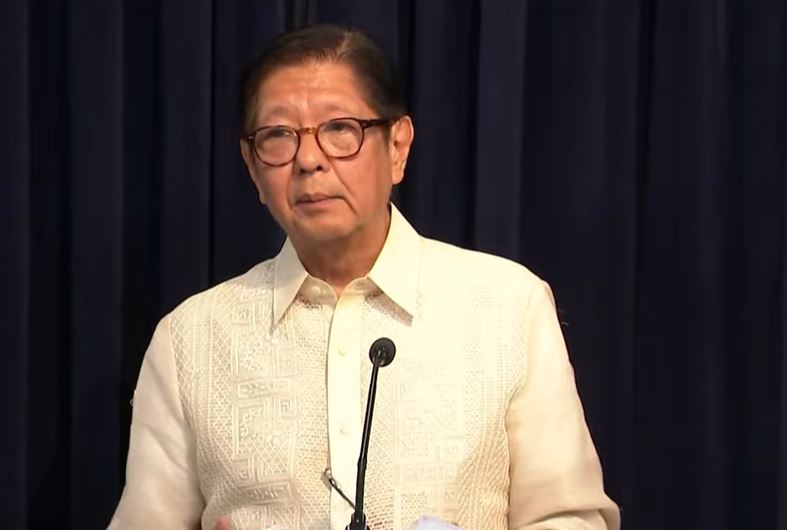
President Ferdinand ''Bongbong'' Marcos on Monday announced that he had already removed the excise tax on LPG and kerosene amid high fuel prices in the country.
Marcos on March 25 signed into law Republic Act No. 12316, giving him the emergency power to suspend or reduce the excise tax rate on fuel.
''So sa ilalim ng kapangyarihan na binigay sa atin ng batas, tinanggal ko na ang excise tax sa LPG at sa kerosene,'' Marcos said.
(Under the power provided by law, I removed the excise tax on LPG and kerosene.)
''Ang katumbas nito ay tatlong piso at tatlumpu’t anim ah how much is this? 3.36. P3.36 ang bawas ng kada kilo ng LPG. Halos P37 sa isang tangke ang mababawasan ng presyo. At P5... sorry, P5.65, P5.65 kada litro ng kerosene,'' he added.
(This is equivalent to P3.36 ... P3.36 lesser per kilo of LPG. Almost P37 in one tank would be lessened. And P5 per liter of kerosene.)
Excise tax on gasoline, diesel
Asked about the excise tax on diesel and gasoline, Marcos said it would be discussed during the UPLIFT meeting on Tuesday, April14.
The Department of Finance said it would take 15 days after Marcos signed the measure for the law to take effect.
Finance Undersecretary Fermin Adriano said the President may issue the EO on the excise tax either "on April 12 or April 13" at the earliest.
Just hours before Marcos made the announcement, Finance Undersecretary Rolando Ligon Jr. said there was still no timeline on the suspension or rate reduction of the excise tax on fuel.
“We're still awaiting the instructions from the Office of the President with regards the lifting of the excise tax. If the Office of the President releases it today, the effectivity will be one to two days,” Ligon told the House’s Legislative Energy Action and Development Committee.
'Big rollback, not enough'
Marcos on Sunday announced that the price per liter of diesel would roll back by P20 and gasoline by P4.43 on Tuesday, days after the US and Iran announced a two-week ceasefire in the Middle East conflict.
"Malaking tulong ito lalo na sa ating mga driver, sa mga commuter, at sa bawat pamilyang Pilipino na araw-araw naapektuhan ng mataas na presyo ng krudo," he said.
However, he added, "hindi pa ito sapat."
(This will be a big help, especially to our drivers, commuters, and to every Filipino family who is affected by the high prices of oil every day. This is not enough.)
However, the US and Iran over the weekend failed to reach an agreement to end their war despite marathon talks that concluded on Sunday in the Pakistani capital, Islamabad, jeopardizing the fragile ceasefire.
Each side blamed the other for the failure of the 21-hour negotiations to end fighting that has killed thousands and sent global oil prices soaring since it began over six weeks ago.
“The President may, upon the recommendation of the Development Budget Coordination Committee (DBCC), in coordination with the Secretary of Energy, suspend the imposition of or reduce the excise taxes on fuel under this Section when the average Dubai crude oil price based on Mean of Platts Singapore (MOPS) reaches or exceeds Eighty US dollars (USD 80) per barrel for one (1) month immediately preceeding the issuance of the suspension or reduction order,” the RA No. 12316 read.
'Not more than three months'
The newly enacted law provides that any suspension or reduction of the excise tax rate on petroleum products shall be effective for a period not exceeding three months.
“Provided, the power of the President to temporarily suspend or reduce the excise tax on petroleum products granted under this Section shall be exercised only until December 31, 2028,” the measure stated.
The law also stated that any suspension or reduction may be applied to specific petroleum products, and can be implemented as a full suspension or partial reduction of the applicable excise tax rates.
The excise tax rates will automatically revert to their original levels without requiring further executive or legislative action upon the occurrence of either: “One (1) week after the one (1)-month average of Dubai crude oil price based on MOPS fall below Eighty US dollars (USD 80) per barrel as duly certified by the Department of Energy (DOE);” or after three months of the implementation.
Within 15 days of the issuance of a suspension order, and every month thereafter, the President, through the DBCC in coordination with the DOE, must submit a report to Congress detailing the factual basis and policy goals for the suspension or reduction; the estimated foregone revenues; and the expected impact on inflation and fuel prices, and a cost-benefit analysis.
“The report shall include a recommendation on whether the suspension or reduction of excise taxes should be maintained, modified, or lifted, and shall form part of the basis for any continued suspension or reduction,” the law read.
Further, oil companies are required to submit monthly information to the DOE regarding the cost components of the petroleum products they sell during the suspension period. –LDF/NB/RSJ, GMA News

