

 GMA Brandtalk
 Tracking
 Archives

EXPLAINER: How middle class may avail of DSWD cash aid amid high fuel prices
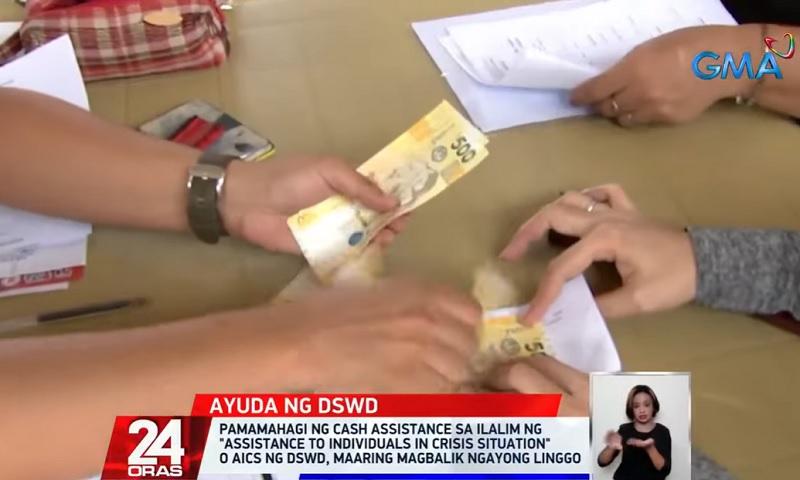
High oil prices have driven up the cost of food and basic commodities, placing a significant burden on Filipinos, including the middle-income sectors.
According to the Philippine Institute for Development Studies (PIDS) study by Deanne Lorraine D. Cabalfin, Jose Ramon G. Albert, and Mohammad A. Mahmoud, middle-income households in the country are those with per capita income between two and 12 times the official poverty line, or P13,873 a month.
The middle-income class has three categories:
Lower middle-income: P27,746 - P55,492 monthly family income
Middle middle-income: P55,492 - P97,111 monthly family income
Upper middle-income: P97,111 - P166,476 monthly family income
READ: EXPLAINER: Who is the middle class in the Philippines amid the rising prices?
With the oil crisis, the government said assistance may also be accessed by the middle-income class.
According to the Department of Social Welfare and Development (DSWD), the Assistance to Individuals in Crisis Situation (AICS) program is not limited to the vulnerable sectors, although currently, the priority beneficiaries of the program are PUV drivers.
“The cash relief assistance na ipinatutupad ng DSWD, ito po 'yung emergency scheme namin para i-address 'yun ngang ayon sa gobyerno ay mostly affected noong nagsimula ang gulo sa Middle East,” said DSWD Undersecretary Adonis Sulit of the Policy and Planning Group.
(The cash relief assistance being implemented by the DSWD is our emergency scheme to address those who the government deemed to be the most affected since the conflict in the Middle East began.)
The AICS program is one of DSWD’s social welfare services that provides medical assistance, burial, transportation, education, food, or financial assistance to Filipinos in crisis.
Sulit noted that the assistance was available to the middle class and minimum wage earners, as it is a “social protection intervention” accessible to all individuals in the Philippines.
On the DSWD Thursday Media Forum, Crisis Intervention Program Director III Edwin Morata said that the program will assist anyone confirmed to be in a “crisis state”.
“Ang magiging reference po namin ano po ang current state po ninyo. I will not deny that there are some professionals with high income, pero tandaan po natin there are shocks na hindi naman nila in-expect… Hindi na kami titingin po sa economic level nila kung mayaman ka ma o hindi. Ang titignan namin diyan [ay] ano ang sitwasyon mo, ano ang kakayanan mo, at saan kami pwede pumasok para tumulong,” Morata shared.
(Our reference would be what your current state is. I will not deny that there are some professionals with high income, but we must remember that there are shocks which they might have not expected… We will not look into their economic level if they are rich or not, but rather what their situation is, what their capabilities are, and where we can come in to help.)
To avail the AICS program’s financial assistance, an individual must head to their nearest DSWD office with the following requirements:
- Valid ID
- Authorization Letter (if applicable)
- Barangay Certificate of Residency or Certificate of Indigency or Certificate of the Client is in Need of Assistance
- Other documents of legal authorities that may prove a crisis situation (such as police report, certificate of death, medico-legal certification, etc.)
Other requirements may apply for other forms of assistance.
Each client will be validated and processed by DSWD’s case workers.
“As long as kayo po ay may current crisis state at nangangailangan po kayo ng augmentation sa DSWD, bukas po ang opisina po ng DSWD from Monday to Friday, from 8:00 [a.m.] to 5 p.m.,” Morata said.
(As long as you are in a current crisis state and in need of augmentation from the DSWD, the office of the DSWD is open from Monday to Friday, from 8:00 [a.m.] to 5 p.m.
As of March 2026, the DSWD said it has set aside a total of P30 billion for financial assistance to Filipinos amid the fuel crisis.
As of April 16, over P3.2 billion has been disbursed to PUV drivers across the country.
Further assistance is set to be released and distributed as DSWD continues its payout programs for affected drivers.—LDF, GMA News

