

 GMA Brandtalk
 Tracking
 Archives

House panel flags 'gaps' in DepEd's 3-term calendar
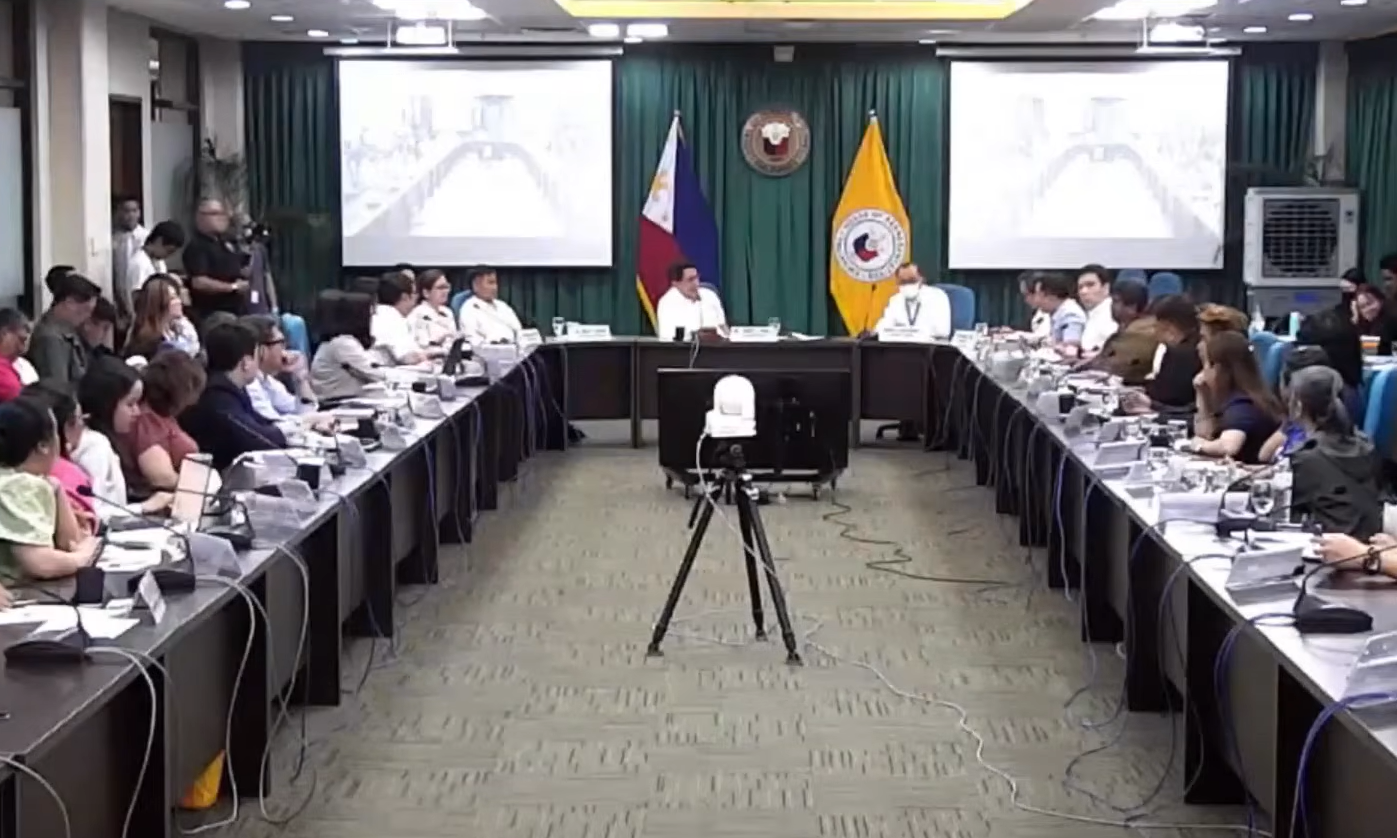
Lawmakers on Monday raised concerns over the Department of Education’s (DepEd) planned shift to a three-term school calendar, citing possible gaps in instructional time, lack of buffer days, and unclear learning targets under the proposed system.
During a briefing of the House Committee on Basic Education and Culture chaired by Roman Romulo, legislators questioned DepEd officials on how the reform—set for rollout in School Year 2026–2027—would address disruptions such as class suspensions due to unpredictable weather.
Romulo stressed the need for flexibility, warning that a tightly packed schedule without sufficient buffer days could prevent students from completing required lessons.
“Papaano kung magkaroon ng no classes in between… hindi nila mako-complete lahat? Kawawa ang bata,” he said, noting that missed days could affect coverage of the Most Essential Learning Competencies (MELCs).
(What happens if there are no classes in between… they won’t be able to complete everything? It’s the students who suffer.)
DepEd Assistant Secretary Janir TY Datukan said teachers are guided by a “budget of work” that allows prioritization of competencies depending on available time, but acknowledged the need to refine implementation details.
Lawmakers also pointed out inconsistencies in the number of instructional days under the proposed calendar.
Based on DepEd’s presentation, the total appeared to reach only 172 instructional days—below the commonly cited 180-day requirement.
“I think you should clarify that,” Romulo said, urging the agency to review its computations and ensure alignment with learning requirements.
ARAL program questioned
The committee also scrutinized DepEd’s learning recovery initiatives, particularly the Academic Recovery and Accessible Learning (ARAL) program.
Lawmakers asked how struggling students—especially beyond Grade 1—would be supported, noting that current interventions appear focused on early-grade learners.
Romulo proposed expanding remediation efforts across all grade levels, including an eight-week recovery program instead of shorter interventions embedded in regular class schedules.
“Bakit Grade 1 lang? We’re falling behind from Grades 1 to 12 based on your own data,” he said.
DepEd said it would consider the proposal while maintaining that current strategies aim to balance academic recovery and student well-being.
Policy basis, design questioned
Lawmakers also sought clarification on the basis for certain design choices, including a proposed five-day remediation period within the school calendar.
Datukan admitted the approach was based on practical considerations, but said no specific studies were cited to support the five-day model.
“We wanted to find the balance between academic requirements and the overall wellness of the child,” he said.
The committee also raised concerns over the timing of interventions, noting that the ARAL program is set to begin later in the school year, potentially leaving struggling learners unsupported at the start of classes.
DepEd defends reform package
DepEd said the three-term calendar is part of a broader reform package that includes updated assessment systems, flexible learning strategies, and efforts to streamline lesson planning.
Officials said the shift aims to provide longer uninterrupted learning periods, reduce disruptions, and improve pacing for both students and teachers.
However, lawmakers stressed the need for clearer policies, consistent data, and contingency measures before full implementation.
The committee directed DepEd to submit additional details on instructional time, learning competencies, and remediation strategies to ensure the reforms address learning gaps without overburdening schools.
Based on the initial report, DepEd cited findings that up to 53 out of 180 school days in School Year 2023–2024 were lost due to weather disturbances and non-instructional activities, resulting in compressed lessons and reduced learning time.
To address this, the proposed calendar divides the school year into structured blocks, including an opening period for assessments and preparation, longer uninterrupted instructional phases, and end-of-term periods for remediation, enrichment, and teacher development.
Classes are expected to begin in early June, with the first term running from June to September, the second from September to December, and the third from January to late March.
Each term will include an instructional block of about 54 to 61 days focused on continuous teaching with minimal disruptions.
These will be supplemented by enrichment periods for remediation, assessment, grading, lesson planning, and wellness breaks for both teachers and learners.
A dedicated opening block will also be implemented for learner profiling, baseline assessments, and administrative preparation.—MCG, GMA News

