

 GMA Brandtalk
 Tracking
 Archives

What happens next in Rodrigo Duterte’s ICC case?
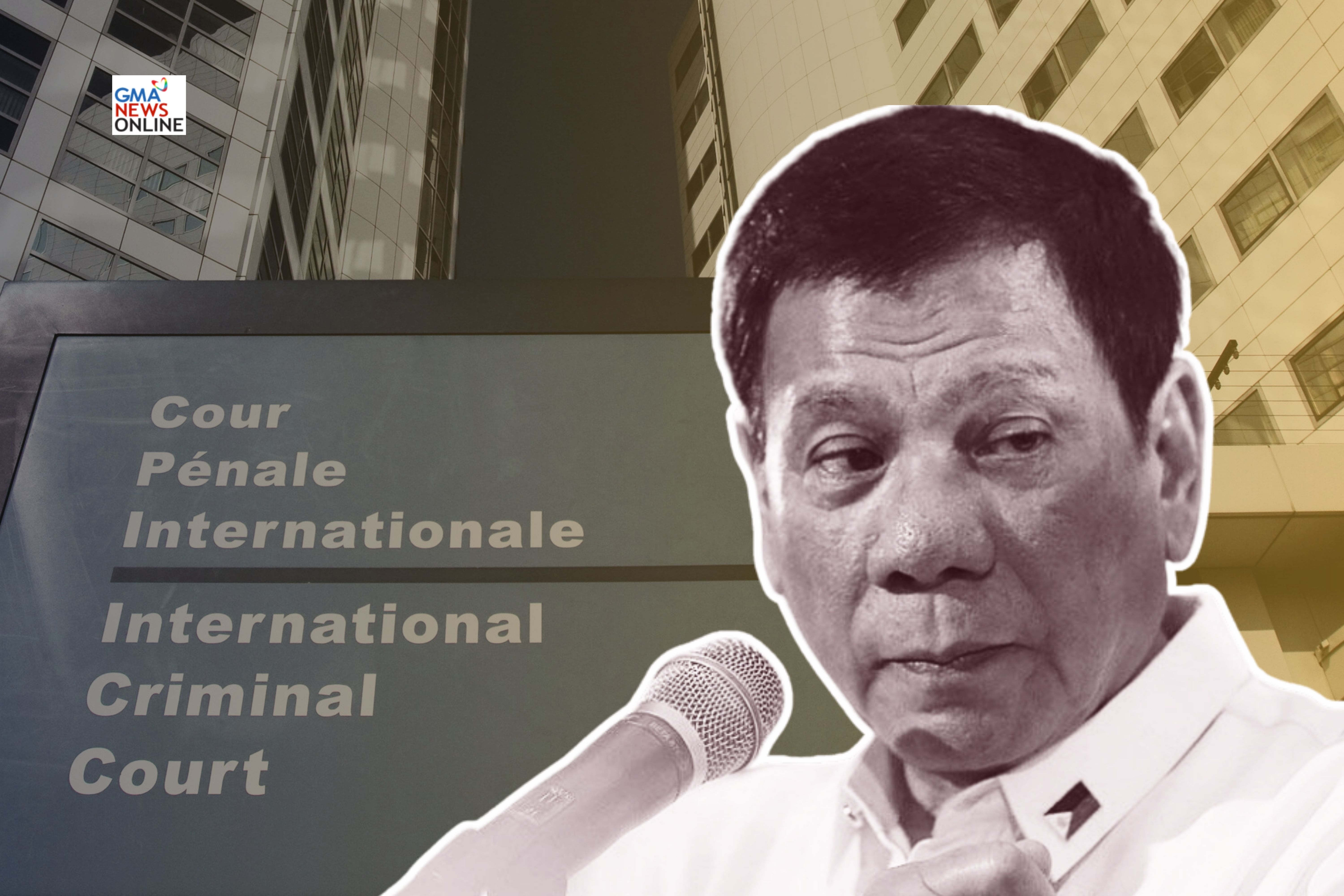
The International Criminal Court (ICC) on Thursday confirmed the charges of crimes against humanity against Rodrigo Duterte over the killings in his war on illegal drugs when he was Davao City mayor and later as President.
In a 50-page decision, the ICC Pre-Trial Chamber I committed Duterte to face trial on the charges as confirmed and ordered the court registrar to transmit the decision on the confirmation of charges and the record of these proceedings.
So what happens next in the case of the 81-year-old former President before the ICC?
According to the ICC website, the ICC Presidency will form a Trial Chamber that will conduct the subsequent phase of the proceedings and assign three judges other than those appointed in the Pre-Trial Chamber I.
The Pre-Trial Chamber I judges are Iulia Motoc, Reine Alapini-Gansou, and Maria del Socorro Flores Liera.
READ: Meet the three female ICC judges who signed the warrant of arrest for Duterte
The Trial Chamber will then hold conferences, meet with the parties and participants to set the trial date, and adopt necessary procedures to ensure a fair and prompt trial.
It will also rule on several preliminary issues, including the timing and the manner of disclosure of evidence.
Duterte is expected to be present in court during his trial before the ICC as Article 63 of the Rome Statute states that the accused should be present during the trial.
Any other issues about the accused’s participation shall be decided by the ICC judges.
A total of 539 victims have been authorized to participate in the proceedings.
They shall be represented by Filipino lawyers Joel Butuyan and Gilbert Andres and Paolina Massidda, the Principal Counsel of the Office of Public Counsel for Victims (OPCV), who will act as a single team of common legal representatives.
The defense and prosecution can still appeal the ICC’s decision confirming the charges against Duterte upon the authorization of the Pre-Trial Chamber I.
Duterte could still request an interim release during the trial.
The confirmed charges against the former President are the following:
- Count 1: Murder as a crime against humanity in Davao City during the mayoral period of at least 19 victims, between 2013 and around June 2016, through indirect co-perpetration, ordering and/or inducing, and/or aiding and abetting;
- Count 2: Murder as a crime against humanity of ‘high-value targets’ in locations across the Philippines during the presidential period of at least 14 victims between around July 2016 and July 2017, through indirect co-perpetration, and/or ordering and/or inducing and/or 25(3)(c) (aiding and abetting); and
- Count 3: Murder and attempted murder as crimes against humanity in barangay clearance operations in locations across the Philippines during the presidential period of at least the 45 victims (43 murders and two attempted murders) between around July 2016 and September 2018, through indirect co-perpetration, ordering and/or inducing, and/or aiding and abetting.
in its decision released on Thursday, the Pre-Trial Chamber I determined that there is substantial ground to believe that the former President was responsible for the crimes against humanity of murder and attempted murder, allegedly committed in the widespread and systematic attack against civilians in the Philippines from November 2011 to 16 March 2019, in the context of the war on illegal drugs.
It also found sufficient evidence to establish that “neutralize” meant “to kill” in the context of the case.
Duterte’s camp previously argued that the term means to arrest and denotes “lawful restraint.”
“The word ‘neutralise’ was used and understood by those involved in the operations to mean to ‘kill,’” the Pre-Trial Chamber I said.
Duterte was arrested in the Philippines by local authorities on March 11, 2025 and has been detained since then at the ICC Detention facility in Scheveningen in The Hague, Netherlands. — JMA, GMA News

