

 GMA Brandtalk
 Tracking
 Archives

SC scraps Duterte admin's order dismissing Carandang as Deputy Ombudsman
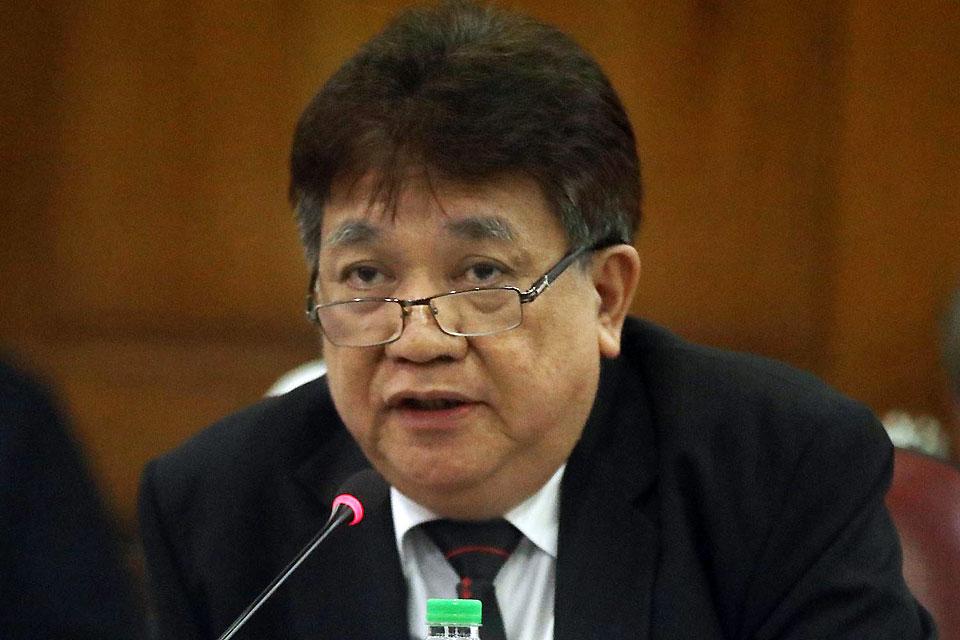
The Supreme Court has voided the dismissal from service of then-Overall Deputy Ombudsman Melchor Arthur Carandang following his probe into the wealth of former President Rodrigo Duterte.
In a 28-page decision made available to the public on Saturday, May 2, the SC Third Division affirmed the Court of Appeals ruling that voided "for lack of jurisdiction" the decision by Duterte's Office of the President (OP) that sanctioned Carandang.
The high bench likewise voided the Office of the President's decision itself, dated July 30, 2018, which found Carandang administratively liable for graft and corruption and betrayal of public trust, and dismissed him from public service.
It also struck down the June 14, 2019 order of then-Ombudsman Samuel Martires, which was carried out "(p)ursuant to the Decision of the Office of the President," that directed Carandang to cease and desist from performing powers and functions of his post, which was likewise declared vacant.
With this, the SC ruled that, "Carandang is entitled to all retirement benefits effective upon the expiration of his term. He is likewise entitled to receive the salaries corresponding to the period of his preventive suspension and dismissal, but only up to the end of his term."
The decision was penned by Associate Justice Maria Filomena Singh. Associate Justices Benjamin Caguioa, Henri Jean Paul Inting, Samuel Gaerlan, and Japar Dimaampao concurred with the decision.
AMLC records
The ruling recalled Carandang's statements from an ambush media interview on September 27, 2017 that the Office of the Ombudsman had received transaction records transmitted by the Anti-Money Laundering Council (AMLC).
The high court said Carandang allegedly went further by intimating that these documents came about in relation with an investigation initiated by the Ombudsman following a complaint lodged by former Senator Antonio Trillanes IV regarding Duterte's alleged unexplained assets.
However in September 2017, the AMLC Secretariat issued a statement declaring that it was not the source of the documents and information exposed by former Senator Trillanes.
Following this, on January 26, 2018, the Office of the President issued a formal charge against Carandang for divulging valuable information of confidential character, and disclosure and/or misuse of confidential information, among others.
Question of authority
In response, Carandang filed a Special Appearance with Manifestation Ex Abundanti Ad Cautelam on February 9, 2018. He argued that Section 8(2) of Republic Act 6770 or the Ombudsman Act of 1989, the provision granting the President administrative disciplinary authority over the Deputy Ombudsman, has long been declared unconstitutional by the Court in Gonzales III v. Office of the President.
Carandang thus submitted that then-Executive Secretary Medialdea had no authority to issue the formal charge, which ordered his preventive suspension.
The Office of the Ombudsman issued its decision sanctioning Carandang five months later.
Carandang later asked the Court of Appeals on June 20, 2019 to review the decision, arguing that the President has no administrative disciplinary jurisdiction over the Overall Deputy Ombudsman.
The CA issued a decision granting Carandang's petition on November 18, 2021, which set aside the 2018 decision by the Office of the President.
Ombudsman's independence
In affirming the CA's decision, the Supreme Court ruled that the appellate court "rightly cited" the Second Gonzales Decision in overturning the Office of the former President's removal of former Overall Deputy Ombudsman Carandang.
"By constitutional design, the President possesses no administrative or disciplinary authority over a Deputy Ombudsman. Moreover, even on the merits, the claims of Carandang's administrative liability are tenuous at best, lacking a firm foundation in fact or law."
The high bench likewise upheld the independence of the Ombudsman office from the Executive branch.
"The Office of the Ombudsman is independent by constitutional design, and the Court has already addressed the arguments raised in the Petition in the Second Gonzales Decision," it added.
It cited the Constitution that expressly labeled the Office of the Ombudsman as "independent," to ensure its enduring existence and effective functioning.
Public's right to information
Further, the Supreme Court argued Carandang's statements showed neutrality and stressed the preliminary nature of the actions taken by the Office of the Ombudsman.
"By no stretch of the imagination can any act of graft or corrupt practice be attributed to him. Rather than betraying public trust, Carandang's act of providing information on the status of a pending complaint before his office is consistent with the public's right to information on matters of national interest," it said.
"As to the allegedly false statements made by Carandang, specifically his claim that he received bank transactions from the AMLC despite the AMLC Secretariat's official statement that it did not provide the Office of the Ombudsman with any such report, this matter, by itself, does not justify Carandang's dismissal from service and forfeiture of benefits," it added.
Carandang's term as Overall Deputy Ombudsman expired in 2020. — VDV, GMA News

