

 GMA Brandtalk
 Tracking
 Archives

DOST-PSHS to offer AI elective course next school year
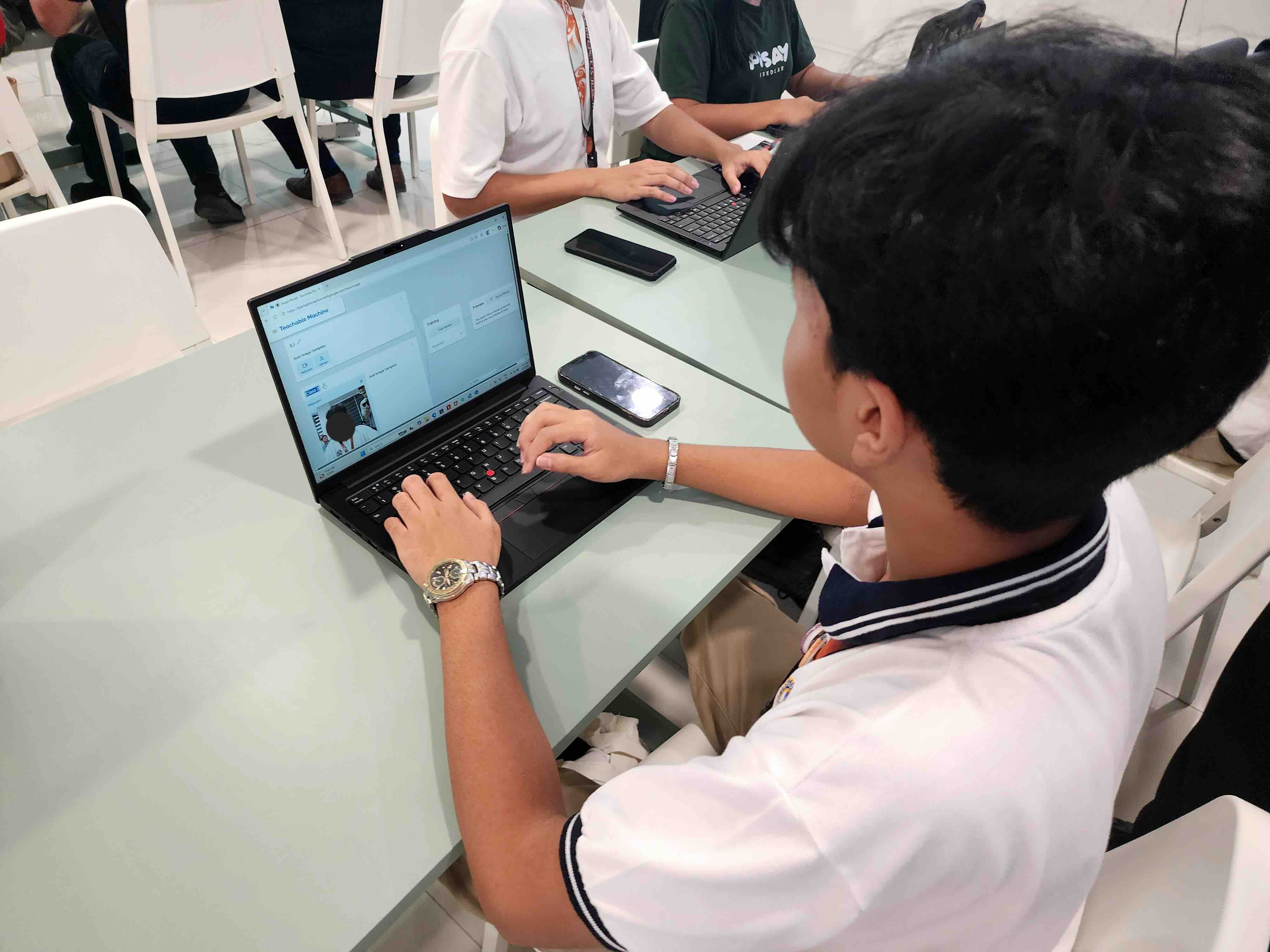
The Department of Science and Technology-Philippine Science High School System (DOST-PSHS) said on Tuesday that it will offer an artificial intelligence (AI) elective course at its main campus in Quezon City starting next school year.
Speaking to GMA News Online, Rod Allan de Lara, PSHSH Main Campus Director, said the Artificial Intelligence and Immersive Technology course will be offered to students in Grades 10 to 12.
“Grade 10 to 12 kasi yan po yung pag-introduce namin ng mga elective sa aming curriculum,” De Lara said.
(We will offer it to Grade 10 to 12 students because it is when we introduce electives into our curriculum.)
“And then, eventually, yung integration with other subjects will come in,” he added.
De Lara made the statement as DOST-PSHS launched its first AI laboratory, which not only allows students to utilize AI but also take part in its development.
He explained that students can create an AI model or application using specialized computers powered by a Graphics Processing Unit (GPU).
Instead of having a physical laboratory, DOST-PSHS uses a cloud storage with at least 10 terabytes of storage for its projects.
“Ang ibig sabihin ng cloud ay storage pa siya, pero hindi siya physically in local, pero it can be, in our case, a data center in Singapore,” De Lara said.
(A cloud is a storage, but it's not physical. In our case, it’s a data center in Singapore.)
“They (students) have to create an account to have access to the cloud, and the cloud is created with a very high-powered GPU and storage, 10 to 20 terabytes of data storage capacity, and that's a lot,” he added.
To maintain an ethical use of AI among students, De Lara shared that DOST-PSHS is incorporating the use of AI in its values education.
However, he admitted that forming value education in the AI environment is difficult.
“To be very honest, it's difficult. Well, for one, values are something that many view as very subjective. The notion of what is right and wrong is often in the gray area,” he said.
“So at the end of the day, kung ano yung na-implicate sa aming mga studyante (whatever we implicated in our students) from Grade 7 to 10. I hope they will carry that through as they go through their journey of [AI] development,” he added.
In February, the Department of Education issued a comprehensive policy on the use of AI in basic education.
DepEd Order No. 003, s. 2026, titled “Foundational Guidelines on Artificial Intelligence in Basic Education,” states that AI may assist teachers in lesson planning, quiz generation, content development, and feedback.
It may also support administrative tasks such as drafting reports and analyzing data.
High-risk systems, such as AI-driven appraisal tools, automated eligibility checkers, and AI-based monitoring systems, are permitted only under strict safeguards and transparency requirements.
Minimal-risk tools such as grammar checkers, accessibility features, scheduling assistants, and auto-formatting tools may be used under standard IT controls.
“No AI system shall be used without human oversight,” the policy provides. —VAL, GMA News

