

 GMA Brandtalk
 Tracking
 Archives

Is a local warrant needed to arrest Bato Dela Rosa? Lawyers weigh in
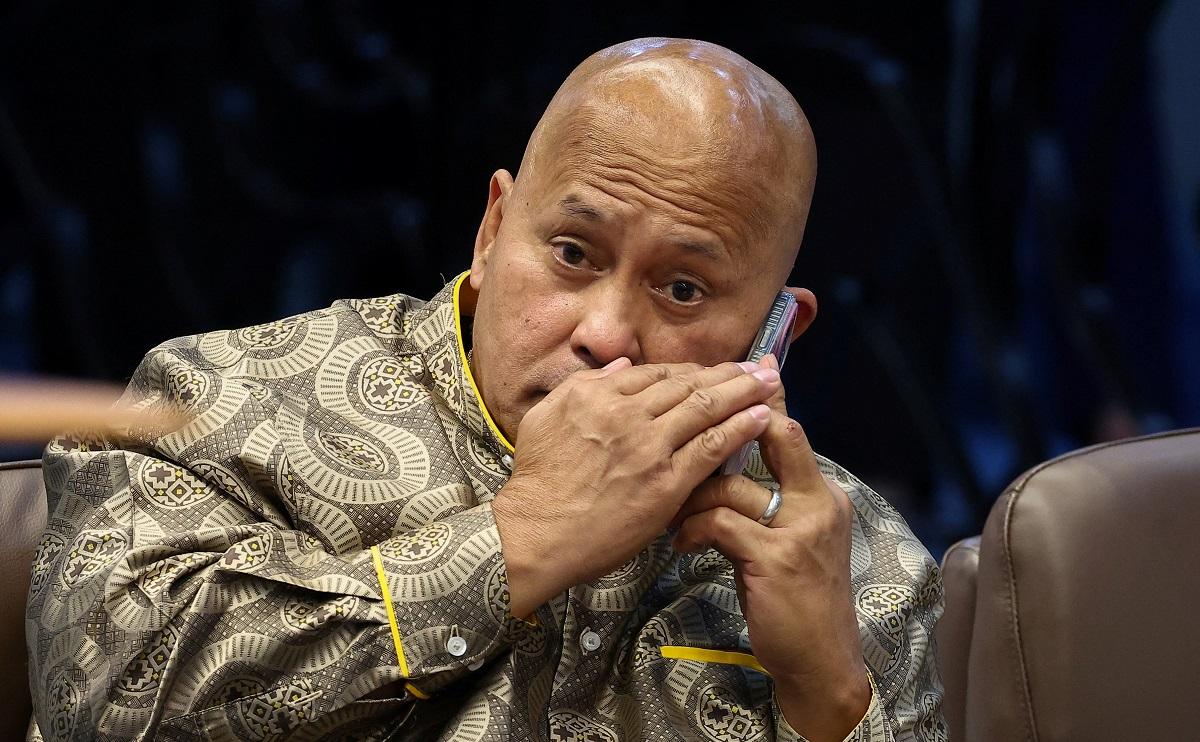
Despite an existing arrest warrant issued by the International Criminal Court (ICC) for Senator Ronald "Bato" Dela Rosa, his allies claim that authorities must first obtain a warrant from a local court before he can be arrested.
Some lawyers, however, argue that a local warrant is not needed.
In a message to GMA News Online, National Union of Peoples' Lawyers (NUPL) president Ephraim Cortez said a local warrant is unnecessary.
For Cortez, the ICC arrest warrant against Dela Rosa is valid and can be implemented outright. He argued that Philippine courts cannot rule on the enforceability of the ICC arrest warrant as it does not have jurisdiction to do so.
"There is no need for any court proceedings to pass upon its enforceability, since there is no law or rules of procedure providing for such a remedy," he said.
"As a consequence, courts have no jurisdiction over such a remedy, since jurisdiction is conferred by law," he added.
Cortez explained that Dela Rosa is charged with crimes against humanity by the ICC, which he said was a "heinous international crime" that is considered a "foundational violation of international law."
According to the lawyer, such crimes can be prosecuted anywhere, regardless of where they are committed, and that the ICC was created as a permanent tribunal to investigate and prosecute such crimes.
He stressed that the Philippine government recognizes the universal jurisdiction of the ICC through its compliance with the generally accepted principles of international law.
"Ang universal jurisdiction ng mga korte ng ibang bansa, gayundin ang jurisdiction na binigay sa ICC sa pamamagitan ng Rome Statute, ay kinikilla sa Pilipinas dahil sa ating pag sunod sa generally accepted principles ng international law," Cortez said.
(The universal jurisdiction of courts in other countries is the same as the jurisdiction given by the ICC through the Rome Statute, which the Philippines recognizes because of our compliance with the generally accepted principles of international law.)
Cortez also cited the Republic Act (RA) 9851 or the Philippine Act on Crimes Against International Humanitarian Law, Genocide, and Other Crimes Against Humanity.
"Under said Sec. 17, the Philippine government has the option to defer to any investigation conducted by a foreign court or international tribunal. If the government decides to defer to such an investigation, it has the discretion to surrender custody, or to extradite," Cortez said.
"In the case of Sen. Dela Rosa, the available option is to surrender custody, since extradition is inapplicable to the ICC, which cannot be a state party to an extradition treaty," he added.
Cortez also stressed that the ICC is an international tribunal, not a foreign court.
Similarly, former Far Eastern University Law Dean Mel Sta. Maria said many experts believe that a local warrant is no longer needed for Dela Rosa's arrest.
According to Sta. Maria, the Philippine Constitution states that the generally accepted principles of international law shall be part of the law of the land.
"Ang ating Constitution sinasabi na ang generally accepted principles of international law shall be part of the law of our land. So bahagi na ng ating batas ang mga international law na 'yan," he said on Super Radyo dzBB.
Sta. Maria said the Philippine government then promulgated RA 9851 as a bridge to connect the Constitution to international law.
"Kung nire-recognize natin ang jurisdiction nila, lahat ng process nila nire-recognize din natin, kasama na ang pag i-issue ng warrant of arrest. Kaya hindi na kailangan mag-issue dito," he said.
(If we recognize their jurisdiction, then we recognize all of their processes, too, including the issuance of warrants of arrest. That's why a warrant need not be issued here.)
Integrated Bar of the Philippines (IBP) National President Allan Panolong also cited RA 9851, saying that a country that upholds or adopts international laws is bound to implement an arrest warrant issued by the ICC.
"Even if the warrant of arrest is not issued by a local court, but as a country which upholds or which adopts international laws, we are bound to implement an arrest warrant issued by [the] ICC," Panolong said on Unang Balita.
"Because [the] ICC is not a foreign court. This is an independent, permanent court," Panolong said.
No SC TRO
Meanwhile, Sta. Maria said he believes that Dela Rosa can be arrested as the Supreme Court (SC) did not grant Dela Rosa's plea for a temporary restraining order (TRO) to prohibit the government from implementing the arrest warrant against him.
To recall, Dela Rosa's camp has asked the SC for immediate judicial protection and sought guidance on the legal effect of the arrest warrant.
He also reiterated his appeal for the issuance of a TRO or writ of preliminary injunction prohibiting the arrest or transfer of Dela Rosa to any foreign tribunal without prior judicial authorization.
The SC did not issue a TRO as it directed the respondent government officials to comment on his plea.
"Ano ang signal noon? Ang signal noon, hindi muna namin ibibigay ito. Sumagot muna kayo. Hindi ibig sabihin noon, huwag niyong gawin ang gusto niyong gawin in terms of the executive," he said.
(What does that mean? It means, we won't give you this. Provide your answer first. That doesn't mean that you shouldn't do what you want to do in terms of the executive.)
Not a valid warrant
For his part, Senate President Alan Peter Cayetano said the Philippine Constitution states that the only valid warrant is a warrant of arrest from a Philippine judge.
"If any provision or any treaty is against the Constitution, the Constitutional shall prevail. And the Philippine Constitution said that the only valid warrant is a warrant of arrest from a Philippine court," he said.
Dela Rosa is the subject of an arrest warrant for "alleged criminal responsibility as an indirect co-perpetrator" in the crimes against humanity of murder from July 3, 2016, until the end of April 2018, wherein at least 32 persons died.
He was placed under protective custody of the Senate after National Bureau of Investigation agents attempted to serve the warrant against him on Monday.
The senator left the premises of the Senate at 2:30 a.m. Thursday with Senator Robin Padilla. His location is currently unknown to authorities. — VDV, GMA News

