

 GMA Brandtalk
 Tracking
 Archives

EXPLAINER: Why rotational brownouts occur
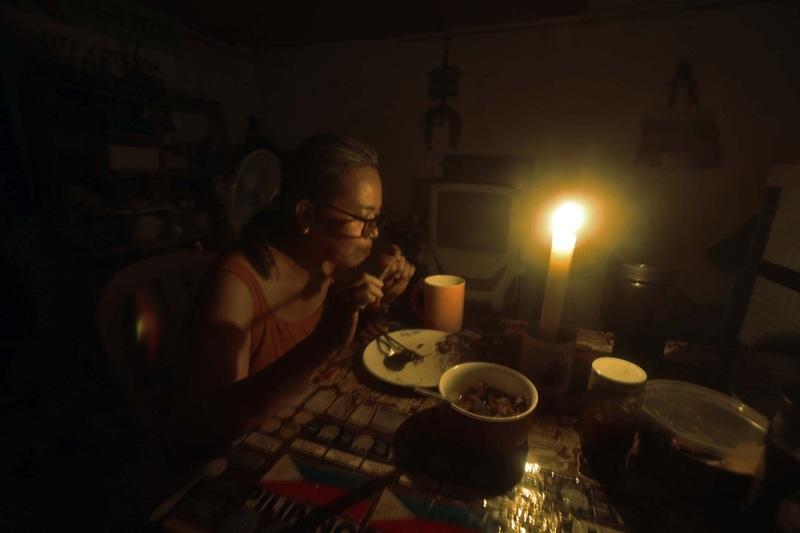
Hundreds of thousands of consumers across Luzon and the Visayas have been affected by rotational brownouts this week, as the country’s power grid struggles to keep up with rising demand amid limited supply.
The National Grid Corporation of the Philippines (NGCP) placed both Luzon and Visayas under red and yellow alerts on May 15, signaling a critical power supply situation.
NGCP uses four alert levels to indicate the condition of the power grid:
White alert – Normal operations; supply is enough for demand
Yellow alert – Supply is tight; reserves fall below required levels
Red alert – Power supply is insufficient to meet demand
Blue alert – Precautionary alert during calamities
A red alert is the most serious, meaning there is not enough electricity available, prompting power interruptions in some areas.
What causes a power shortage?
According to NGCP, the alerts were triggered by a combination of high demand and unexpected supply disruptions.
“The extension of the red and yellow alerts is due to the tripping of GNPD Unit 1, resulting in the loss of 668 MW (megawatts) and further aggravating the supply deficiency,” the grid operator said.
In Luzon, available capacity dropped to 12,075 megawatts, below the peak demand of 12,927 megawatts, resulting in a deficit of 852 megawatts.
More than 4,800 megawatts of power capacity were also unavailable due to forced outages and plants operating at reduced capacity.
The Visayas grid also experienced a shortfall, with a supply gap of around 220 megawatts.
Why are rotational brownouts implemented?
Because supply cannot meet demand, NGCP resorts to Manual Load Dropping (MLD)—commonly known as rotational brownouts.
This means power is temporarily cut in certain areas in a scheduled manner to prevent a total grid collapse.
Each outage may last between two and three hours, depending on grid conditions.
In Luzon, around 320,000 consumers were affected as of 7:00 p.m. Thursday, according to Meralco.
Affected areas include parts of Bulacan, Cavite, Laguna, Metro Manila, Pampanga, Quezon, and Rizal.
Similar outages also impacted several provinces in the Visayas.
The Department of Energy (DOE) and the Energy Regulatory Commission (ERC) have directed NGCP to submit a comprehensive report on the power supply disruptions.
The probe will cover the series of yellow and red alerts declared from May 12 to 14, as well as the grid’s response to the outages.
NGCP said efforts are ongoing to stabilize the power situation.
“NGCP's current efforts are focused on maintaining the stability of the Luzon and Visayas grids while awaiting the normalization of supply,” it said, adding that an investigation into recent grid issues is already underway.
It also expressed its commitment to comply with government directives and submit the required report. — VBL, GMA News

