

 GMA Brandtalk
 Tracking
 Archives

11th ID, Sulu PNP, and NGO offer education program for ex-Abu Sayyaf
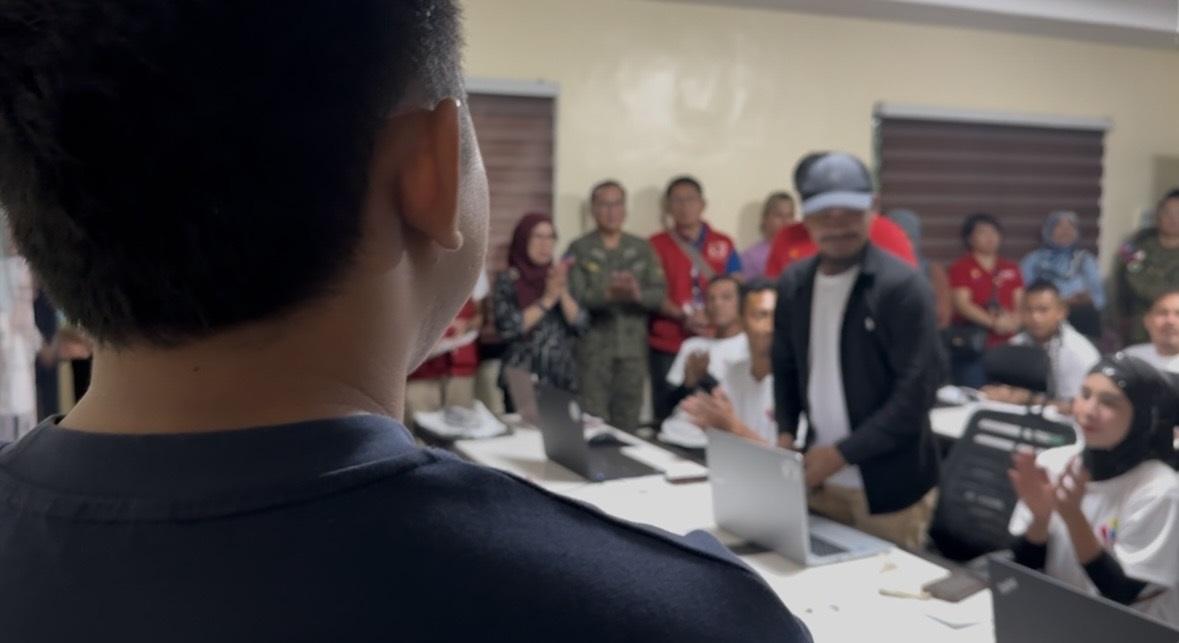
MAIMBUNG, Sulu — In a province once known as a stronghold of the Abu Sayyaf Group, former members of the terrorist organization are now being helped to return to education and rebuild their lives.
At least 80 former members of the ASG, including several considered former violent extremists or FVEs, together with some of their relatives, are currently enrolled in KLIK Mobile Education or KLIKme, a technology-enabled education program run by a non-government organization in partnership with the 11th Infantry Division under the Western Mindanao Command of the Armed Forces of the Philippines and the Sulu Provincial Police Office.
Among them is “Randy,” not his real name, a former Abu Sayyaf member who said he was only 10 years old when he was recruited into the group.
His parents, he said, did not approve of his joining. But an uncle, who had earlier become a member of the Abu Sayyaf, allegedly promised him that the group could help lift his family out of poverty.
“Nalaman ko na mayroong pera doon, na may magbibigay ng pera, ganun, kaya sumali sa AS Group. Sa kaalaman ko, doon lang ako makakahanap ng pera sa panggastos ko sa pamilya, kaya ako pumasok doon,” Randy said.
(I learned that someone would be giving out money, so I joined the ASG. I thought that that was the only way I could find money for my family.)
By the age of 13, Randy said he had already learned how to handle firearms.
Years passed, and Randy found himself trapped in an Abu Sayyaf faction in Indanan, Sulu. He said he eventually realized the danger of staying with the group after he was wounded in an encounter with the military. He alleged that the group's leaders were willing to abandon their own men.
“Kasi nakakatakot yung buhay na sa loob, minsan giyera, kung may mamamatay, hindi na mapupulot yung iba,” he said.
(It was frightening, life in the group. There would be conflicts, and some will be killed, and some would be left behind.)
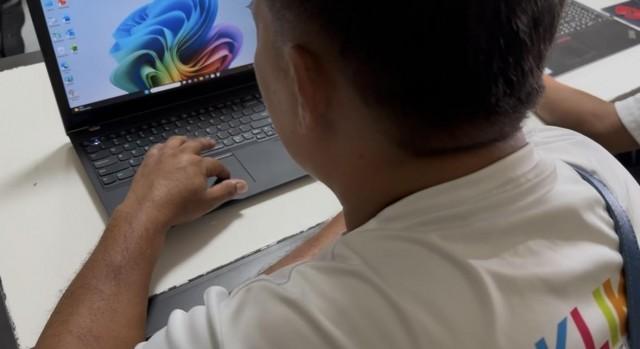
Another KLIKme learner, a former Abu Sayyaf member from Sulu whom GMA News will call “Lito,” said poverty, money, and the belief that the group was fighting for a cause were among the reasons he joined.
Lito said he had been with some of the former high-value individuals in Sulu, including Isnilon Hapilon, Omar Patek, and other leaders of the Abu Sayyaf and other terrorist groups.
He also did not deny being involved in some kidnapping activities carried out by the Abu Sayyaf in the past.
But in 2018, after forming his own family, Lito said he decided to leave the group.
“Hindi na totoo yung pinaglalaban, parang personal interes o pinagyayaman na yung kung ano man yung nakukuha nila, dati ginagastos talaga sa grupo, halimbawa kung ano man makuha sa kidnap. Hindi naman nag extortion pero yun ang nangyayari kaya naisip ko na na magbagong buhay na lang ako,” Lito said.
(They were no longer being true to what they were fighting for; it seemed they were doing it for personal interest or gain when in the past they would use it what they got, for example from kidnapping activities, for the group. I didn't take part in extortion but that was what was happening, so I resolved to turn over a new leaf.)
To qualify for the government’s Enhanced Comprehensive Local Integration Program or E-CLIP, Lito said he had to prove his loyalty to the government.
He said he helped authorities in the arrest of several Abu Sayyaf leaders and in the rescue of kidnapping victims.
“Para makita na totoo yung pagbalik-loob namin na tumutulong talaga sa gobyerno,” he added.
(So they would know our return was for real, we would help out the government.)
Lito is now a member of the Citizen Armed Force Geographical Unit or CAFGU and continues to assist WestMinCom in its operations.
Previous studies have identified poverty and lack of access to education as among the roots of Abu Sayyaf’s influence in Sulu—an influence that, for decades, pulled some communities into a cycle of ideology, criminality, and violence, making the province one of the group’s known strongholds.
Sulu Governor Abdusakur “Toto” Abubakar Tan II said the province has gone through years of conflict, but the situation has changed.
“Giyera ang sumira sa lugar na ito, peace and order ang aming naging problema: insurgency, terrorism, kidnapping; name it, nangyari lahat sa lugar na ito but then, Alhamdulillah, nagbago kami,” Tan said.
(War was what destroyed this place, and peace and order became a problem: insurgency, terrorism, kidnapping, name it, it happened here. But then, praise Allah, we were able to change.)
“We bring the government services to the people instead of, hindi dapat ang tao ang naghahanap ng serbisyo ng gobyerno dapat ang gobyerno ang nagseserbisyo sa tao,” he added.
(It shouldn't be the people having to look for government service, but the government serving the people.)
Most of the KLIKme learners plan to continue their education through the Department of Education’s Alternative Learning System or ALS.
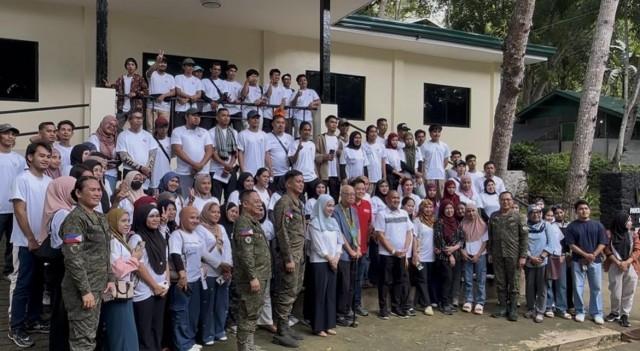
Social Welfare Secretary Rex Gatchalian said the program is also meant to equip former extremists with practical skills that can help them reintegrate into society.
“Marami sa kanila gusto ng karagdagang life skills, hindi man makakuha ng formal diploma [Many of them want to learn additional life skills, even if they don't get a formal diploma]. Life skills like computer literacy, digital literacy, how to prepare your resume so itong mga [these] development programs will help them become productive members of our society,” Gatchalian said.
Because the KLIKme program runs for nine months, the Department of Social Welfare and Development also provide financial assistance to enrollees to help them continue attending the program.
“Sa hirap ng buhay kailangan din nilang maghanap buhay hindi naman sila pwede na araw-araw ito lang ang ginagawa, walang source of income. Hindi man natin mapalitan yung income nila pero the important part is may naiaabot tayo na tulong to keep them encourage to continue the program,” Gatchalian said.
(With life as hard as it is they also need to earn a living. They can't just be doing this every day without a source of income. Even if we cannot replace their income, the important thing is we are able to extend help to encourage them to continue the program.)
In all, around 500 former violent extremists have surrendered and returned to the fold of the government.
However, only about 180 of them have so far been cleared and enrolled in E-CLIP. Authorities said some still have pending cases with the Philippine National Police over their alleged involvement in crimes committed by the Abu Sayyaf.
The DSWD, Department of the Interior and Local Government, and Department of Justice are continuing coordination on these cases.
Brigadier General Leonardo Peña, commander of the 11th Infantry Division under WestMinCom, said the government cannot give immediate clearance to all former combatants because the process must be done in coordination with police authorities.
“Hindi namin mabigyan sila ng clearance dahil nga in tandem with the police kailangan wala silang cases, so ito yung project or program na pwede nating mapa-avail sa ganitong mga tao so that they will feel na hindi sila outcast sa society, kasi ang target na natin dito is normalization and mainstreaming of the former combatants na mapasok sa community,” Peña said.
(We cannot immediately give them clearances because it has to be in tandem with the police; they must not have cases, so this is the project or program that we can offer to them so that they will not feel like they are outcasts, because our target here is the normalization and mainstreaming of former combatants so that they may re-enter society.)
In 2023, Sulu was declared free from the influence of the Abu Sayyaf Group.
According to WestMinCom, which operates in the province, authorities are now monitoring only around two individuals believed to still be recruiting people to join lawless groups.
WestMinCom said one of the reasons Abu Sayyaf’s presence has nearly disappeared in Sulu is the participation of local communities themselves.
Around 2,000 Tausug residents, according to WestMinCom, have been recruited as members of the CAFGU, helping authorities secure communities and monitor possible threats.
“Maraming nag-surrender and maraming na-neutralize din kasi tao mismo ng province ang nagtuturo,” Peña said.
(Many have surrendered and been neutralized because locals are the ones teaching them.)
WestMinCom said the Sulu local government and the AFP are working to meet all the requirements for the province to be declared under stable internal peace and security.
The DSWD and its partner NGOs acknowledge that there is no absolute guarantee that recruitment into terrorist or lawless groups will completely stop. But they said access to education, sustained government assistance, and long-term livelihood support are clear steps toward breaking the vicious cycle of recruitment and achieving lasting peace in Sulu. — BM, GMA News

