

 GMA Brandtalk
 Tracking
 Archives

EXPLAINER: What is the role of senator-judges in the impeachment court?
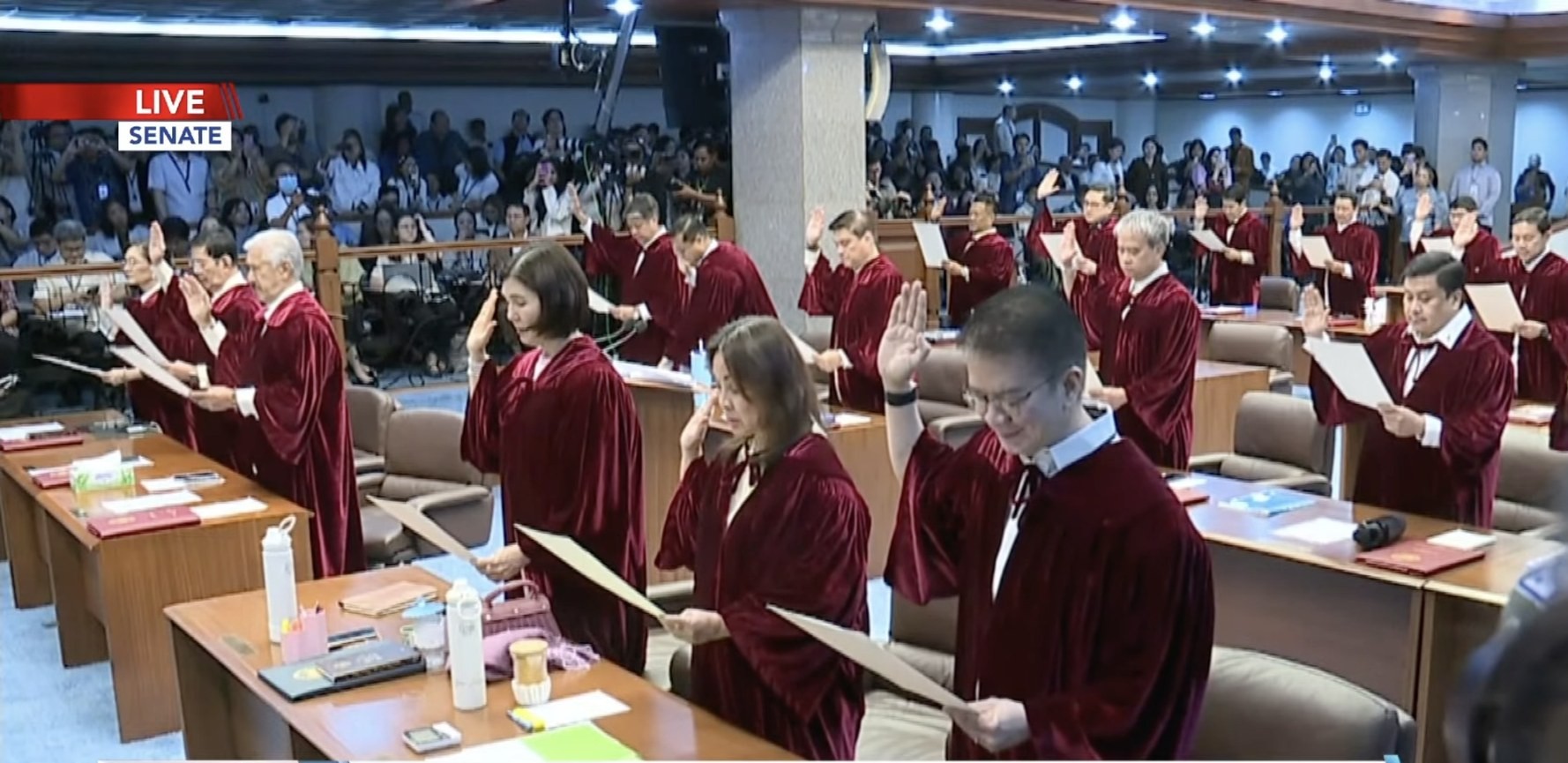
The Senate formally convened as an impeachment court on Monday, May 18, following the impeachment of Vice President Sara Duterte by the House of Representatives on May 11 and days after receiving the Articles of Impeachment.
Duterte will be tried over allegations of culpable violation of the 1987 Constitution, graft and corruption, and betrayal of public trust.
After suspending their regular session, the 23 senator-judges present donned their robes and took their oath as judges.
What is the role of senator-judges in the impeachment court?
Under Article XI of the 1987 Constitution, the Senate has the sole power to try and decide all impeachment cases.
Senator-judges are responsible for evaluating evidence presented by the prosecution and the defense, and ultimately determining whether the impeached official is guilty or not guilty.
Regardless of political affiliation, senator-judges are expected to observe “political neutrality” during impeachment proceedings, as provided under the Senate’s rules on impeachment trials.
According to UP College of Law Assistant Professor Paolo Tamase, political neutrality means “keeping the proceeding constitutional and fair.”
“Nanunumpa sila na titingnan nila yung ebidensya nang patas. Hindi magpe-play ng role yung mga partido nila at yung kanilang mga alliances doon sa basic question kung guilty or not guilty ba yung isang indibidwal,” he explained.
(They swear to examine the evidence fairly. Their political parties and alliances should not play a role in the basic question of whether an [impeached official] is guilty or not guilty.)
He added that political neutrality is essential in impeachment trials to assure the public that the process is focused on accountability.
How does Senate leadership affect impeachment trials?
A week before the Senate convened as an impeachment court, a leadership change took place in the chamber.
With 13 votes in favor, 9 against, and 2 abstentions, Senator Alan Peter Cayetano was elected Senate President, replacing Senator Vicente “Tito” Sotto III.
The leadership change occurred on the same day the House of Representatives voted to impeach Vice President Duterte.
According to Tamase, the Senate President plays a key role in impeachment proceedings, particularly in ruling on procedural matters as presiding officer.
“Unless i-question siya ng plenary na hindi naman madalas nangyayari… And may tendency, as I predict, na kung ano ‘yung desisyon ng presiding officer, susuportahan ‘yun ng mayorya. Dahil ‘yung presiding officer ang nagdidikta din kung sino yung mayorya,” he explained.
(Unless it is questioned by the plenary, which does not usually happen… And there is a tendency, as I predict, that whatever decision the presiding officer makes will be supported by the majority. Because the presiding officer also helps determine who the majority is.)
Tamase said failure by senator-judges to observe political neutrality could erode public trust in the process.
“Ultimately, sa taumbayan nananagot hindi lamang ‘yung impeached officer o impeachable official, but pati yung senador,” he added.
(Ultimately, it is not only the impeached officer or impeachable official who is accountable to the public, but also the senators.)
A writ of summons is expected to be issued to Duterte.
The vice president’s camp is required to respond to the Articles of Impeachment within 10 calendar days from receipt of the summons.
Cayetano has authorized the case to be calendared for pre-trial, with notices to be issued to both parties after the filing of the last pleading.—MCG, GMA News

