

 GMA Brandtalk
 Tracking
 Archives

CBCP call for prayers, aid for OFWs, dialogue amid global conflicts
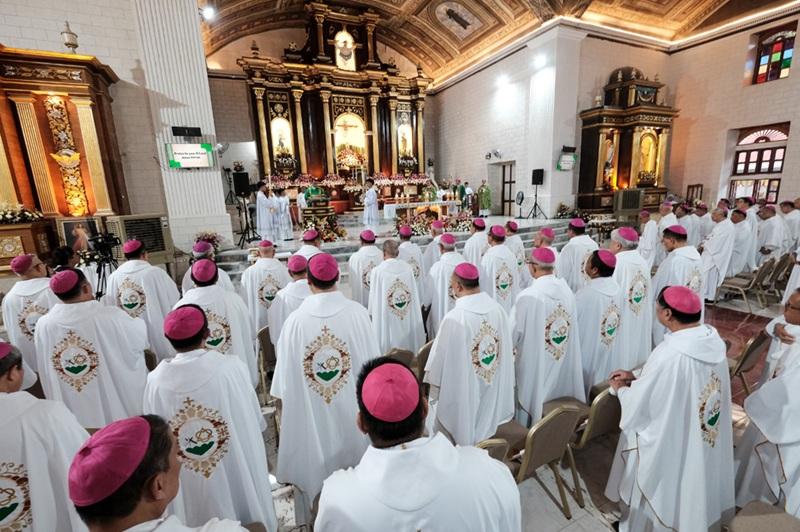
Filipino bishops issued a statement that is focused on wars, acts of terror, grieving mothers, the wounded, the abandoned people with a deliberate call on civil and religious leaders to enter into dialogue while encouraging educators to continue their work as formators of conscience.
The pastoral response of the Philippine Church, the prelates said, is to call on the people to continue pray for peace, extend assistance to Overseas Filipino Workers (OFWs) and their families, and to promote dialogue "among neighbors, cultures, and peoples."
"With hearts burdened by sorrow and concern, we, the bishops of the Catholic Bishops’ Conference of the Philippines (CBCP), join the Holy Father and the universal Church in praying for peace amid the ongoing crisis and war in the Middle East and elsewhere. As violence escalates and tensions deepen, we once again hear the Risen Lord’s words to His disciples: “Peace I leave with you; my peace I give to you” (Jn 14:27)," said Archbishop Gilbert Garcera, Catholic Bishops' Conference of the Philippines president (CBCP).
"These words of Christ are not mere sentiments. They are a command, a gift, and a mission. In a world wounded by hatred, fear, vengeance, and greed, followers of Christ are called to be instruments and channels of peace," he added.
Effects of war
Garces highlighted the consequences of war and violence, "children deprived of safety, mothers grieving their sons and daughters, families driven from their homes, the wounded left untreated, the elderly abandoned, and communities reduced to rubble."
"The faithful need no convincing of the tragedy of war. Yet while we express grave concern about the current US-Iran conflict and its far-reaching consequences, we likewise affirm that we do not forget the many other hotspots in the Philippines, across Asia, and throughout the world that continue to inflict suffering on peoples and nations," according to the statement signed by Garces, who is also the Archbishop of Lipa.
He pointed out the the wars in remote places affect OFWs and their families, "their safety, livelihood and futures" and the economic consequences that include "rising fuel costs, high prices of goods, transportation burdens."
Also bearing the burden of these economic effects are the "daily wage earners, farmers, fisherfolk, transport workers, the elderly and families with little savings."
"As Christians, we do not celebrate war. We do not glorify revenge. We do not demonize entire peoples or religions. Instead, we are called to truth, compassion, justice, and the patient work of reconciliation," he added.
Task for the leaders
World leaders, the bishops said, should "choose dialogue over domination, diplomacy over destruction, restraint over retaliation, and moral courage over pride and aggression.
For religious leaders, "we earnestly urge that religion and the holy name of God never be invoked to justify war, hatred, violence, extremism, or vengeance. Authentic faith must always serve as a bridge toward peace, reconciliation, compassion, and the protection of the sacred dignity of every human person."
The bishops' message to civil leaders, is to "exercise vigilant and impartial leadership in the protection of the people and nations."
The included educators, because "In a world increasingly wounded by propaganda, extremism, polarization, and misinformation, Catholic education carries the sacred responsibility of forming minds and hearts according to the truth, compassion, and wisdom of Christ, rather than according to passing ideologies, prejudice, or rigid worldviews."
The Church's response
The Filipino people are called to celebrate the Holy Mass, Eucharistic Adoration, pray the rosary for peace in the world.
Parishes are called on to support OFWs, through "parish-based feeding programs, community pantries, emergency relief efforts, and charitable initiatives for individuals and familiesburdened by inflation, economic uncertainty, and hardships, following the spirit of compassionand generosity witnessed during the pandemic."
Lastly, they are also calling for the promotion of dialogue, encourage mutual respect, build bridges of dialogue, hope, and solidarity within communities.
"We cannot remain indifferent to the cries of those suffering from war. Let us unite in prayer for peace, stand with the afflicted, and call all peoples and nations to choose dialogue, justice, and the sanctity of every human life," they said.
"Let every parish become a sanctuary of prayer and reconciliation. Let every family become a cradle of peace, compassion, and hope. And let every Christian be a living witness to mercy, dialogue, and the healing love of Christ in a wounded world," they added. — BAP, GMA News

