

 GMA Brandtalk
 Tracking
 Archives

DepEd credits teacher exchange with South Korea for boosting innovation
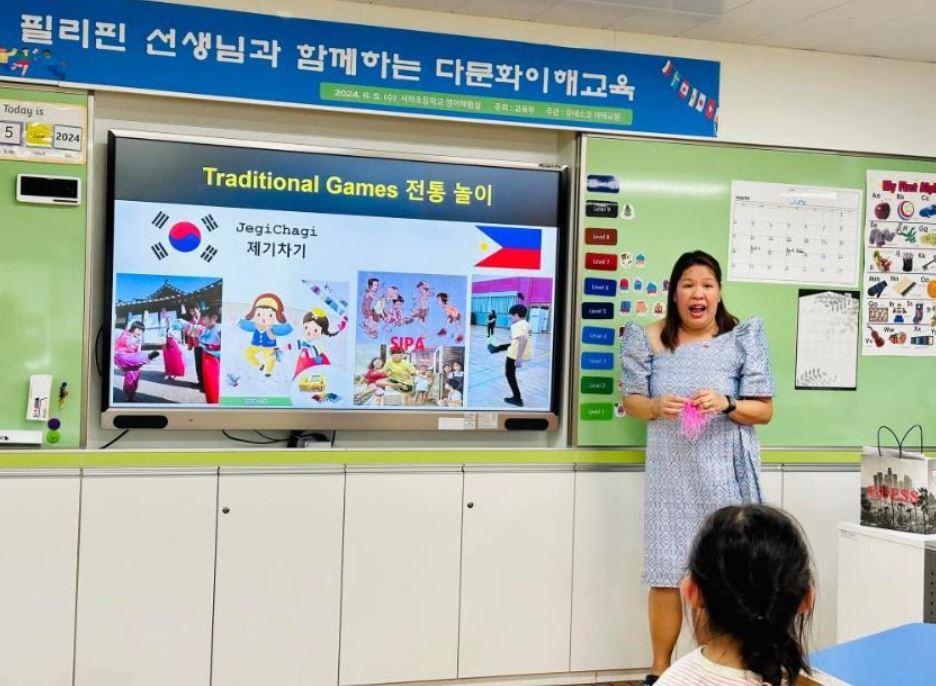
The Department of Education highlighted how Filipino teachers who joined an exchange program with South Korea brought home new teaching approaches and community-based education initiatives after immersing themselves in another country’s school system.
The Korea-Philippines Teacher Exchange Programme (KPTEP), launched in 2012, is jointly implemented by DepEd and the South Korean Ministry of Education in partnership with the Asia-Pacific Centre of Education for International Understanding.
According to DepEd, the program aims to strengthen intercultural understanding and educational collaboration between Filipino and Korean educators.
Education Secretary Sonny Angara said teacher development through international partnerships could help improve the country’s education system.
“Through international cooperation programs like this, we can equip our instructional leaders with world-class competencies that directly benefit our learners,” he added.
DepEd said around 330 educators have participated in the exchange program since it began, including about 190 Filipino teachers deployed to South Korea and 140 Korean teachers sent to the Philippines.
Among the participants was Raleigh Ojanola, a Master Teacher II from Koronadal National Comprehensive Senior High School in Region XII, who joined the exchange last year.
Ojanola said observing the Korean education system encouraged him to strengthen literacy efforts in his own community after returning to the Philippines.
“The experience opened a lot of realizations,” Ojanola said.
“The more I witnessed the Korean educational system, the more I realized that I need to go back to serve my community and to continue to enlighten our learners so that they too can become successful,” he added.
After returning home, Ojanola developed “Project TULAY,” a reading intervention program integrating Global Citizenship Education concepts into localized reading materials.
Another participant, Kristine Cruz of Malabon National High School, said the exchange exposed Filipino teachers to educational practices that could be adapted locally.
“We have learned a lot of things, especially in the best practices of other countries like South Korea. And we're able to apply those practices in our educational system to enhance and eventually help our system,” Cruz said.
“We have this thinking now that we are not just Filipino teachers, we are global teachers,” she added.
DepEd said Cruz later launched a school clubs festival focused on Global Citizenship Education and the United Nations Sustainable Development Goals, while also organizing online cultural exchange classes between her students and a South Korean partner school.
The department added that four Filipino teachers are currently in South Korea as part of the 2026 exchange participant batch.—LDF, GMA News

