

 GMA Brandtalk
 Tracking
 Archives

EXPLAINER: What is Brigada Eskwela?
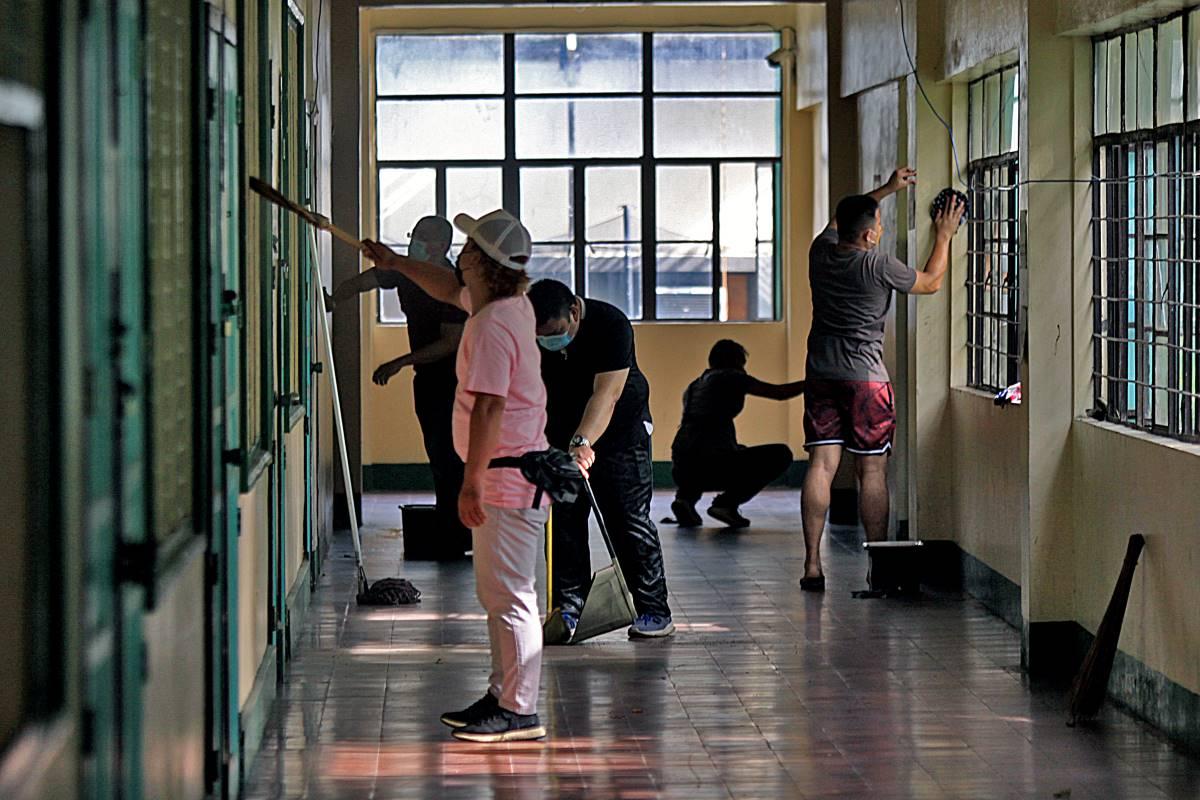
Highlighting the spirit of community for the Filipino youth, the Department of Education (DepEd) leads Brigada Eskwela before the start of each school year—its flagship event that calls on stakeholders to unite in preparing public schools across the country to become the best possible learning institutions for elementary and high school students.
This year's Brigada Eskwela is themed, "Bayanihan sa Paaralan: Nagkakaisa para sa Kaayusan at Kaalaman Bayan (Working Together in Schools: Unity for the Nation's Orderliness and Knowledge)," focusing on "improving school infrastructure and strengthening literacy."
In Memorandum No. 27, series of 2026, the DepEd encourages the cooperation of teachers, learners, parents, communities, and stakeholders to participate in the three stages of Brigada Eskwela:
Pre-implementation: Assessing the problem
The DepEd mandated schools to prepare two to three months before the Brigada Eskwela Week, which started this year on June 1 and will end on June 5.
During this stage, school facility coordinators conduct comprehensive assessments of all school infrastructure, including the identification of facilities that need repair, retrofitting, upgrading, or replacement.
According to the DepEd memorandum, these facilities include:
- classrooms
- offices
- libraries
- laboratories
- water and sanitation facilities
- electrical systems
- roofs
- drainage
- perimeter fences
Inspections are necessary to ensure the safety, functionality, and resiliency against hazards such as typhoons, earthquakes, floods, and fire.
At this stage, the DepEd prohibits school heads and teachers from soliciting or collecting any form of contribution or Brigada Eskwela fees from parents, students, volunteers, partners, and stakeholders.
"All DepEd Offices and schools shall strictly observe the prohibition on partnering with, accepting donations or sponsorships from industries that present conflicts of interest, such as, but not limited to, the tobacco, breast milk substitutes, and alcoholic beverage industries," DepEd adds.
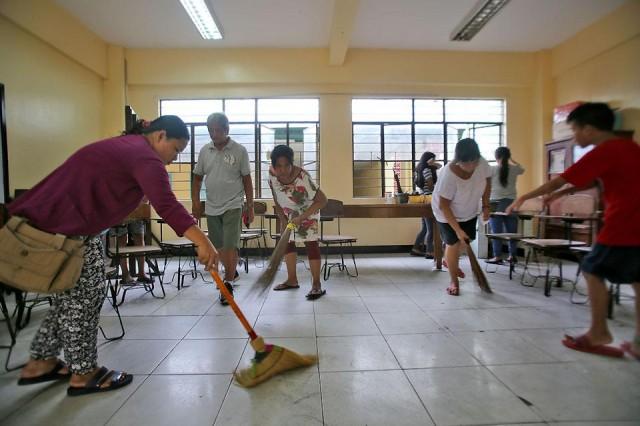
However, schools may begin reaching out to potential external partners during the implementation stage or Brigada Eskwela week. These partners may include local government units, national government agencies, private individuals and organizations, non-government organizations (NGOs), and parents.
The nature of engagement and suggested support to be provided for each stakeholder must be specifically identified.
Included in the suggested form of support is the provision of materials for general cleaning, sanitation, electrical and lighting, water maintenance, reading kits, classroom essentials, digital learning, and snacks for volunteers.
Implementation: Getting into action
When the program rolls out during Brigada Eskwela Week, teachers, students, parents, and other stakeholders gather in schools to conduct week-long activities.
Based on DepEd's memorandum, schools may select from a list of suggested activities for Brigada Eskwela week, which include:
- General cleaning of classrooms and school premises
- Repair, repainting, replacement, and/or rehabilitation of school facilities such as roofs and gutters, walls, comfort rooms
- Maintenance works
- Reading or Storytelling Session with learners
- Tree planting
Meanwhile, schools are directed to ensure cleanliness on learning grounds and are free from "unnecessary decorations, tarpaulins, and posters" in compliance with a department order.
Post-Implementation: Looking ahead
Brigada Eskwela does not end after its implementation. In the following week, schools prepare and submit accomplishment reports summarizing all activities, partnerships, and resources.
School heads are also directed to record all donated items classified as "property, plant, and equipment" in the book of accounts with supporting documents, depending on their value.
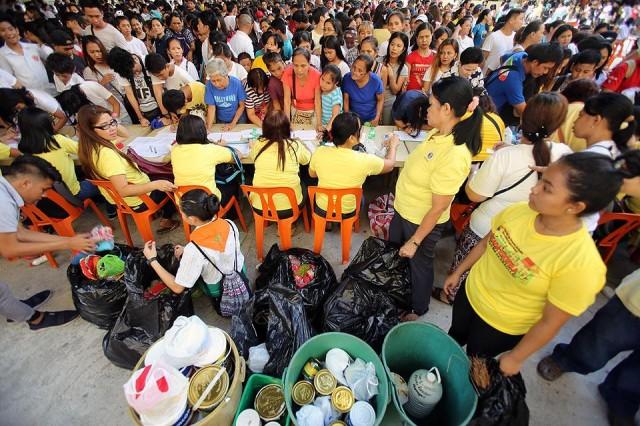
The attendance of DepEd employees to Brigada Eskwela is considered official time. In all governance levels, employees are "encouraged" to join for two days.
Under DepEd guidelines, teachers who participate in Brigada Eskwela activities may earn vacation service credits, with one day credited for every eight hours of service, up to a maximum of five days.
Sharing the burden?
The bayanihan effort under the Brigada Eskwela program, however, has drawn concerns online that the responsibility for maintaining schools tends to shift the burden away from government and to parents and teachers.
In a social media post, Alliance of Concerned Teachers (ACT) Party-list raised concerns over the out-of-pocket expenses of teachers during Brigada Eskwela.
"Sa mundo ng mga dapat, hindi humuhugot mula sa sariling bulsa si teacher para sa pagkukumpuni ng mga sira at pagsisiguro na well-ventilated ang silid-aralan. Hindi rin dapat umasa sa mga donasyon at ambagan ng mga magulang at iba pang nagmamalasakit," ACT Party-list said.
(In an ideal world, teachers should not have to spend their own money on repairing damaged facilities and ensuring that classrooms are well-ventilated. Schools should also not have to depend on donations and contributions from parents and other concerned citizens.)
During a privilege speech, ACT Party-list Representative Antonio Tinio called on DepEd to the release in full the P10,000 teaching supplies allowance of teachers prior to the start of Brigada Eskwela.
"Dapat buo ninyong matanggap ito dahil tax-exempt ang teaching supplies allowance. Nananawagan tayo sa Department of Education na i-relase na ito kagakyat," Tinio said.
(Teachers should receive it in full because the teaching supplies allowance is tax-exempt. We urge the Department of Education to release it immediately.)
DepEd's response
In a press release on Tuesday, DepEd said teacher assistance programs are actively ongoing, including the distribution of teaching allowance to eligible beneficiaries provided by Republic Act 11997 or the Kabalikat sa Pagtuturo Act.
"Malinaw dapat na hindi sila inaatasang gumastos mula sa sariling bulsa. Responsibilidad nating gawing mas madali para sa teachers na magturo, hindi dagdagan ang kanilang pasanin," Angara said.
(It should be clear that they are not required to spend out of their own pockets. It is our responsibility to make it easier for teachers to teach, not to add to their burden.)
DepEd added that schools should strictly implement the 'No Collection Policy' not just for Brigada Eskwela, but also during enrollment, and other activities leading to the start of classes. — VDV, GMA News

