

 GMA Brandtalk
 Tracking
 Archives

Extended repairs of major plants contribute to Visayas power shortage — DOE
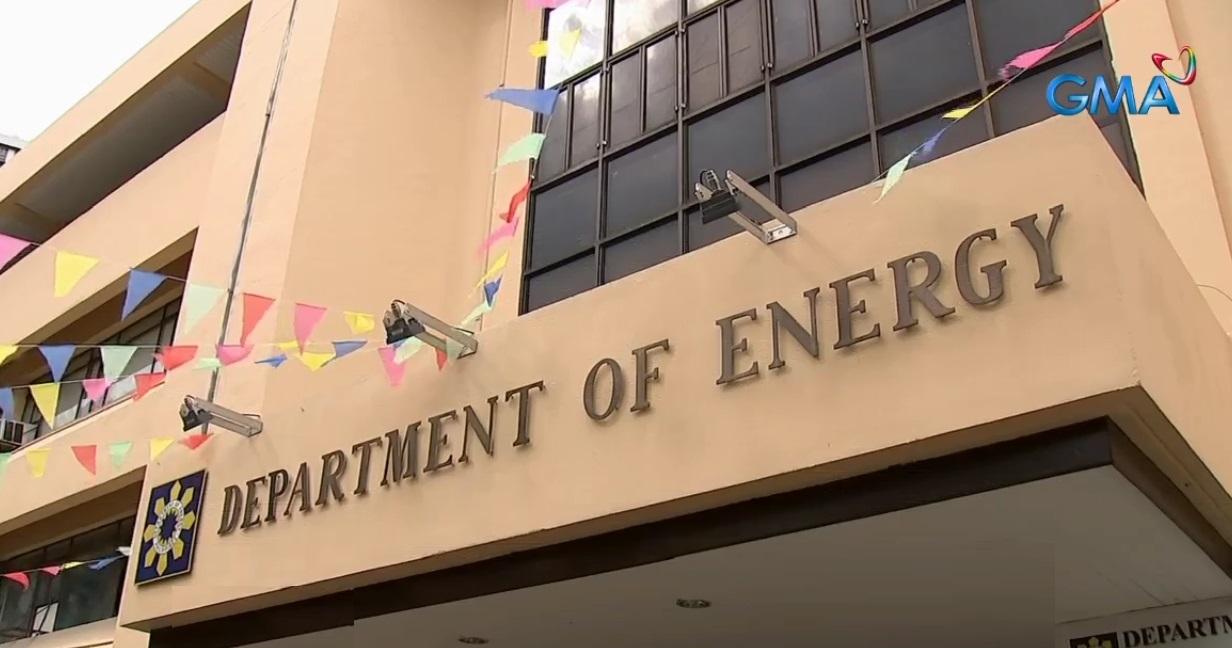
The extended repairs of three major power generation facilities in the Visayas has significantly contributed to the region's power shortage, according to the Department of Energy (DOE).
In an interview on Super Radyo dzBB on Saturday, DOE Undersecretary Mario Marasigan said the outages were among the reasons the Visayas grid was placed under yellow and red alerts in recent weeks, resulting in rotational brownouts.
"Meron po tayong malalaking planta na 'yung iba ay matagal na pong naka-outage dahil nire-repair at naka-schedule naman po 'yon originally sa kanilang scheduled maintenance, nae-extended po ang kanilang generation," Marasigan said.
(We have large power plants, some of which have been on prolonged outages because they are undergoing repairs. While these were originally scheduled for maintenance, their offline periods have been extended.)
Marasigan said a total of 673.4 megawatts (MW) of capacity in the Visayas is currently on forced outage.
Two of the major power plants undergoing repairs are located in Toledo City, Cebu, each with a capacity of 169 MW. Repairs are expected to be completed by the end of August.
Meanwhile, another power plant in Panay with a capacity of 150 MW is targeted to resume operations on July 3.
Marasigan said another factor behind the insufficient power supply in the Visayas is the derating of power plants that rely on seasonal feedstock, such as biomass facilities that use agricultural waste.
"Hindi milling season ngayon ng mga sugarcane kaya 'yung mga feedstocking ang ginagamit nilang gatong ay kulang kaya derated po sila," Marasigan said.
(It is currently not sugarcane milling season, so the feedstock used as fuel is in short supply, causing these plants to operate below their full capacity.)
Like hydropower facilities, biomass generation is also affected by seasonal conditions, including low water levels during the dry season, he added.
As of Saturday, the DOE said the Visayas had 168.6 MW of derated power plants, or facilities operating below their full capacities.
Marasigan, however, emphasized that the country's overall power supply remains sufficient.
"Sa kasalukuyan po, supisyente po yung supply natin ng kuryente, at may tinatawag po tayong grid operating maintenance program kung saan po naka-schedule yung maintenance and repair program po hindi lang ng mga planta, pero pati ang mga linya ng kuryente," he said.
(At present, our electricity supply remains sufficient. We also implement a Grid Operating and Maintenance Program, which schedules maintenance and repairs not only for power plants but also for transmission lines.)
Mindanao power surplus
Following the magnitude 7.8 earthquake that struck offshore Sarangani on Monday, the DOE is monitoring at least three affected power generation facilities.
Two of the facilities are located in Davao del Sur and are expected to be restored by June 17. Meanwhile, the third facility is expected to resume operations between June 13 and 14.
Despite the temporary outage of the three power plants, the DOE said Mindanao continues to have excess power supply.
"In fact, kahit patay pa 'yung tatlong unit ng Mindanao, nakakapag-export pa po ang Mindanao sa ngayon papunta ng Cebu, nakakatulong pa po sila sa Visayas," DOE Undersecretary Mario Marasigan said.
(In fact, even with three of its power units offline, Mindanao is still able to export electricity to Cebu, helping support the Visayas grid.)
To stabilize power supply, the DOE said it is collaborating with the Energy Regulatory Commission (ERC), the Independent Electricity Market Operator of the Philippines (IEMOP), and the National Grid Corporation of the Philippines (NGCP) to identify immediate solutions, particularly for the Visayas.
Marasigan said the department is considering deploying a battery energy storage system capable of storing at least 170 megawatts (MW).
"During daytime may sobra naman so pwedeng gamitin 'yon pang-charge ng battery, at 'pag hapon at gabi tsaka po natin gagamitin 'yung battery," Marasigan said.
(During the daytime, there is excess power that can be used to charge the battery, and the stored energy can then be utilized in the afternoon and evening.)
"So meron naman pong mga ginagawa nang mga project sa Visayas, so pabibilisin lang po natin 'yung pagtatapos non, mai-connect na agad sa grid, para makapagbigay-serbisyo na po agad," he added.
(There are already ongoing projects in the Visayas, so we will simply expedite their completion and ensure immediate grid integration to quickly deliver power services to the public.)
The DOE is targeting an additional 70 MW of capacity to come online in June.
Marasigan added that the department is also looking to deploy diesel generator sets that could provide around 20 MW of backup power.
"Naghanap po tayo ng power barges, 'yun po bang nakakarga sa barge, meron naman po tayong nakita na available dito sa Navotas hindi po siya ginagamit sa ngayon. 'Yun po yung ina-arrange na sana malipat sa Visayas, particularly sa Panay," he said.
(We looked for power barges—those mounted on barges—and found one available in Navotas that is not currently being used. Arrangements are being made so it can hopefully be transferred to the Visayas, particularly to Panay.)
If transferred, the power barge is expected to provide 70 MW.
The DOE is eyeing an additional 260 MW of capacity to boost both reserve and active power supply as a short- to medium-term measure to stabilize the electricity grid.
As for long-term solutions, Marasigan said the department is monitoring several projects, including a 150-MW power plant unit in Toledo, Cebu, and a coal-fired power plant in Panay that is exempt from the coal moratorium.
"Pero tayo po ay nag-iimbita na sana may magtayo po ng mga natural gas facilities sa Visayas para po magamit natin 'yung flexible characteristic ng natural gas…ito po ay ina-eye natin na malagay din sa Panay Island," Marasigan added.
(We are encouraging investors to build natural gas facilities in the Visayas so we can take advantage of the fuel's flexible characteristics. We are also eyeing Panay Island as a possible site.)
Across both conventional and renewable energy sources, the DOE projects around 1,400 MW of additional capacity to come online in the first quarter of 2026, bringing the total to between 2,000 MW and 2,500 MW by the end of the year.
By the end of the Marcos administration in 2028, the DOE aims to achieve a cumulative additional capacity of around 4,000 MW.
"Pero hanggang 2030 po… kung naalala ninyo meron tayong mga Green Energy Auction Projects, so 'yun pong mga winners… nakikita po natin by 2030 hanggang 2032 almost 12,000 MW po ang dapat makumpleto," Marasigan said.
(Up to 2030, if you recall, we have the Green Energy Auction Projects. We expect the winning projects to deliver nearly 12,000 MW of completed capacity by 2030 to 2032.)
Nuclear power
Among the options being studied is whether the existing Bataan Nuclear Power Plant remains viable for rehabilitation or whether the country would need to build a new facility.
Marasigan said potential sites for future nuclear power plants have yet to be finalized, although Palawan, Masbate, and Bataan are among the areas being considered.
Choosing a location is crucial, he said, given that the Philippines is prone to volcanic activity, earthquakes, and typhoons.
At the same time, the DOE is studying which nuclear technologies would be most suitable for the country, including small modular reactors (SMRs), which do not require large facilities.
Marasigan said the government is actively engaging with foreign partners for assistance in conducting preliminary studies and eventually constructing nuclear power facilities.
"Marami po. Naaayon na rin po doon sa listahan po ng ating International Atomic Energy Agency, sila po ay tumutulong sa atin para magkaroon tayo ng access sa iba’t ibang teknolohiya," he said.
(There are several. In line with the list provided by the International Atomic Energy Agency, they are helping us gain access to various nuclear technologies.)
The Philippines has already signed an agreement with the United States that allows the country access to American nuclear technology, he added.
Marasigan said the government is also in talks with partners in Europe, Russia, South Korea, and Japan.
The DOE is targeting to complete more advanced studies on nuclear power before the end of the current administration.
"Bago pa natin naipasa ang batas na nagke-create ng PhilAtom, 'yung agency na magre-regulate ng paggamit ng nuclear technologies, humingi na po tayo ng tulong sa International Atomic Energy Agency," Marasigan said.
(Even before we passed the law creating PhilAtom—the agency that will regulate the use of nuclear technologies—we had already sought assistance from the International Atomic Energy Agency.)
"Kung saan patuloy natin ginagampanan ang 19 infrastructure requirement bago makapagpatayo ng planta, so 'yun pong ating interagency on nuclear energy ay aktibo pong ginagawa at kinukumpleto 'yung requirement na yon," he added.
(We continue to comply with the 19 infrastructure requirements needed before a nuclear plant can be built, and our inter-agency committee on nuclear energy is actively working to complete them.)
Marasigan said the DOE has also begun conducting information campaigns and public perception surveys.
The department is also studying whether nuclear power plants could help lower electricity costs, he added. —VBL, GMA News

