

 GMA Brandtalk
 Tracking
 Archives

Filing of second WPS arbitration case under study, says maritime expert
A decade after the Philippines secured a landmark victory against China before the Permanent Court of Arbitration, the government is studying the possibility of filing a second arbitration case over the continued presence of Chinese assets in the West Philippine Sea (WPS), a maritime expert said on Saturday.
“Pinag-aaralan din po, alam ko, natin at ng mga ahensya kung ano pang paraan para pwede silang madala sa isang tribunal,” maritime expert Jay Batongbacal said in a report by Jonathan Andal on "24 Oras Weekend" on Saturday.
(As far as I know, we, together with various government agencies, are studying other ways by which China may be brought before an international tribunal.)
“If you are going to pursue an international case, you better be sure that you can win it, which is what we did in the first arbitration case,” he added.
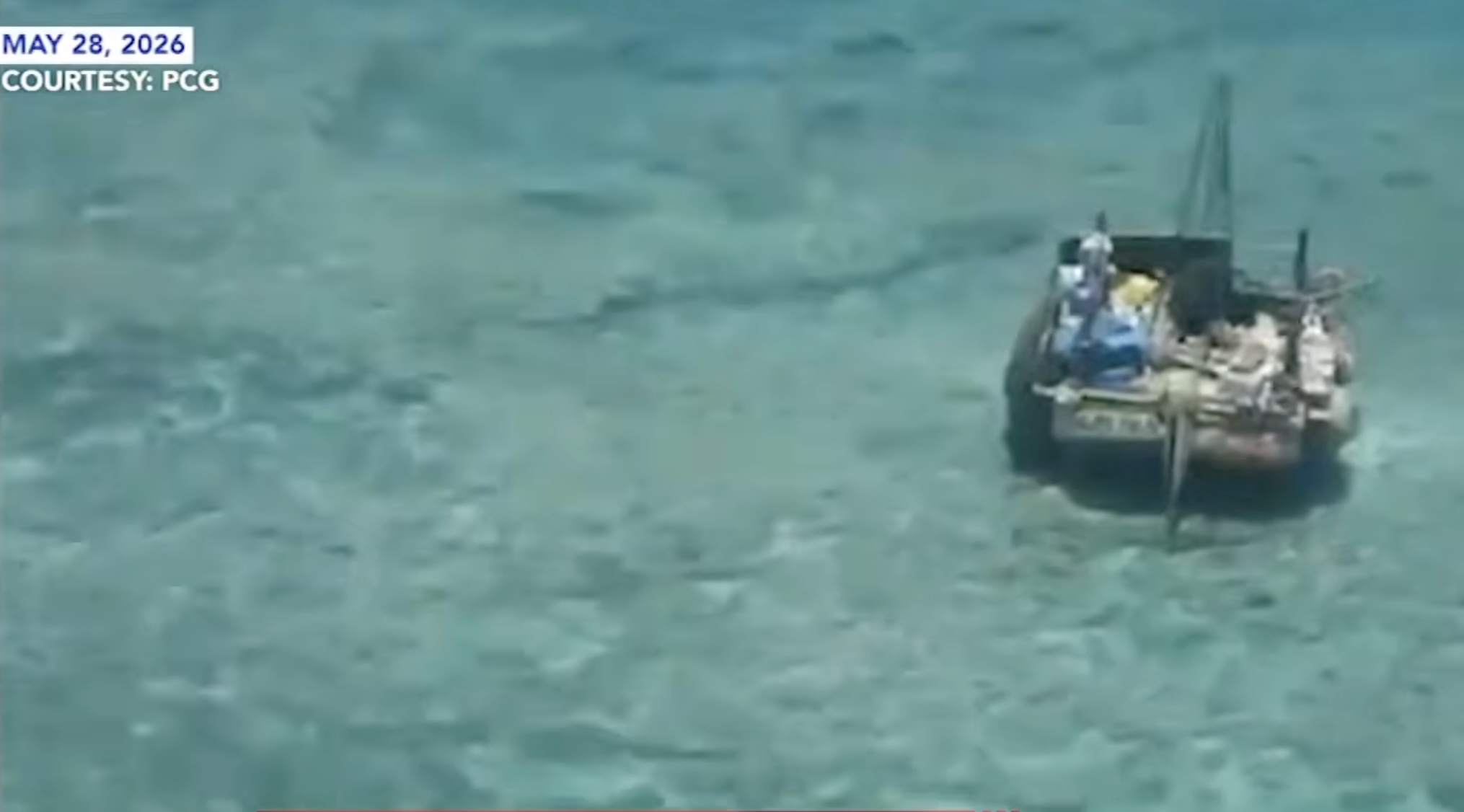
Batongbacal made the remarks following reports that a Chinese floating platform, buoy, and antenna had been monitored at Bajo de Masinloc for about two weeks.
“As of yesterday, the movable floating platform remains inside the shoal. It just moved to the northernmost part of the shoal,” said Rear Admiral Jay Tarriela, Philippine Coast Guard spokesperson for the WPS.
Tarriela added that two Chinese research vessels also remain in the vicinity of Bajo de Masinloc.
Bajo de Masinloc, internationally known as Scarborough Shoal, lies about 119 nautical miles off Zambales and around 500 nautical miles from Hainan, China.
China has long asserted its claim over the shoal, which it calls Huangyan Island, and has maintained that its activities there are for scientific research.
Batongbacal, however, said China had used a similar justification before transforming other features in the WPS into artificial islands and military installations.
“’Yun ngang nangyari sa Mischief Reef o Panganiban Reef na noong 1992 ay nakita nga rin natin na tinayuan nila ng estruktura,” he said.
(That is exactly what happened at Mischief Reef, or Panganiban Reef, where we first observed structures being built in 1992.)
“Noong una ay sabi nila civilian fishermen shelter lang iyon daw, pero alam natin na after several decades, ngayon ay iyon ang pinakamalaking base militar ng Tsina sa ating West Philippine Sea,” he added.
(At first, they claimed it was merely a shelter for civilian fishermen, but decades later it has become China's largest military base in the West Philippine Sea.)
The maritime expert said China would need to secure a permit from the Philippines to conduct marine scientific research in Philippine waters. Under Philippine law, structures that fail to comply with legal requirements may be subject to confiscation.
Tarriela declined to say whether the PCG plans to enforce this provision, saying it involves operational matters.
Meanwhile, the Philippine Navy warned of what it described as a “creeping invasion” by China, affecting not only the country's maritime domain but also its territory, economy, politics, and intelligence security.
“Bago tayo umabot sa physical invasion, may mga invasion nang ginawa sa atin through subtle means,” Philippine Navy spokesperson for the WPS Rear Admiral Roy Vincent Trinidad said.
(Even before any physical invasion, there have already been forms of invasion carried out through subtle means.)
Batongbacal said authorities are monitoring reports of the rapid sale of beach properties in Palawan facing the West Philippine Sea.
He added that similar activities are now being observed in other areas, including parts of Luzon.—Lyjah Tiffany Bonzoi/MCG, GMA News

