

 GMA Brandtalk
 Tracking
 Archives

Ombudsman: Anti-corruption fight should not end with investigation
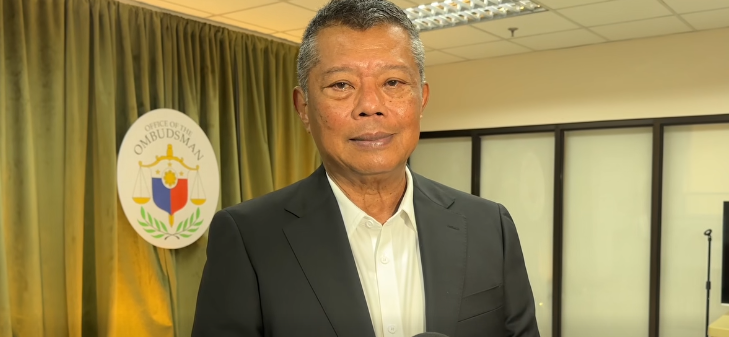
Ombudsman Jesus Crispin Remulla on Thursday said the fight against corruption must go beyond investigation and prosecution, saying accountability should come with "systemic reforms."
“Corruption is not only a legal problem. When corruption weakens institutions, people lose confidence. Investors hesitate. Communities suffer. Public resources that should create opportunities are wasted,” Remulla said in a speech during the 7th Global Conference on Sustainable Development Goals 16 held at the United Nations Headquarters in New York.
“That is why our approach at the Office of the Ombudsman is very clear: Accountability must be certain. But reform must also be systemic. We cannot investigate our way out of corruption alone. Of course, those who abuse public office must be held accountable.... If we truly want lasting change, we must also ask the more difficult questions. Why did corruption happen? Where did the system fail?,” he added.
Remulla then said preventing corruption means looking beyond individuals and examining the systems that allow corruption to grow.
“We are strengthening prevention together with enforcement, reviewing our internal systems, improving processes, advancing digital transformation, strengthening partnerships across government and with international institutions,” he said.
Remilla also mentioned that he recently touched base with Supreme Court Chief Justice Alexander Gesmundo for the inclusion of the Office of the Ombudsman in the Justice Sector Coordinating Council, noting that the fight against corruption cannot operate in isolation.
“Corruption cases move through an entire justice ecosystem - from investigation, prosecution, adjudication, and ultimately, the delivery of justice. If one part of that system is weak, the entire system is affected,” Remulla said.
Amid the ongoing flood control mess probe, Remulla said these are difficult moments that can also bring moments of reform.
“When weaknesses are exposed, we have an opportunity — and a responsibility - to correct them. Because the goal is not simply to punish the mistakes of yesterday. The greater responsibility is to build better institutions,” Remulla said.
“If we want citizens to trust government, government must first prove that it deserves that trust. And that is the commitment we bring from the Philippines: To pursue accountability and to strengthen institutions. And to ensure that public service remains exactly what it should be — a service to the public,” Remulla added. —VAL, GMA News

