

 GMA Brandtalk
 Tracking
 Archives

Minors could face prosecution if actions show discernment, lawyers say
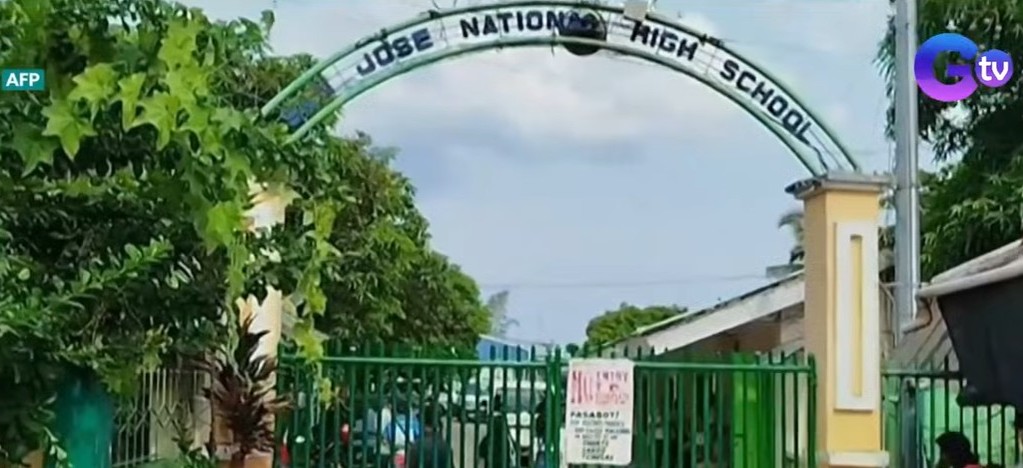
Though minors are generally exempt from criminal liability, minors above 15 years old may be held liable if it is proven that they acted with discernment, lawyers said Tuesday.
“As an exception, minors aged 15 to 18 who commit a crime can be held criminally liable and subject to prosecution if it is established that they acted with discernment,” NUPL President Ephraim Cortez told GMA News Online.
“Meaning, they understand the consequences of their acts, and can distinguish what is morally right and what is morally wrong,” Cortez said.
This came following the tragic school shooting incident inside San Jose National High School in Barangay San Jose, Tacloban City on Monday, which left three individuals dead and 15 others injured.
“In the Tacloban case, they intentionally brought the firearms inside the school. They conspired, and it was obviously planned. These indicate they acted with discernment,” Cortez said.
Under the Juvenile Justice and Welfare Act of 2006, a child 15 years of age or under at the time of the commission of the offense shall be exempt from criminal liability. However, the child shall be subject to an intervention program.
A child above 15 but below 18 years old shall also be exempt from criminal liability and subjected to an intervention program, unless he or she acted with discernment.
The law states that the child shall then be subjected to the appropriate proceedings in accordance with the act.
Discernment
In February 2024, the Supreme Court (SC) issued guidelines to determine discernment in crimes involving children in conflict with the law.
The SC set the following guidelines:
- Discernment is the capacity of the child at the time of the commission of the offense to understand the difference between right and wrong and the consequences of the wrongful act;
- The task of ascertaining discernment is done preliminarily by a social worker, and finally by the court. The determination shall take into account the ability of a child to understand the moral and psychological components of criminal responsibility and the consequences of the wrongful act; and whether a child can be held responsible for essentially antisocial behavior. The social worker’s assessment is merely evidentiary and is not binding upon the court. Ultimately, the court finally determines discernment, based on its own appreciation of all the facts and circumstances in each;
- There is no presumption that a minor acts with discernment. The prosecution must specifically prove as a separate circumstance that the alleged crime was committed with discernment;
- For a minor at such an age to be criminally liable, the prosecution is burdened to prove beyond reasonable doubt, by direct or circumstantial evidence, that he or she acted with discernment;
- In determining discernment, courts shall consider the totality of facts and circumstances in each case, such as: (i) the very appearance, the very attitude, the very comportment and behavior of said minor, not only before and during the commission of the act, but also after and even during trial, (ii) the gruesome nature of the crime, (iii) the minor’s cunning and shrewdness, (iv) the utterances of the minor, (v) the minor’s overt acts before, during and after the commission of the crime, (vi) the nature of the weapon used, (vii) the minor’s attempt to silence a witness, and (viii) the disposal of evidence or hiding of the corpus delicti.
Section 38 of the Juvenile Justice and Welfare Act states that once the minor who is under 18 at the time of the offense is found guilty, a trial court shall determine and ascertain any civil liability which may have resulted from the offense committed.
Meanwhile, instead of pronouncing a judgment of conviction, the law states that the court shall place the minor under a suspended sentence.
The act also added that that suspension of sentence shall still be applied even if the juvenile is already 18 or more at the time of the pronouncement of his/her guilt.
Meanwhile, Section 39 states that a court may dismiss a case against a minor whose sentence was suspended upon the recommendation of the social worker.
However, if the court finds that the measures imposed upon the minor was not fulfilled or if the minor failed to comply with the conditions of his rehabilitation program, the minor will be brought to court for the execution of judgment.
“If said child in conflict with the law has reached eighteen (18) years of age while under suspended sentence, the court shall determine whether to discharge the child in accordance with this Act, to order execution of sentence, or to extend the suspended sentence for a certain specified period or until the child reaches the maximum age of twenty-one (21) years,” the law read.
Intervention
In an interview on Balitanghali, Juvenile Justice and Welfare Council (JWCC) Executive Director Tricia Clare Oco stressed that though the minors in conflict with the law must accountability, they must also undergo rehabilitation.
“Dapat meron ding masusing intervention sa kanila kasi hindi ito laban ng parusa vs. rehabilitation dahil parehong mahalaga ‘yun,” she said.
(There should also be thorough intervention for them because this is not a matter of punishment versus rehabilitation, since both are important.)
“Dapat may accountability sila pero dapat nare-rehabilitate din ‘yung mga bata at siyempre, dapat nasusuportahan ‘yung mga pamilya na naapektuhan nito lalo na ‘yung mga biktima na nawalan o nasaktan doon sa pangyayari,” she added.
(There should be accountability, but the children should also be rehabilitated. And of course, the families affected by this should be supported, especially the victims who lost loved ones or were harmed in the incident.)
She said that in cases such as murder, minors may be brought to Bahay Pag-Asa, a 24-hour child-caring institution, where they will stay for at least a year.
“Pwede pang humaba ‘yan. Io-order ‘yan ng judge na mag-undergo siya ng extensive program, ‘yung structured talaga na strict actually ‘yun na form para sa kaniyang rehabilitation,” she said.
(It can be extended further. The judge may order the child to undergo an extensive program, a structured and actually strict form of rehabilitation.)
Oco said minors whose rehabilitations are not successful may be detained once they become 18 years old.
She also said that the JWCC is not in favor of lowering the age of criminal responsibility. She said that authorities must look into why such an incident happened.
“It doesn’t follow na ‘pag pinababa mo eh hindi na siya gagawin ng mga bata. In fact, ‘pag tiningnan mo sa ibang jurisdiction, halimbawa sa US na mas strict ‘yung laws nila doon, mataas pa rin ang incidents ng school shooting,” she said.
(It doesn’t follow that lowering it will stop children from doing it. In fact, if you look at other jurisdictions, such as the US where the laws are stricter, incidents of school shootings are still high.)
“So tingnan natin ‘yung talaga, ano ba ‘yung cause or drivers nong violence bakit ito ginagawa ng bata dahil usually, hindi lang ‘yan iisang rason,” she added.
(So let us really look at what the causes or drivers of the violence are and why children do this, because usually there is not just one reason.)
Liability of parents
Meanwhile, Cortez said that parents cannot be held criminally liable, even if their son or daughter acted with discernment.
“But they will be held civilly liable for any damages their son/daughter inflicted on others resulting from the crime committed by the youth offenders,” Cortez said.
According to Cortez, a court will issue an order regarding the civil liability.
“Once na file ang criminal case, ung civil case arising from the crime is deemed filed, and the parents can be the one ordered to pay the civil liability,” Cortez said.
(Once the criminal case is filed, the civil case arising from the crime is deemed filed as well, and the parents may be ordered to pay the civil liability.) — RSJ, GMA News

