

 GMA Brandtalk
 Tracking
 Archives

SC: GSIS exceeded authority on survivorship benefits for secondary beneficiaries
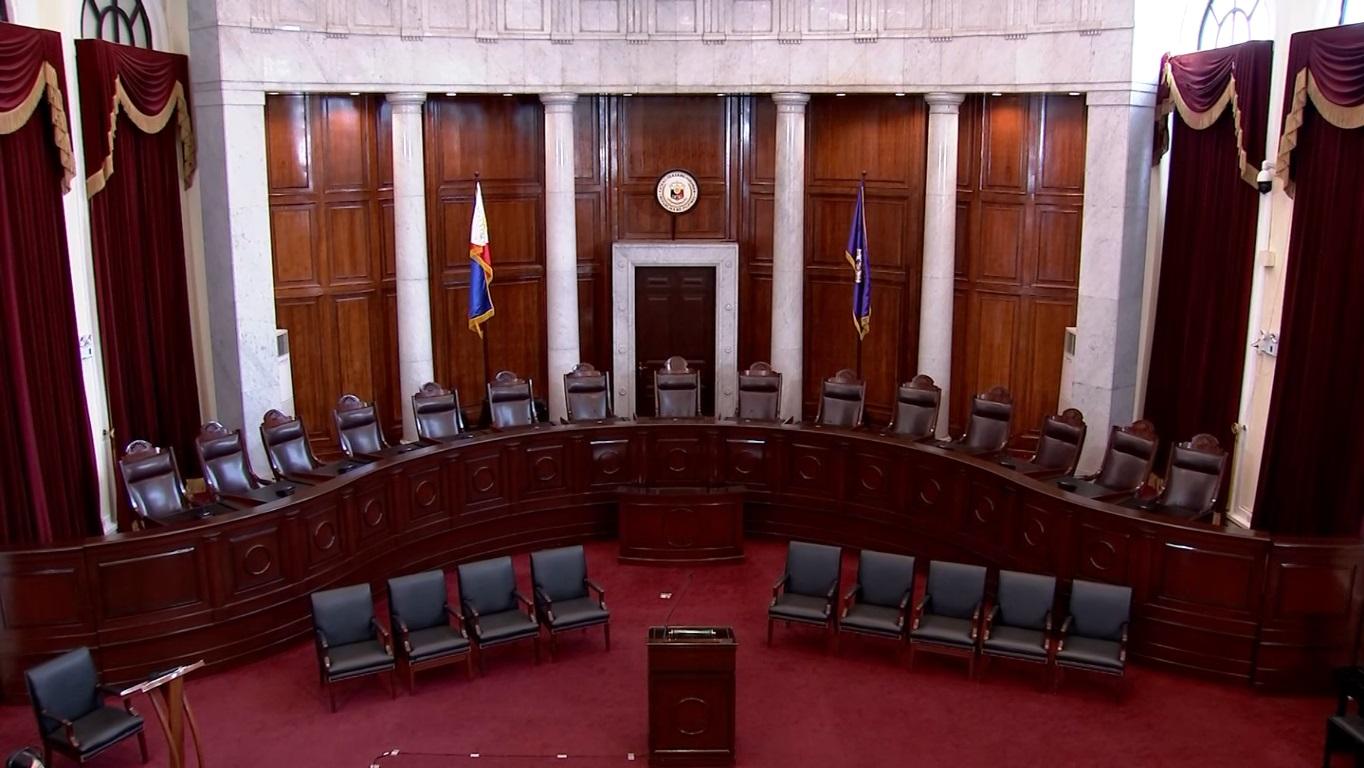
The Government Service Insurance System (GSIS) exceeded its authority when it issued a rule excluding secondary beneficiaries from receiving survivorship benefits for members with at least three but less than 15 years of service, the Supreme Court has ruled.
In a 17-page decision, the Supreme Court’s Third Division declared Section 24.2.2 of the Implementing Rules and Regulations of Republic Act No. 8291, or the Government Service Insurance Act of 1997, as ultra vires or beyond the authority granted by law.
The provision said secondary beneficiaries could only get survivorship benefits if the deceased GSIS member had worked in government for at least 15 years.
The High Court enjoined the GSIS from implementing the rule, saying it conflicts with Section 21(c) of the GSIS Act.
“Thus, rules promulgated by an administrative agency must always be consistent with the law they intend to carry out,” the SC said.
“A regulation that modifies an existing law by abridging, impairing, or enlarging its terms, or by imposing additional requirements not contemplated by the statute, is void not only for being ultra vires but also for being unreasonable, and must be struck down by the courts,” it added.
The case stemmed from a petition for survivorship benefits filed by the father of a deceased public school teacher who had served in government for 13 years and paid GSIS premiums for 12 years.
The teacher died single and without children.
GSIS denied the application based on Section 24.2 of its IRR. The Court of Appeals of the Philippines upheld the denial, prompting the petitioner to elevate the case to the Supreme Court.
The High Court ruled in favor of the petitioner.
According to the Court, under the GSIS Act, a secondary beneficiary is entitled to survivorship benefits if there is no primary beneficiary, the dependency requirements are met, the member was in government service at the time of death, and had rendered at least three years of service.
GSIS argued that limiting the benefit to cases where the deceased had rendered at least 15 years of service was meant to “equalize” the treatment of beneficiaries with those of members qualified for monthly pensions.
But the SC said that while GSIS’ intention may have been noble, it cannot override or impair the law.
The Court added that the law already distinguishes benefits based on a member’s years of service.
It noted that beneficiaries of members who served at least 15 years are entitled to a survivorship pension, while those whose deceased relatives served at least three but less than 15 years are entitled to a cash payment equivalent to 100% of the member’s average monthly compensation for every year of service for which contributions were paid.
The decision, penned by Associate Justice Henri Jean Paul Inting, was promulgated in February 2026 and made public in June 2026.—MCG, GMA News

