

 GMA Brandtalk
 Tracking
 Archives

PH, New Zealand elevate bilateral relations to Comprehensive Partnership
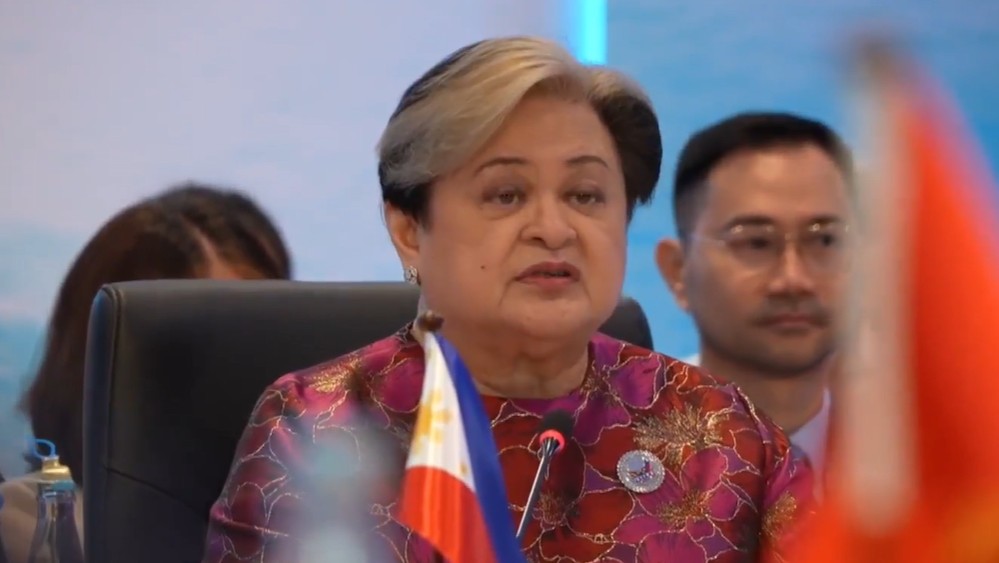
The Philippines and New Zealand have formally elevated their bilateral relations to a Comprehensive Partnership, expanding cooperation into new areas.
The formalization of the Comprehensive Partnership was announced during a meeting between Philippine Foreign Affairs Secretary Ma. Theresa Lazaro and New Zealand Foreign Affairs Minister Winston Peters on Tuesday.
In a statement, the Department of Foreign Affairs (DFA) said the two officials declared the Comprehensive Partnership as a "new chapter" in Philippine-New Zealand relations.
"One that is reliable, built on trust and a shared commitment to the rules-based order governed by international law, and focused on delivering tangible benefits for both nations, the Indo-Pacific region, and the world," DFA said.
The ministers tasked officials to develop a Plan of Action for the succeeding years to fully harness the benefits of a forward-looking Comprehensive Partnership.
They also acknowledged the accomplishments outlined in the Roadmap to Comprehensive Partnership, which has guided bilateral engagements over the past two years.
On defense and security, both nations welcomed enhancements in military cooperation, including joint exercises, training, and the Status of Visiting Forces Agreement signed by the two countries' defense ministers in April 2025.
On trade and economic relations, the ministers underscored the significant potential in trade and economic ties, which is reflected in the goal set by Leaders to increase two-way trade by 50 percent by 2030, and noted we are making good progress.
They also welcomed the launch of preparatory discussions with the Philippines on accession to the Comprehensive and Progressive Agreement for Trans-Pacific Partnership (CTPP).
The two officials said they look forward to continuing regular high-level visits following the biennial Foreign Ministry Consultations (FMC) at the vice-ministerial level and the inaugural Maritime Dialogue, both held in 2025.
They also commit to strengthening people-to-people links, including through resource cooperation, cultural exchanges and air connectivity.
This came after the two officials recognized the contribution of Filipinos in New Zealand, which is the eighth largest ethnic community in the country.
They welcomed the signing of a Memorandum of Cooperation in the Field of Education and the Arrangement on the Mutual Recognition of Seafarers, as well as the renewal of the Geothermal Energy Cooperation Arrangement, which are both long-standing features of the bilateral relationship.
Both the ministers recognized New Zealand's bilateral development contribution to the Philippines, which focus on climate and economic resilience, knowledge and skills, and peace, security and preventing violent extremism.
ASEAN matters
In relation to the Association of Southeast Asian Nations (ASEAN) , the ministers recognized New Zealand's support to the economic bloc, including initiatives on funding the ASEAN Centre for Biodiversity and increase in tertiary scholarships under the Manaaki New Zealand Scholarship Programme.
The ministers called for partnerships between ASEAN and the Pacific Islands Forum, as they reaffirmed the importance of cooperation in the ASEAN context.
They also reaffirmed their commitment to dialogue and diplomacy, and peaceful settlement of disputes, in accordance with international law, as they exchange views on the need to maintain peace and stability in the Indo-Pacific including the South China Sea.
On July 20, a Philippine Navy sailor suffered a head injury after he was allegedly struck with a baton by a China Coast Guard personnel during an incident at Ayungin Shoal.
The CCG, however, claimed that it was the Philippine side that initiated the confrontation.
In response, PCG spokesperson for the West Philippine Sea Rear Admiral Jay Tarriela said the CCG has no legal basis to conduct maritime law enforcement within the Philippines' exclusive economic zone (EEZ).
For its part, the Chinese Embassy in Manila maintained that Beijing has sovereign rights over the contested waters.
In 2016, an international arbitral tribunal in The Hague ruled in favor of the Philippines, declaring that China's sweeping claims in the South China Sea had "no legal basis." China has rejected the ruling. —Mariel Celine Serquiña/RF, GMA News

