

 GMA Brandtalk
 Tracking
 Archives

DA pushes for P250-billion budget in 2027
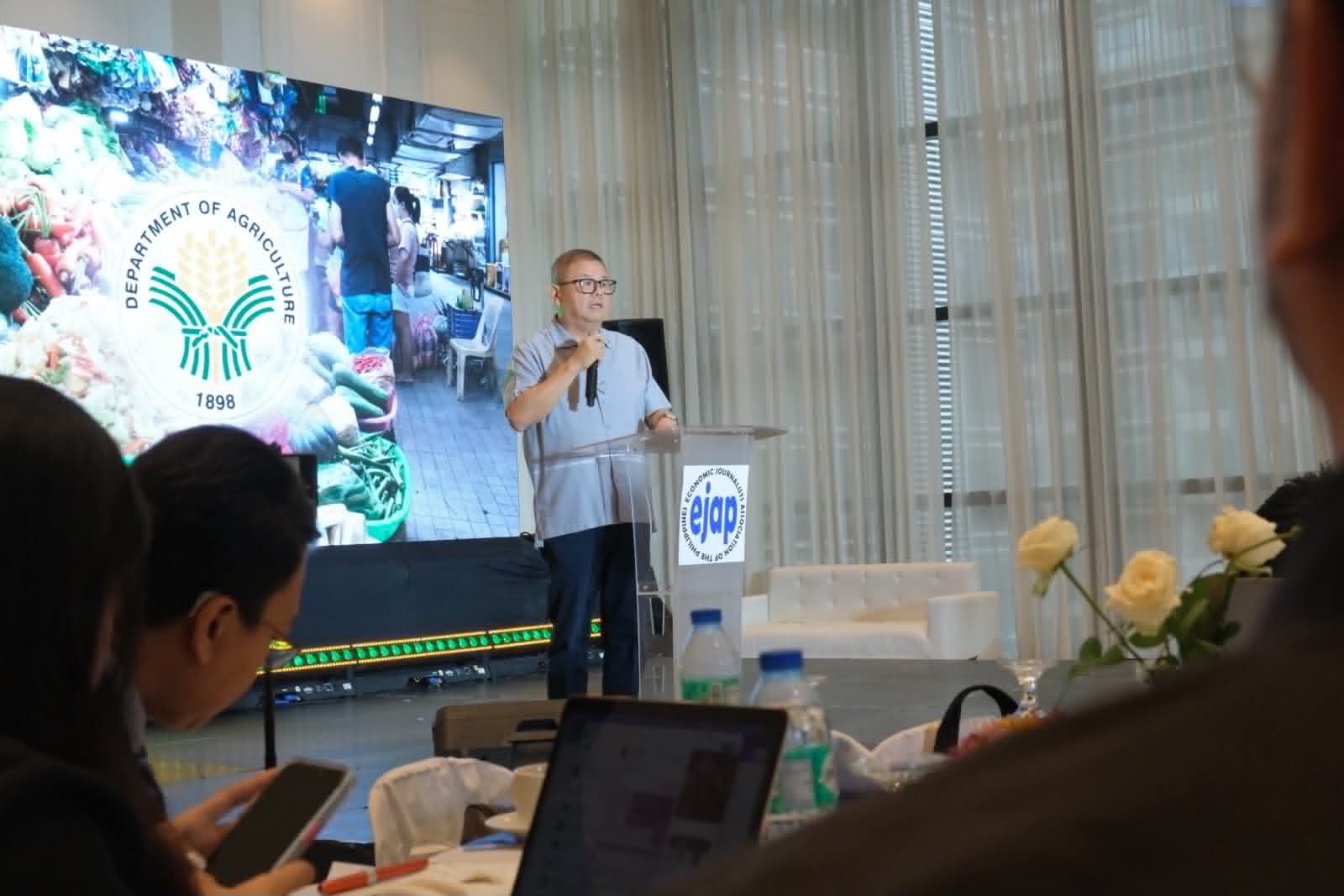
The Department of Agriculture (DA) is seeking a P250-billion budget for 2027, with Agriculture Secretary Francisco Tiu Laurel Jr. emphasizing that sustained investments in the farm sector are essential to strengthening food security, rural prosperity, and economic resilience.
Speaking at the Economic Journalists Association of the Philippines (EJAP) Food Security Forum in Makati City on Thursday, Tiu Laurel noted that agriculture's contribution to the economy has steadily declined, from 19% of gross domestic product (GDP) in 2005 to just 7.9% two decades later.
While part of the decline reflects the rapid expansion of the industry and services sectors, Tiu Laurel said it also stemmed from years of treating agriculture as "yesterday's industry instead of tomorrow's insurance policy."
He said that mindset is now changing, with the proposed DA budget rising to P250 billion in 2027 from P215 billion in 2026.
The department's budget has also nearly doubled from about P117 billion in 2022.
"Investment is where reform begins... It buys tractors instead of excuses, it builds irrigation instead of promises," Tiu Laurel said.
He said next year's funding will support farm mechanization, irrigation, research laboratories, hatcheries, cold-chain facilities, digital infrastructure, and post-harvest systems designed to boost productivity while reducing losses and lowering food costs.
Tiu Laurel added that the expanded Rice Competitiveness Enhancement Fund, which receives P30 billion annually, will continue to finance farm machinery, certified seeds, solar-powered irrigation, cash assistance, production inputs, and affordable credit.
The Marcos administration also increased funding for the Philippine Crop Insurance Corp. by P2 billion this year and may approve an additional allocation in 2027 to extend coverage to more farmers and fisherfolk.
Meanwhile, the Animal Industry Development and Competitiveness Act allocates P20 billion annually to rebuild the livestock sector, particularly the hog industry, which was devastated by African swine fever.
"Agriculture has never been an industry for the impatient," Tiu Laurel said.
"Rice does not grow on news cycles. Corn does not respond to hashtags. Irrigation canals are not built overnight," he added.
Tiu Laurel said these investments are beginning to yield results, with agriculture and fisheries growing by 2.6% in 2025—their fastest expansion in eight years—while gross value added increased by 3.1% despite erratic weather and lingering animal diseases.
"Consumers also benefited as rice prices eased, food inflation moderated, sugar prices declined, and vegetable prices became more stable, aided by calibrated imports, expanded Kadiwa stores, stronger National Food Authority buffer stocks, and sustained production support," he said.
However, Tiu Laurel acknowledged that the sector's transformation is far from complete, noting that nearly half of the country's irrigable land remains without irrigation, logistics costs are still high, research requires greater funding, and climate change continues to threaten harvests.
He said future investments will focus on expanding mechanization, irrigation, mega food hubs, agriports, fish hatcheries, and digital technologies, including artificial intelligence and satellite-based monitoring, to improve decision-making from farm planning to disaster response.
"Progress should not be measured by whether every problem has disappeared," Tiu Laurel said, adding that "it should be measured by whether we are finally investing in solutions equal to the challenge."
The DA chief said sustained investment is essential not only to raise farmers' and fishers' incomes but also to secure the country's food supply for generations to come. —VBL, GMA News

