

 GMA Brandtalk
 Tracking
 Archives

EXPLAINER: Stonehill v. Diokno: When the Supreme Court excluded illegally obtained evidence
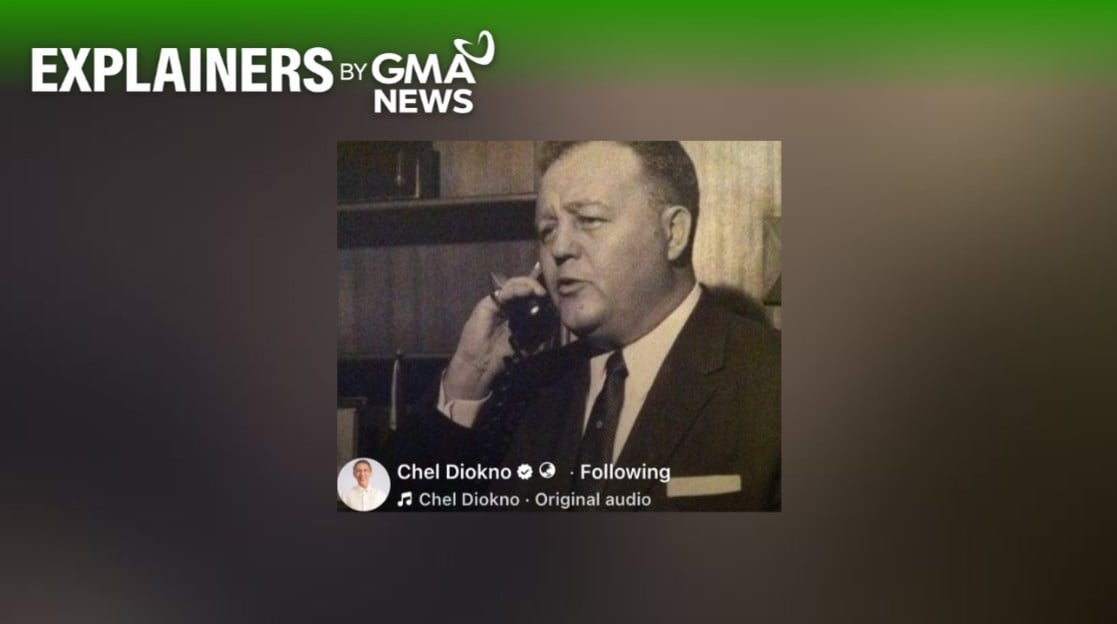
In 1967, a case concerning American businessman Harry Stonehill reached the Supreme Court (SC), leading the court to overturn an earlier ruling that allowed the admission of evidence obtained through unlawful searches.
What happened?
According to the SC ruling, Stonehill and his associates were accused of violating Central Bank Laws, Tariff and Customs Laws, the Internal Revenue Code, and the Revised Penal Code.
The government, under then Justice Secretary Jose Diokno, applied for 42 search warrants against Stonehill, Robert Brooks, John Brooks, and Karl Beck— who were also facing deportation cases at the time.
The warrant directed law enforcement authorities to search the offices, warehouses, and/or residences of Stonehill and the others and to seize and take possession of “books of accounts, financial records, vouchers, correspondence, receipts, ledgers, journals, portfolios, credit journals, typewriters, and other documents and/or papers showing all business transactions.”
However, in their petition before the SC, Stonehill argued that the warrants were null and void as they do not describe with particularity the documents to be seized; the warrants were issued to fish for evidence in their deportation case; and the searches were made illegally, among others.
They also argued that the search warrants are “general warrants.”
In its ruling, the SC stressed that a warrant must be issued upon probable cause and that the warrant shall particularly describe the things to be seized.
The SC said the warrants complied with none of the requirements.
“[N]o specific offense had been alleged in said applications. The averments thereof with respect to the offense committed were abstract. As a consequence, it was impossible for the judges who issued the warrants to have found the existence of probable cause,” it said.
The Court also said that the applications “do not allege any specific acts performed by herein petitioners.”
It said that upholding the warrants “would be to wipe out completely one of the most fundamental rights guaranteed in our Constitution.”
Exclusionary Rule
The respondent government officials argued that under Moncado vs. People’s Court, even though searches and seizures were found unconstitutional, the evidence seized from them was still admissible.
The SC, however, said that it is of the unanimous opinion that the position taken in Moncado should be abandoned.
“We hold, therefore, that the doctrine adopted in the Moncado case must be, as it is hereby, abandoned,” the SC said.
According to the Court, most common law jurisdictions have adopted the exclusionary rule, “realizing that this is the only practical means of enforcing the constitutional injunction against unreasonable searches and seizures.”
The exclusionary rule prohibits or excludes unlawfully acquired evidence.
“Indeed, the non-exclusionary rule is contrary, not only to the letter, but also to the spirit of the constitutional injunction against unreasonable searches and seizures,” the SC said.
'Fruit of the poisonous tree'
Where, then, did the phrase the “fruit of the poisonous tree” come from?
According to the SC in Alicando, the phrase was coined in Nardone v. United States (US), a US Supreme Court ruling in 1939.
The rule states that once the source or “tree” is shown to have been unlawfully obtained, any secondary or derivative evidence “the fruit” derived from it is also inadmissible.
The SC said that the rule is based on the principle that evidence illegally obtained should not be used to gain other evidence because the originally illegally obtained evidence taints all evidence subsequently obtained.
According to the SC, it applied the rule in the case of People vs. Salanga.
“Salanga was the appellant in the rape and killing of a 15-year-old barrio lass. He was, however, illegally arrested. Soldiers took him into custody,” it said.
“They gave him a body search which yielded a lady's underwear. The underwear was later identified as that of the victim. We acquitted Salanga. Among other reasons, we ruled that ‘the underwear allegedly taken from the appellant is inadmissible in evidence, being a so-called fruit of the poisonous tree,” it added.
The scandal
Akbayan Representative Chel Diokno, the son of then-Justice Secretary Diokno, said that the Stonehill case was one of the largest corruption scandals in the country.
“Si Harry Stonehill ay isang American businessman na nagtayo ng malaking business empire sa bansa. Kalaunan, inimbestigahan siya dahil sa mga alegasyon ng bribery, tax evasion, at corruption,” Diokno said in a Facebook post.
(Harry Stonehill was an American businessman who built a large business empire in the country. He was later investigated over allegations of bribery, tax evasion, and corruption.)
He said that through the raid, authorities obtained a “blue book” that contained the names and records of high government officials who allegedly accepted bribes from Stonehill.
After his father lost the case, Diokno said Stonehill was deported.
“Kinilala ng ilang historian ang Stonehill case bilang isa sa pinakamalalaking cover-up sa kasaysayan ng bansa. Isang pagkakataon sana para lumabas ang buong katotohanan, pero nauwi sa pagtatakip at pag-iwas sa accountability,” he said.
(Some historians recognized the Stonehill case as one of the biggest cover-ups in the country’s history. It was supposed to be an opportunity for the whole truth to come out, but it instead ended in a cover-up and an evasion of accountability.) –NB, GMA News

