

 GMA Brandtalk
 Tracking
 Archives

Biz groups see 'hits and misses' in Marcos' SONA 2026
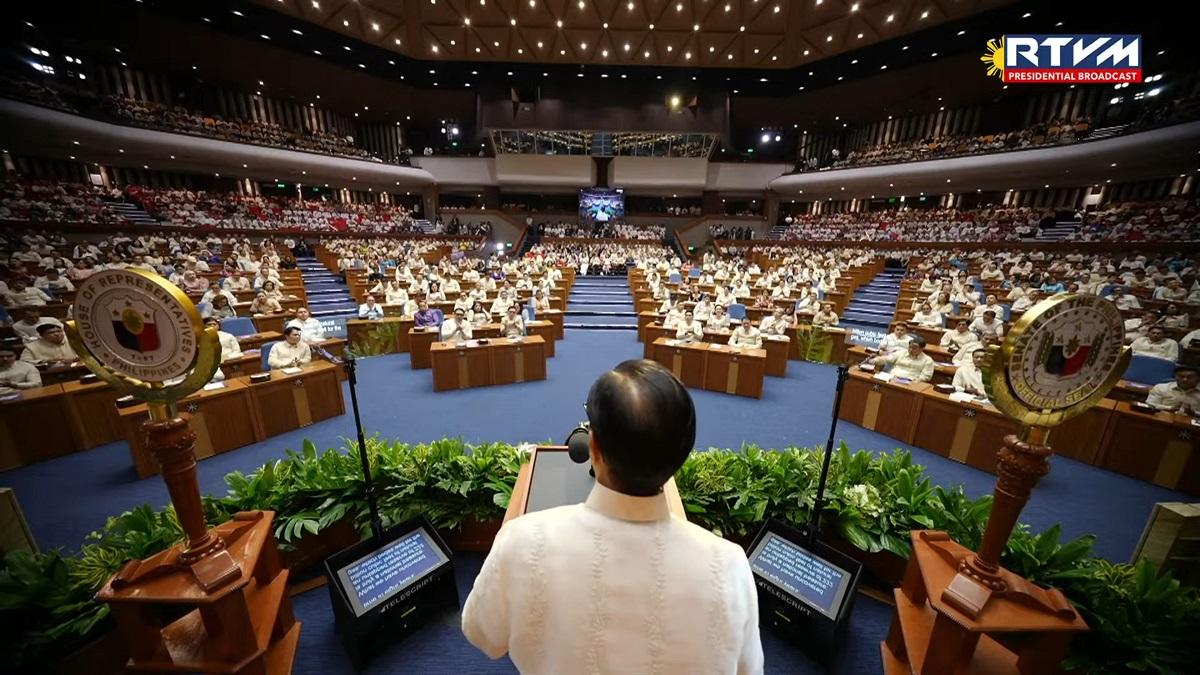
Business groups on Tuesday gave President Ferdinand “Bongbong” Marcos Jr.’s fifth State of the Nation Address (SONA) generally positive reviews, but stressed that effective implementation, policy consistency, and deeper structural reforms are needed to sustain economic growth.
In separate statements, local and foreign business groups in the Philippines welcomed the President’s focus on investment competitiveness, job creation, energy security, and infrastructure, but urged the administration to translate these commitments into concrete policies with measurable results.
According to the Makati Business Club (MBC), Marcos’ penultimate SONA had both “hits and misses,” as it welcomed commitments on accountability, workforce development, agriculture, energy security, and ease of doing business.
The group, however, said several reforms remain unaddressed, including concerns over Pax Silica and the Luzon Economic Corridor, structural safeguards following audit suspensions, the institutionalization of bicameral conference transparency, and the limit on unprogrammed or discretionary funds.
“President Marcos Jr. set a crucial tone of accountability at the outset of his address after a year of investigations into flood control and calls for governance reform. We also laud his reaffirmation of national sovereignty through international law and support the administration’s focus on workforce readiness, agricultural development, ease of doing business, and energy security,” MBC Executive Director Julia Abad said.
“However, turning these commitments into sustained economic growth requires further reforms with a view to sustained, long-term implementation. We urge the administration to advance key policies, including the Right to Information Act, institutionalization of bicameral budget transparency and limits to unprogrammed discretionary funds, structural BIR audit safeguards, and bank secrecy reforms, to build strong foundations for effective governance, strengthen investor confidence and ensure long-term competitiveness,” she added.
The Management Association of the Philippines (MAP) also cited Marcos’ “strong emphasis” on governance reforms and the economy, welcoming priorities such as job creation, food security, affordable energy, healthcare, and support for micro, small, and medium enterprises (MSMEs).
“The challenge now is execution. Businesses are looking for clear implementation timelines, policy consistency, and close collaboration between government and the private sector,” it said in a separate statement.
“We hope Congress will quickly translate these priorities into legislation where needed, while the Executive ensures that programs are implemented efficiently and their benefits are felt by ordinary Filipinos,” it added.
Among Marcos’ calls on Congress were to amend the Electric Power Industry Reform Act (EPIRA) to put a stop to system loss charges, including an accompanying value-added tax (VAT) from being passed on to consumers.
He also urged Congress to expand the annual income tax exemption threshold to increase the take-home pay of the Filipino middle class, in a bid to ease their burden amid the rising cost of living.
“The SONA leaned more toward immediate socioeconomic concerns, which reflects the realities many Filipinos face today,” the MAP said.
“Moving forward, we hope this is complemented by a stronger emphasis on long-term economic reforms that improve the investment climate, strengthen MSMEs, accelerate infrastructure and digital transformation, and make the Philippines more competitive globally,” it added.
This was echoed by the American Chamber of Commerce of the Philippines (AmCham), which welcomed Marcos’ call for EPIRA amendments and continued investments in energy and infrastructure, but said lasting changes are necessary to boost investments into the country.
“While commending the administration's overall economic agenda, AmCham emphasizes that sustained reforms remain essential to further improve the investment climate. The Chamber called for continued progress on priority measures, including cybersecurity, the Digital Economy, the National Single Window System, and the effective implementation of the Ease of Doing Business Act, CREATE MORE, and the Ease of Paying Taxes Act, alongside continued stakeholder consultations to ensure practical, science-based, and investment-friendly regulations,” it said separately.
“We remain committed to working with the administration, Congress, and our partner government agencies to translate these priorities into concrete policies, effective implementation, and measurable improvements in the Philippine business environment,” it added.
For its part, the European Chamber of Commerce of the Philippines (ECCP) welcomed Marcos’ focus on accountability, energy security, and infrastructure, but noted that the next two years would need steady implementation and predictable rules.
“The President set out a clear direction: a Philippines that is more secure, more self-sufficient, and better prepared for shocks beyond its control,” ECCP President Dr. Diana Edralin said.
“European businesses share that goal and are ready to contribute capital, technology, and expertise. What will make the difference over the next two years is steady implementation, predictable rules, and
continued consultation between the government and the private sector,” she added.
Financial markets were also mixed on Tuesday, with the Philippine Stock Exchange index (PSEi) down 10.87 points or 0.17% to 6,304.03, while the peso appreciated to P61.6:$1 from Monday’s finish of P61.675:$1. — BM, GMA News

