

 GMA Brandtalk
 Tracking
 Archives

Sariling Kuryente Act filed at House after Marcos' push at SONA 2026
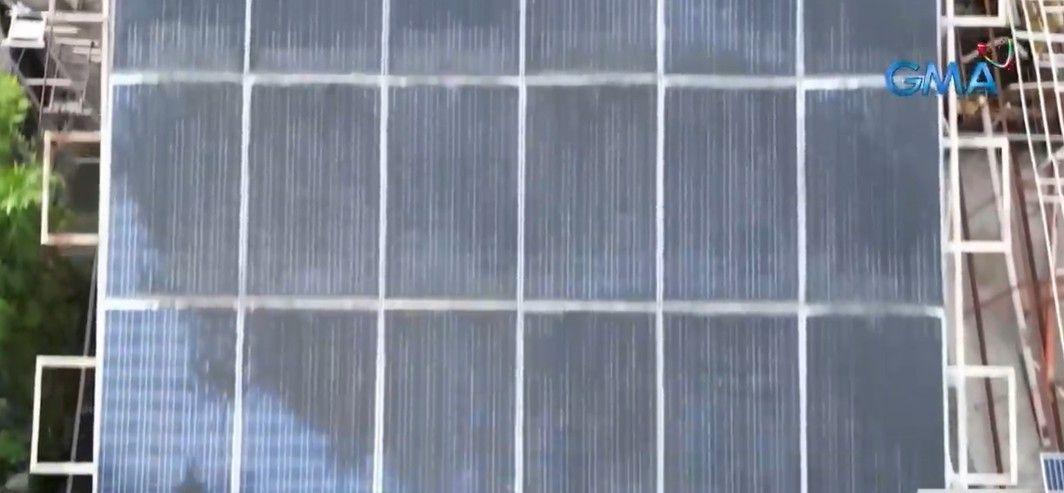
Following the call by President Ferdinand "Bongbong" Marcos Jr. in his fifth State of the Nation Address (SONA), a measure encouraging households to generate their own power by installing home solar panels and battery storage systems has been filed at the House of Representatives.
House Majority Leader Sandro Marcos, and House Speaker Faustino "Bojie" Dy III filed House Bill No. 10431 or the "Sariling Kuryente Act." This would amend the Electric Power Industry Reform Act (EPIRA) of 2001 by distinguishing electricity generated for personal consumption from those produced for commercial sale.
"Kung kaya ng isang pamilya o negosyo na gumawa at mag-store ng sariling kuryente, government should clear the path instead of treating them like a commercial power producer,” the presidential son said in a statement.
(If a family or business can generate and store their own power, government should clear the path instead of treating them like a commercial power producer.)
In his annual report to the country, Marcos said, “Upang maging simple, madali, at abot-kaya ang pagpapakabit ng solar panel at battery storage systems sa kanilang mga bahay, hinihiling ko ang tulong ng Kongreso na maipasa na ang Sariling Kuryente Act,” Marcos said.
(To make the installation of solar panels and battery storage systems in their homes simple, easy, and affordable, I am asking Congress for help to pass the Sariling Kuryente Act.)
The proposed measure emphasizes that operating a behind-the-meter generator or energy storage system purely for personal use does not make an end-user a generation company
Furthermore, distribution utilities cannot demand prior approval, extra technical studies, meter replacements, agreements, or added fees for these qualified non-exporting systems
If a system uses an Energy Regulatory Commission (ERC)-recognized, certified equipment to prevent electricity from feeding back into the distribution grid, it no longer requires prior approval or a certificate of compliance from the ERC.
Furthermore, distribution utilities cannot demand prior approval, extra technical studies, meter replacements, agreements, or added fees for these qualified non-exporting systems, the bill provides.
The owner may only be required to notify the distribution utility that the installation has been completed.
Moreover, homeowners’ associations, property managers, and developers cannot stop residents from installing these systems on their own private property. They can only set reasonable guidelines related to structural safety, public safety, or shared community spaces.
The Department of Energy (DOE) said that it will soon issue a policy similar to the proposed measure by the President.
"With that policy, we want to simplify the requirements, lessen the bureaucracy para mas mabilis siya. So we will be issuing this siguro in a month or so. Pero 'yun po 'yung basic na objective ng Sariling Kuryente Act na people can put it up with less hassle sa permits nila at mabilis ang pag-install," Energy Secretary Sharon Garin said.
(With that policy, we want to simplify the requirements, lessen the bureaucracy so that it will be faster. So we will be issuing this maybe in a month or so. But that is the basic objective of the Sariling Kuryente Act, that people can put it up with less hassle on their permits and quick installation.) —KG, GMA News

