

 GMA Brandtalk
 Tracking
 Archives

'Eere Tayo!': Julius Segovia's book aims to counter fake news, advocates truth-telling
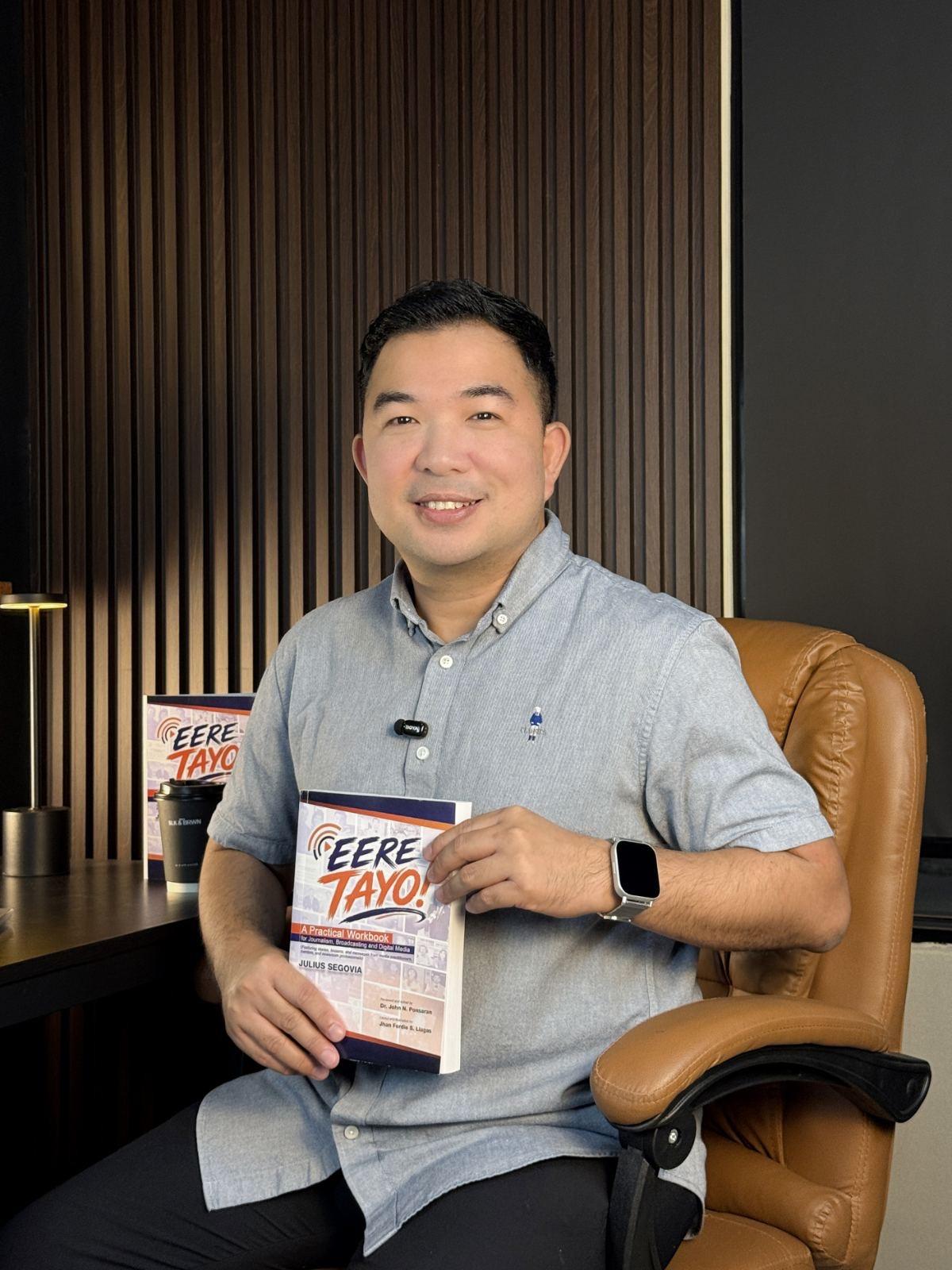
If you happen to be a regular GMA News viewer who watched "24 Oras," "Saksi," and "State of the Nation" in the early 2010s, you are probably familiar with the name Julius Segovia. He delivered consumer and business-related news for these newscasts and became a familiar face on Philippine television.
When Julius left the broadcasting world to pursue another passion—teaching—he devoted himself to journalism education in the academe. He has also actively participated in journalism symposiums across the country, helping enrich the minds of young and aspiring journalists.
Now, carrying more than a decade of experience as a broadcast journalist and journalism professor, Julius has developed a practical workbook titled "Eere Tayo!," a term commonly used in broadcast newsrooms to mean that a story will air.
According to Segovia, the workbook follows an experiential learning approach.
“It’s more than just a compilation of my experiences as a broadcast journalist and educator,” he said, adding that the workbook will allow “students to learn not only by reading but by experiencing how journalism works in the real world.”
At the core of the practical workbook is the goal of empowering “future communicators to think critically, verify information, uphold ethical journalism, and become responsible storytellers in an age where truth matters more than ever.”
How the idea for the workbook began
In my interview with Julius, he said that the idea behind "Eere Tayo!" began more than a decade ago, when he started training campus journalists and school paper advisers who were preparing for journalism competitions across the country.
His years of working with students and teachers made him realize that there were not enough journalism reference materials grounded in the realities of the Philippine media industry and specifically written for Filipino learners.
“Through the years, I noticed the limited availability of reference materials suited for Filipino students and the Philippine media,” Segovia said.
His goal was to create a workbook that both students and teachers could easily understand, something that are more relatable, practical, and conversational.
Being a former campus journalist himself, Segovia said, “Learning from a media practitioner is more than just something to be proud of—it is an opportunity to gain insights grounded in real-world experience.”
Professional journalism vs. 'fake news' and propaganda on social media
Segovia’s practical journalism workbook comes at a time when the noble, and often dangerous, work of legitimate journalists is being questioned and attacked, even by some of the country’s highest officials.
The media landscape is also rapidly changing, while social media platforms continue to be flooded with misinformation, disinformation, and propaganda.
Against this backdrop, the workbook aims to educate and equip future journalists with the skills and courage needed to stand firm and defend the truth.
“Future journalists must learn how to verify facts, think critically, and report responsibly,” Segovia said.
“These are skills best developed through the guidance of experienced practitioners who understand the value of accuracy, fairness, and ethical journalism.”
Segovia is realistic about the changing nature of the profession. The workbook is not intended only for those who want to enter traditional television or radio. Its broader goal is to equip “the next generation of campus journalists, broadcasters, and digital storytellers with the knowledge and practical skills they need to become discerning communicators and responsible defenders of truth.”
He acknowledges that “now more than ever, the fight against fake news begins with well-trained storytellers.”
Although Segovia—fondly called JA by his peers—is no longer a practicing broadcast journalist, "Eere Tayo!" drawn from his more than two decades of experience in the media industry. Its lessons come from real-life experiences, collaborations, challenges, and struggles he encountered during years of news gathering and reporting.
He acknowledges that no journalist or news organization is perfect. But at the heart of legitimate journalism are accountability, accuracy, fairness, and professionalism.
“As someone who has spent more than two decades in the media industry and more than a decade in the academe, I wanted to share not only theories and technical lessons, but also real newsroom experiences, practical industry insights, and valuable lessons learned both from successes and mistakes in the field,” he said.
Another salient feature of "Eere Tayo!" is the participation of respected media practitioners, industry experts, and Segovia’s former and present colleagues. They contributed inspiring messages, practical advice, and insights drawn from their own professional experiences.
Through these contributions, the workbook also becomes a collective effort by experienced media professionals who share a commitment to guiding, mentoring, and inspiring the next generation of journalists, broadcasters, and digital storytellers.
At its heart, 'Eere Tayo!' is about empowering future communicators, said Segovia—"to think critically, verify information, uphold ethical journalism, and become responsible storytellers in an age where truth matters more than ever.” — BM, GMA News

