

 GMA Brandtalk
 Tracking
 Archives

PBEd warns PH education reform pace 'dangerously inadequate'
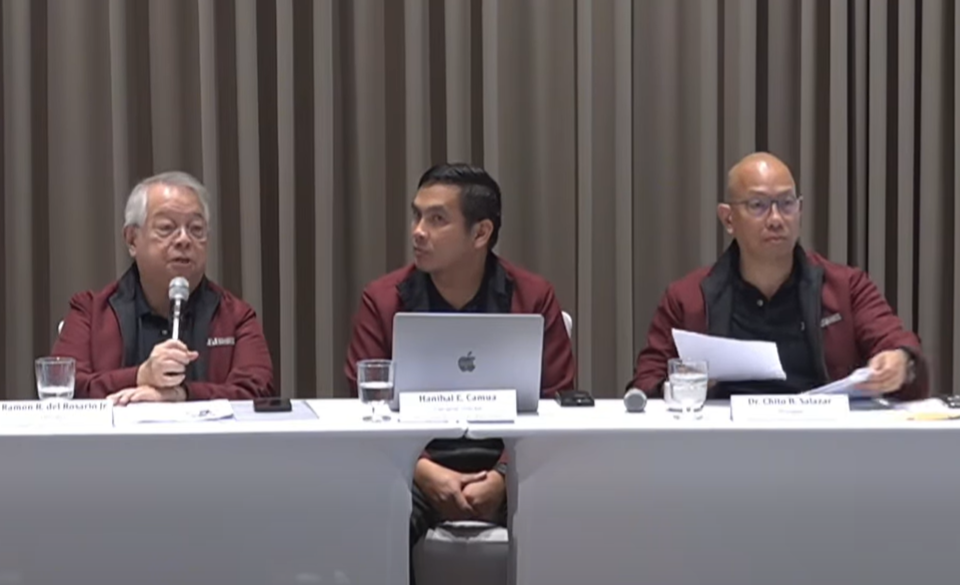
The Philippine Business for Education (PBEd) on Monday warned that while the government has introduced key reforms in the education sector, the pace of implementation remains "dangerously inadequate" to reverse the country's decades-long learning crisis.
During the launch of its 2026 State of Philippine Education Report in Makati City, the business-led education advocacy group acknowledged recent gains, including higher education spending, learning recovery initiatives, curriculum reforms, and efforts to strengthen technical-vocational education.
However, PBEd said these reforms have yet to match the scale and urgency of the country's education challenges, warning that millions of Filipino learners continue to bear the consequences of years of poor learning outcomes.
"Education reform cannot simply be a program that matures five or 10 years from now. A child gets only one First Grade, only one Sixth Grade, and only one chance to graduate from high school prepared for what comes next," PBEd chairman Ramon del Rosario Jr. said.
GMA News Online has reached out to the Department of Education for comment and will update this story once a response is received.
PBEd said the country's education crisis has persisted for decades, with many of today's challenges already identified by the First Congressional Commission on Education (EDCOM I) more than 30 years ago.
These include weak foundational learning, poor teacher quality, classroom shortages, inadequate learning materials, child malnutrition, and the mismatch between education and employment.
"Thirty-five years is long enough to diagnose the crisis. The next chapter must be about execution," Del Rosario said.
The group warned that the impact of poor learning outcomes now extends beyond the classroom and into the economy, with employers struggling to find workers equipped with the skills required in an increasingly technology-driven labor market.
"We cannot be an upper-middle-income economy, compete for high-value investments, or take advantage of artificial intelligence and emerging technologies if millions of Filipinos lack the fundamental skills needed to participate in that future," Del Rosario said.
Among the challenges highlighted in the report are persistent teacher shortages and specialization gaps, inadequate classrooms and learning facilities, poor performance in national and international assessments, child malnutrition, bullying, and limited access to guidance counselors and school-based mental health services.
Despite these challenges, PBEd cited recent government initiatives—including the Academic Recovery and Accessible Learning (ARAL) Program, the strengthened Senior High School curriculum, expanded technical-vocational education pathways, and increased education spending—as important steps toward improving learning outcomes.
Still, the group said reforms must be implemented consistently and sustained beyond changes in political leadership.
"The government must ensure policy continuity and remove long-standing structural bottlenecks through legislation. At the same time, local governments and school leaders must be given greater authority to make decisions closer to learners," PBEd executive director Bal Camua said.
PBEd also urged the private sector to play a bigger role in education by helping shape workforce-relevant curricula, supporting teachers and schools, and strengthening pathways from education to employment.
"The learner comes first—not the institution, not the bureaucracy, and not the political cycle," Del Rosario said.
"Another generation of Filipino children cannot afford to be left behind while the rest of the country moves forward," Camua added. — MCG, GMA News

