

 GMA Brandtalk
 Tracking
 Archives

Truth Commission on EJKs to start hearings on Aug. 14
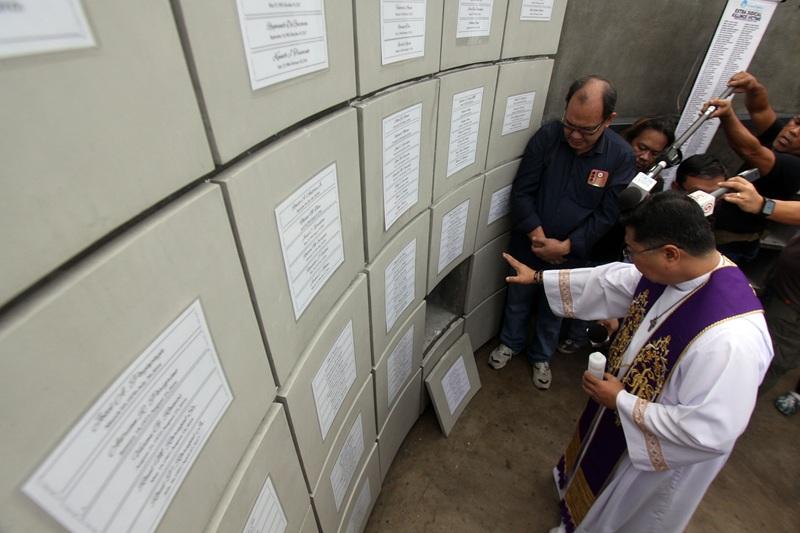
The Truth Commission formed to document alleged extrajudicial killings (EJKs) linked to the Duterte administration's drug war is set to hold its first hearing on Friday, August 14.
"Sisimulan namin ang unang hearing namin by tomorrow, by Friday, at the Pope Pius Center [in Manila]," the commission's chairperson Atty. Raul Pangalangan told Super Radyo dzBB in an interview on Thursday.
(We will start with our first hearing by tomorrow, by Friday, at the Pope Pius Center in Manila.)
Pangalangan is a former International Criminal Court (ICC) judge and former dean of the University of the Philippines College of Law.
He said the five-member commission was created following a call by Kalookan Bishop Pablo Virgilio Cardinal David in November last year.
The commission is separate from the ICC and is not part of the Philippine government. It was organized by the Catholic Church and civil society organizations and has no prosecutorial or judicial powers.
According to Pangalangan, the Truth Commission can hear cases that fall outside the ICC's jurisdiction.
Pangalangan said the commission's primary objective is to hear victims, document their experiences, and consolidate the information into a formal report.
He said the commission can forward evidence and findings to relevant Philippine government agencies, as well as international human rights organizations, for possible action.
The commission is also open to hearing from all sides including government officials and individuals who may want to provide information or their own accounts, he added.
One of the cases to be discussed during the initial proceedings is about Raymart Siapo, a 19-year-old man from Navotas who was killed in 2017 after allegedly being accused of selling marijuana.
Pangalangan said the commission has already conducted an exhumation of Siapo's remains, which were examined by forensic pathologist Dr. Raquel Fortun.
The findings on Siapo's body are expected to be presented during the hearing.
The commission is also gathering information beyond victim testimonies, including government reports, media accounts, and records from organizations assisting victims.
Pangalangan rejected allegations that the commission's purpose is to "demonize" or to cast any party in a bad light.
"I can assure you, demonizing anyone is far from our intentions. In fact, I've said this before in many of my lectures in and out of UP—in the ICC, we don't demonize the defense team. We respect the defense lawyers because, again, the wheels of justice will move forward only if the defense has competent counsel," Pangalangan said in a mix of English and Filipino.
"Pero sa akin, hindi naman demonizing na ilabas 'yung katotohanan. At kung malungkot 'yung katotohanan na ilalahad namin, eh, 'yun ang katotohanan. Alangan namang hindi namin ilabas 'yung nangyari," he added.
(But for me, bringing out the truth is not demonizing. And if the truth we reveal is saddening, well, that's the reality. Obviously, we cannot keep what happened under wraps.)
Salvador Panelo, who served as chief presidential legal counsel of former president Rodrigo Duterte, criticized the initiative as he sees no need for a such a body.
Panelo argued that those responsible for alleged EJKs should instead face formal complaints before prosecutors, where respondents would have the opportunity to present their defenses.
"Propaganda ang mangyayari diyan (That will just present propaganda)," Panelo said in a separate interview Super Radyo dzBB.
"Kasi kung gusto mo talaga mag-demanda, you file it with the prosecutor's office. At 'yung piskal will evaluate kung mayroong prima facie evidence. At kapag mayroon, i-file sa korte para 'yung dalawang panig ay magkaroon ng pagkakataon na magbigay ng kanila-kanilang mga pahayag, akusasyon, at depensa,” he added.
(If you really want to press charges, file it with the prosecutor's office. The fiscal will evaluate if there is prima facie evidence. If there is, file it in court so there are two sides and they will be a chance to give their sides, accusations, and defense.)
Government records show that around 6,200 drug suspects were killed during the Duterte administration, while human rights organizations say that the numbers reach up to 30,000 due to unreported related slays.
Duterte was arrested on March 11, 2025 at the Ninoy Aquino International Airport in Manila after arriving from Hong Kong for alleged crimes against humanity over his war on drugs. He was taken into custody following the issuance of an arrest warrant by the ICC.
Shortly after his arrest, he was transferred to ICC in The Hague where he remains in detention while awaiting trial. — VDV, GMA News

