

 GMA Brandtalk
 Tracking
 Archives

ADVERTISEMENT
Filtered By: Topstories
News
Middle-class activism is back with #MillionPeopleMarch
+
Make this your preferred source to get more updates from this publisher on Google.
It felt more like a rock festival for a cause.
By no means was it your usual rally – filled with disgruntled workers and peasants demanding systemic reform, occasionally leading to clashes with the riot police.
By any measure, the whole “#MillionPeopleMarch” gathering in Luneta Park was your quintessential “middle class” rally. After almost a decade of hibernation, it marked the return of the Filipino middle class to the political fray – carrying the promise of sustained political reform, since historically democratic governments have been more responsive to middle class pressure.
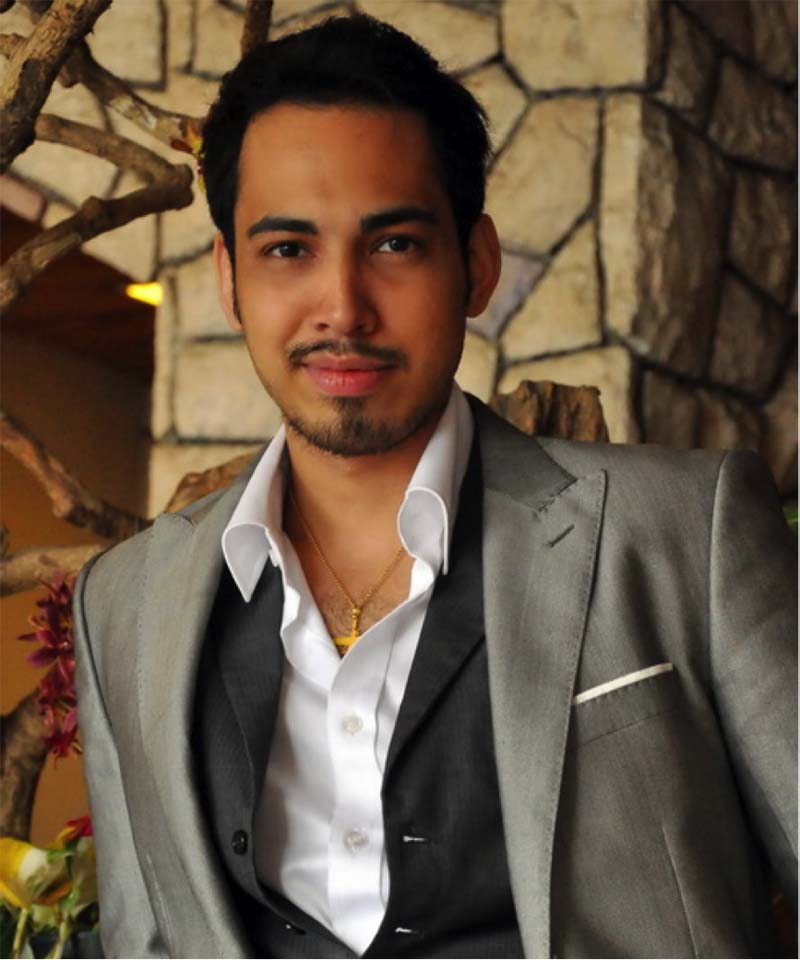
The author, Richard Javad Heydarian
As far as I can recall, the last time the Filipino middle class was so directly and ferociously involved in the political process was during the EDSA II protests against former-President Joseph Estrada in 2001. Once again, it is a corruption scandal that has galvanized scores of youthful, professionals and middle class citizens against our tainted political system.
A global middle-class awakening
Now, placed in a larger global context, the march actually served as a sequel to an ongoing “global awakening,” which has witnessed an increasingly engaged, assertive emerging middle class, especially among rapidly-growing developing countries like the Philippines. Notwithstanding deepening concerning with the lack of inclusive growth, the Philippines is booming, standing as among the most resilient, dynamic economies in the Asia. And this has injected a renewed sense of confidence among an expanding middle class, which has an increasing stake in the proper dispensation of their hard-earned contribution to the state coffers.
Looking at the main grievances and general profile of the participants, and the tempo of the whole event itself, one discovers palpable similarities to recent protests in Turkey (May) and Brazil (June), which saw hundreds of thousands of citizens airing out their frustration with the inability of exisiting democratic institutions to ensure accountability and provide basic welfare, despite a decade of sustained economic growth.
Similar to its Turkish and Brazilian counterparts, the anti-pork march, which gathered up to 100,000 people across the country and beyond, was largely organized through social networking sites, with Facebook and Twitter serving as the main platforms of exchanging views, planning, and information dissemination.
Non-centralized protest
The main actors were the “netizens”, instead of traditional political operators. The loose, murky network of informal organizers was consciously anti-ideological, explicitly disparaging Left/progressive groups and calling for a slogan-free rally. After surveying the whole area, I came to discover that far-left (i.e., the Makabayan bloc) as well as moderate-left (i.e., Akbayan) groups were largely concentrated in the (geographical) margins, while the diverse grouping of middle-class citizens was very much at the center-stage.
Moreover, in the run up to as well as during the rally itself, there were also no visible signs of a central leadership or a steering organization of any sort; political figures were either discouraged from attendance or if ever in attendance they were cautioned against making any parochial speech. There was a constant emphasis on spontaneity and non-hierarchical mobilization, prompting even confusion vis-à-vis the tempo and proceedings of the rally itself.
The ultimate glue, however, that brought tens of thousands of people together was a shared outrage at endemic corruption. It was the strongest show of force by the Filipino middle class in recent memory, and the biggest protest of its kind under the current administration. The sheer size and relative spontaneity of the gathering signaled that Aquino’s historic-high approval-ratings aren’t tantamount to civic passivity and silent grudge by the majority.
What we are seeing across the emerging economies, from Turkey, to Brazil and now the Philippines is clear: As American scholar Francis Fukuyama aptly puts it, the protests are a testament to how in the 21st century “no established democracy should believe it can rest on its laurels, simply because it holds elections and has leaders who do well in opinion polls.” Across the board, what we are witnessing, according to European Philosopher Slavoj Zizek, is primarily a “fluid feeling of unease and discontent that sustains and unites various specific demands.”
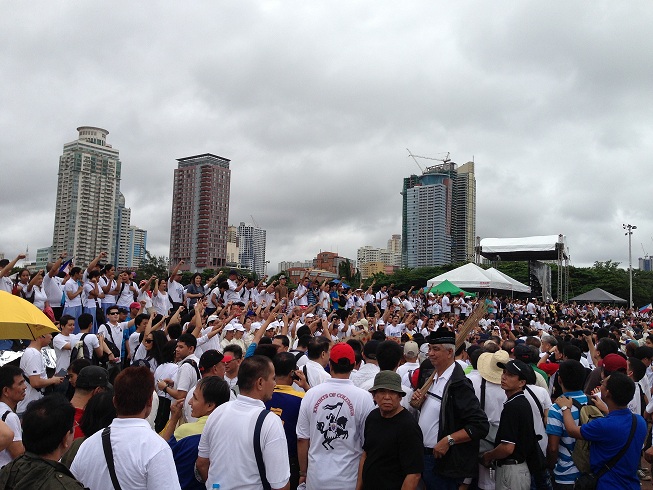
The #MillionPeopleMarch marks the return of middle-class activism after almost a decade of hibernation.
Yet, the “#MillionPeopleMarch” event’s main strengths, namely its spontaneity and savvy optimization of new technology and non-partisan discourse, is also equally its core weakness.
How to sustain the momentum
Initially, I was expecting, perhaps a bit naively, some measure of substantive discourse on how to reform our political system, and ensure that the whole event was not just a reactive, ephemeral venting out of our deep-seated frustrations – just for things to return to business-as-usual as soon as the euphoria of mobilization fizzles out.
I looked forward to deep and engaged discussions on whether we should abolish the pork barrel system.
I prepared for detailed discussions on how to ensure that any alternative fiscal allocation scheme would be shielded from a pervasive culture of corruption. I was expecting some discussions on how we can organize sustained rallies as long as the alleged plunderers are not brought to justice.
In short, I was looking for how we could build a new normal: sustained momentum for mustering constant, programmatic pressure from below for corresponding concrete actions from above, until a measure of accountability is built into our political system.
For this reason, I think the biggest challenge in moving forward is finding ways to establish a fairly stable consensus on a single, overarching leadership, goal, and program of action. Frankly, I am not sure how Facebook and Twitter could provide that.
Nevertheless, the middle class is undoubtedly back, but now is the time to put more flesh to our initial actions.
Richard Javad Heydarian is a lecturer (political science and international relations) at Ateneo de Manila University (ADMU).

