

 GMA Brandtalk
 Tracking
 Archives

OPINION: COP30: What is missing from the conversation
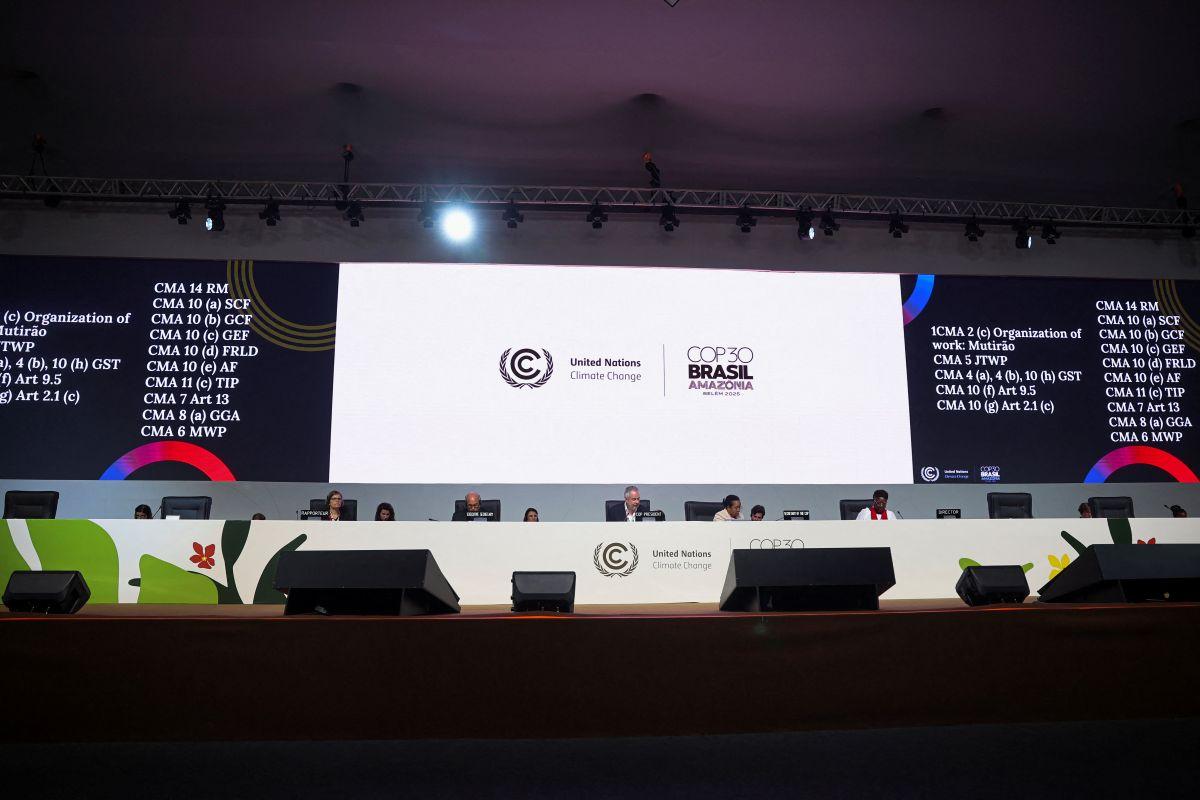
I was in attendance at United Nations COP28 (Conference of Parties) in Dubai when the Philippines secured a board seat on the Loss and Damage Fund. The announcement came through official channels—a concrete win where strategic positioning produced institutional leverage. But between sessions, the contrast was impossible to miss: fossil fuel executives moved through corridors in clusters, laughing over coffee, while our official 200+ person delegation—a huge number, but not in context—didn’t really make much of a presence. Our civil society organizations (CSOs) sprinted between pavilions, ensuring the Philippines had a voice in as many rooms as possible.
The physical architecture of COP itself reinforces these power dynamics. The Blue Zone—reserved for accredited government officials, negotiators, and UN representatives—sits behind security checkpoints where the actual negotiations happen. The Green Zone is open to the public, featuring exhibitions and cultural events, but no access to decision-making rooms. In Dubai, after the first few days, anyone could pay to enter the Green Zone, giving it the feeling of a trade fair. The result: civil society organizations and affected communities are physically separated from the spaces where binding commitments are negotiated. CSOs can organize side events, meet with delegates, advocate loudly—but they cannot sit at the table when text is being drafted. This spatial segregation mirrors the power structure: those most affected by climate change have the least access to the rooms where solutions are being shaped.
It has always been the CSOs filling in the silence at these big, global stages. Although frustrated, I am not surprised that the local news articles I’ve read covering COP have more statements from CSO representatives than the government. When media coverage of COP is dominated by CSO actions and statements, it signals state absence. Because this dynamic has been reinforced over and over again, we continue to lose something essential.
I have stood in plenary halls at climate and biodiversity conferences where frameworks like Kunming-Montreal advanced with binding language written into text. I have also sat through sessions where implementation timelines dissolved into "to be determined at future meetings"—the bureaucratic language that signals nothing will happen.
At one UN Convention on Biological Diversity, I met Carlos Manuel Rodríguez with Ann and Billie Dumaliang from Masungi Georeserve during a coffee break between high-level negotiations. Masungi Georeserve was receiving a special commendation from the UN for sustainable conservation financing and resourcing that same session. Rodríguez was Costa Rica's Environment Minister then—now CEO of the Global Environment Facility. Throughout the conference, we kept seeing him in corridors wearing his ranger attire, tumbler in hand, while suited delegates rushed past to the next session. He always talked to us—not to discuss COP speeches or pledges. He talked about payment for ecosystem services: how Costa Rica doubled its forest cover while making its power sector fully renewable through decades of policy that survived seven different governments. No fanfare. Just consistency that outlasted political cycles.
Before we parted, he told us to never give up in making sure Masungi is protected and that he would be watching over the progress from wherever he ended up.
At COP27, he remembered us immediately as the three small girls fighting for conservation on the ground. He asked, "Do you have good news for me?"
At COP28's Resilience Hub, I watched Hillary Clinton outline climate finance strategies and call for insurance sector reform. Afterward, we rushed to meet and speak with her—close enough to observe how policy language shifts when it moves from prepared remarks to direct exchange. I had only a brief moment to chat and take a photo as she walked toward her next speaking engagement in the Blue Zone.
The contrast was instructive: Rodríguez spoke about implementation that took decades of consistent policy—unglamorous work that survived government transitions. Clinton spoke about finance mobilization strategies—necessary but focused on the machinery of capital allocation rather than the policy coherence required to deploy it effectively. Both perspectives are essential. But the gap between mobilizing finance and ensuring it reaches vulnerable communities through accessible mechanisms remains the persistent failure these conferences have yet to resolve.
As a sustainability leader, I have built programs that operationalize international commitments when financing structures actually hold. I have also documented their collapse when promised funds evaporate into conditional loans or bureaucratic delays that make money inaccessible to those who need it most.
Among many others, these experiences ground my assessment of COP30. The board seat proved that multilateral processes can yield results when negotiators position strategically and coalitions hold. The conversation with Rodríguez demonstrated what rarely surfaces in negotiation halls: implementation requires policy coherence that outlasts election cycles—something no single COP can mandate but without which commitments remain performative. The gap between Clinton's articulated finance mobilization strategies and the disbursement timelines I've tracked shows the persistent distance between capital allocation rhetoric and actual fund accessibility for vulnerable nations.
When fossil fuel lobbyists outnumber Philippine delegates 50 to 1 at COP30, when "fossil fuels" disappear from the final text, when a group of Filipinos pursue landmark litigation against an oil giant while those appointed to negotiate reparations remain silent—these patterns repeat what I've observed across cycles. The question is not whether multilateral processes can produce results. They demonstrably can. The question is whether governments will use their negotiating power to demand transparency on disbursement mechanisms, specify funding sources with explicit budget lines, and publicly connect corporate accountability cases to reparations frameworks.
What now? What's missing isn't ambition or clarity—it's accountability. The voices amplified should be those with the power to enact change. Once announced, the NDCs should specify funding sources, targets, and implementation plans with explicit budget lines distinguishing between immediate emergency response and resilience infrastructure. Access mechanisms must clarify who gets to access those funds and how funds will be monitored. These aren't novel demands.
But COP itself has also fundamentally transformed from a space where governments negotiate climate action into a venue organized around climate investment attraction and public-private partnerships, evidenced by the overwhelming presence of fossil fuel lobbyists and business interests.
In this environment of corporate capture, dissent is theatrical. For vulnerable nations without the resources to outmatch industry presence, if your government isn't actively and audibly advocating for your interests, those interests simply vanish. They don't make headlines. They don't influence the final text. They disappear into the machinery of consensus-building that increasingly favors those with the most money and the loudest voices in the room.
Until that happens, expect the most consequential climate stories to remain untold.
Anna Reyes is the executive director of Sustina.

