

 GMA Brandtalk
 Tracking
 Archives


UN head Guterres cites threat to Ifugao rice terraces in call to end fossil fuels use
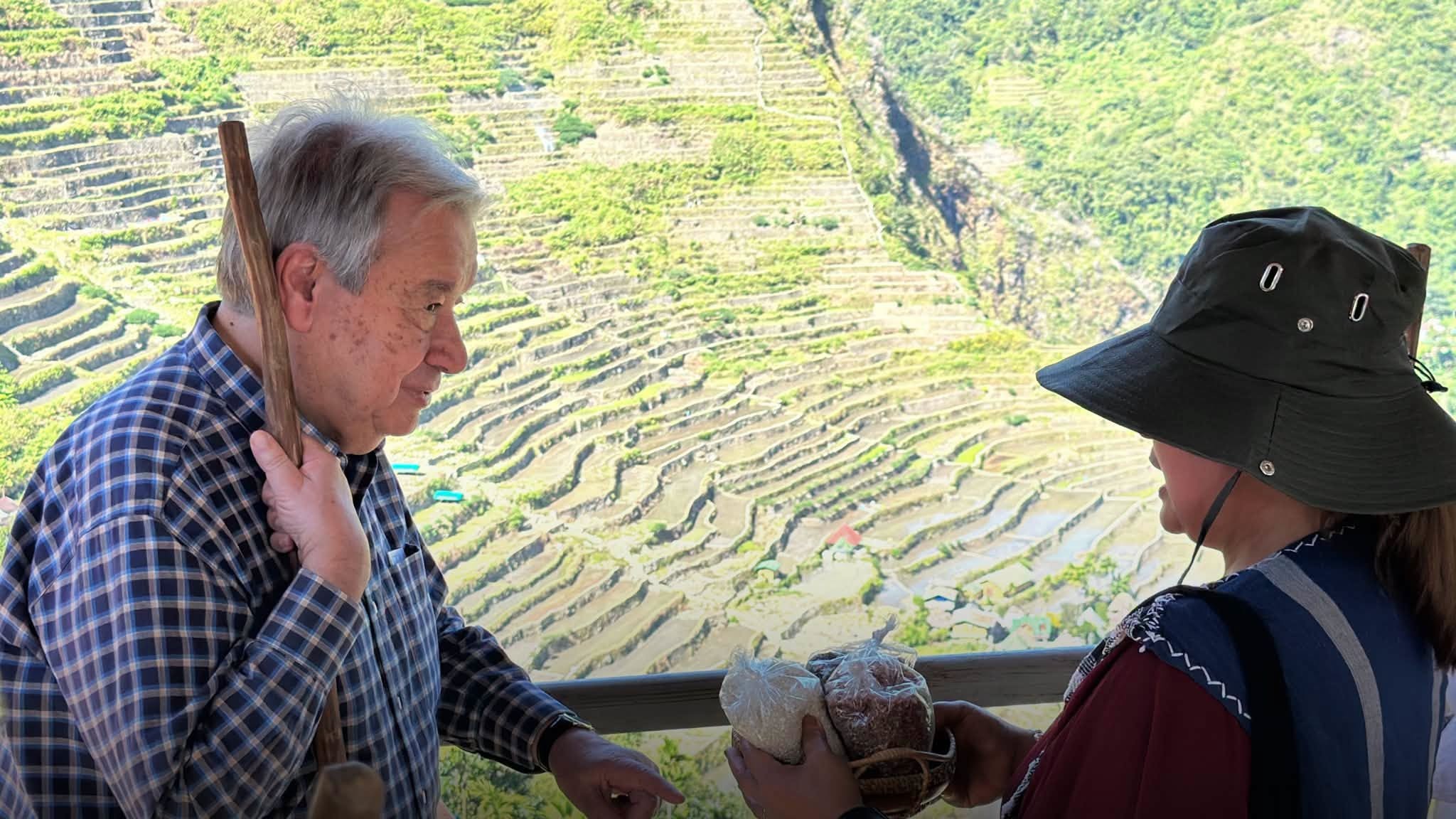
United Nations Secretary-General Antonio Guterres cited the threat posed by climate change to the centuries-old rice terraces in Ifugao Province as as he called for an end to the use of fossil fuels.
In a social media post, Guterres warned that the rice terraces and surrounding local communities are “increasingly under threat” due to the severe effects of climate change.
“Typhoons and landslides have severely damaged the terraces in recent years, while a super-sized El Niño intensifies extreme weather events, bringing prolonged droughts that threaten water supplies, food security and livelihoods,” Gutteres said.
“The only effective response is urgent climate action: ending the addiction to fossil fuels, accelerating the shift to renewables, delivering early warning systems for all, and protecting the most vulnerable,” he added.
The UN head visited Ifugao from November 18 to 19 as part of his post- ASEAN Summit activities in the Philippines.
“When these rice fields were built, my country did not exist yet. It demonstrates the enormous value of the cultures and civilization of this region,” Guterres said in a video posted online.
“Last year, we had landslides in this fantastic site. This year, we are afraid of droughts. Climate change is having a dramatic impact everywhere. But also here in the rice fields of the Philippines,” he added.
Based on the UN website, fossil fuels are by far the largest contributor to global climate change, accounting for around 68 % of global greenhouse gas emissions and nearly 90% of all carbon dioxide emissions.
Guterres explored the iconic Batad Rice Terraces, Bangaan Rice Terraces, Aguian View Deck, and Hapao Rice Terraces, according to the Department of Tourism.
In 1995, the Rice Terraces of the Philippine Cordilleras were inscribed on the UN Educational, Scientific and Cultural Organization (UNESCO) World Heritage List as a living cultural landscape built by the Ifugao people in Ifugao province. —RF, GMA News

