

 GMA Brandtalk
 Tracking
 Archives

A closer look at failed flood control projects in Pampanga, Tarlac, and more
The typhoons and monsoon rains in July and August have recently highlighted the ineffectiveness of flood control projects in some regions of the Philippines, shedding light on alleged corruption in flood control funds.
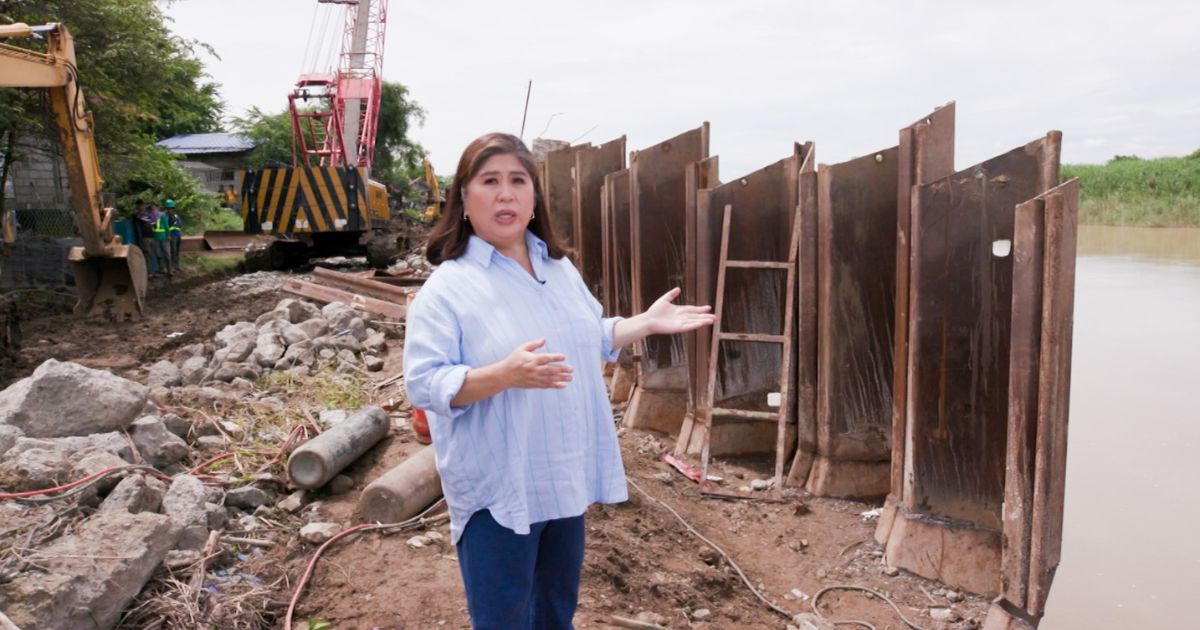
The latest episode of "Kapuso Mo, Jessica Soho," the second part of August 24's story, gave a closer look at some of the failed flood control projects in the Philippines.
Arayat Riverbank Project
The P254 million Arayat Riverbank Project in Pampanga, constructed by Eddmari Construction and Trading, owned by Edgar Sagum, relative of the 4th District Representative of Pampanga, Anna Sagum, collapsed in August 2024, four years after its construction.
According to Structural Engineer Juan Paulo Bersamina, substandard sheet piles were a significant factor in the project's failure.
"Because naka-lean na siya paganon, ibig sabihin nagkaroon ng failure," Bersamina said.
["Because it was already leaning like that, it means there was a failure."]
"It's either because of the soil dahil mukhang saturated din siya. 'Pag saturated kasi ang lupa, mas magiging mabigat, mas malaki 'yung lateral pressure niya na tutulak sa sheet pile," he added.
["It might be because of the soil, since it also looks saturated. When the soil is saturated, it becomes heavier and its lateral pressure pushing against the sheet pile increases."]
Bersamina also said that the sheet piles, which are thick steel sheets forming the foundation, had leaned due to insufficient embedment.
"That's why the rule of thumb is 1.5 times [para] may enough support ka from the bottom," he said.
[That's why the rule of thumb is 1.5 times, so you have enough support from the bottom.]
"If talagang lubog talaga and noong nag-lean pa siya, that means hindi niya kinaya 'yung pressure," he added.
["If it was already submerged and still leaned, that means it couldn't withstand the pressure."]
In addition, Bersamina said the repair method of cutting and re-welding the fallen sheet piles vertically was improper and structurally unstable, making future failures likely.
"In my standards, hindi siya maganda because unang-una, naka-lean na. Then bakit mo pa hihinangin vertically?" he said.
["In my standards, it's not good because, first of all, it's already leaning. So why would you still weld it vertically?"]
Lourdes River Dike
On the other hand, the Lourdes River Dike along the Parua River in Bamban, Tarlac, also collapsed in 2024, two years after it was rehabilitated. The project cost P47 million.
Bersamina said the project was merely a concrete lining without steel reinforcement.
"Based on my research, may design standard naman talaga sa DPWH for that kind of dike," the engineer said, but he argued that that kind of design lacks longevity, especially given that the river carries lahar from Mt. Pinatubo.
["Based on my research, the DPWH really does have a design standard for that kind of dike."]
Bersamina also emphasized that projects in lahar-prone areas require more robust designs due to lahar's heavy and high-velocity nature.
"Ang lahar kasi, may tendency siyang mabigat 'yun," he said. "Tapos, 'yung velocity nu’ng bulusok niya, lalo niyang kakainin ‘yung ilalim."
["Lahar tends to be heavy. Then, with the velocity of its surge, it erodes the base even more."]
"So, most likely, baka 'yun 'yung naging failure ng sheet pile. Kinain niya nang kinain, eh 'yung sheet file natin, it relies du’n sa riverbed. Eh kung kinain siya ng kinain, due to the lahar, at bulusok 'yung velocity, mag-fail talaga siya," he added.
["So most likely, that's what caused the sheet pile to fail. It kept eroding, and our sheet pile relies on the riverbed. It was bound to fail if it kept getting eaten away by the lahar combined with the strong surge, it was bound to fail."]
Mabuhay Underpass
The Mabuhay Underpass at the national highway in General Santos City in Mindanao, a P659 million project that started in 2022 and aimed to alleviate traffic, has remained unfinished.
The Davao-based contractor behind the project is Vicente T. Lao Construction Corporation, while its sponsor is General Santos City Lone District Representative Shirlyn Bañas.
According to residents, instead of easing the city's traffic, it made it even worse.
Former Commission on Audit Commissioner Heidi Mendoza stated that flood control projects are "favorite" targets for corruption because corrupt practices are easily hidden through "embedded items."
"For example, when you do the design, huwag kang mag-design nang simple lang. Kailangan 'yung bonggang-bonggang design. Para mas malaki 'yung cost, 'di ba?" Mendoza said.
["For example, when you do the design, don't make it simple. You need a grand design so the cost will be bigger, right?"]
"Pagdating sa execution, titipirin mo. Hindi mo gagawin as designed. So ang ibig kong sabihin, ito 'yung pinakamadaling paghanapan ng paano magkakapera," she added.
["When it comes to execution, you'll cut corners. You won't follow the design as planned. What I mean is, this is the easiest way to make money."]
Meanwhile, on budget allocations for projects, Professor Cielo Magno, a former Finance Undersecretary, explained that while the local government units submit project proposals to the DPWH, it is during congressional deliberations that "hocus pocus" often begins.
"Yung bicameral members can change, puwede nilang baguhin 'yung lahat ng content nu’ng draft bill," she said.
["The bicameral members can change it. They can alter all the contents of the draft bill."]
"Dapat may minutes ng meeting para alam mo sinong congressman o senador ang nagpa-insert, ang nag-decide, doblehin ang budget ng kongreso," she added.
["There should be minutes of the meeting so we know which congressman or senator made the insertions and who decided to double the budget."]
Magno and Mendoza both said that sustained public attention and active citizen participation are important for any ongoing investigation into failed flood control projects to yield concrete results.
"Nakita mo 'yung kabataan natin ngayon, 'di ba? Sila 'yung unang pumopronta sa paniningil. Meron ng mga lifestyle check," Mendoza said.
["You see our youth today, right? They are the first to step up and demand accountability. There are already lifestyle checks."]
"Ang tanong, hanggang kailan masu-sustain 'yung atensyon ng public? The moment mawala 'yan, baka wala na rin 'yung investigation. 'Yun 'yung takot ko," she added.
["The question is, how long can the public’s attention really last? Once that fades, the investigation could also vanish. That's what I'm afraid of."]
Earlier, President Ferdinand "Bongbong" Marcos Jr. revealed that 20% of the total P545 billion budget for flood control projects had been awarded to just 15 contractors.
In his last State of the Nation Address, Marcos vowed to hold those involved in anomalous flood control projects accountable.
Last week, Senate President Francis Escudero signed subpoenas against individuals behind eight construction firms that failed to send representatives during last week's Senate inquiry on flood control projects. —Hermes Joy Tunac/MGP, GMA Integrated News

