

 GMA Brandtalk
 Tracking
 Archives

498 aftershocks logged after Davao Oriental earthquakes - PHIVOLCS
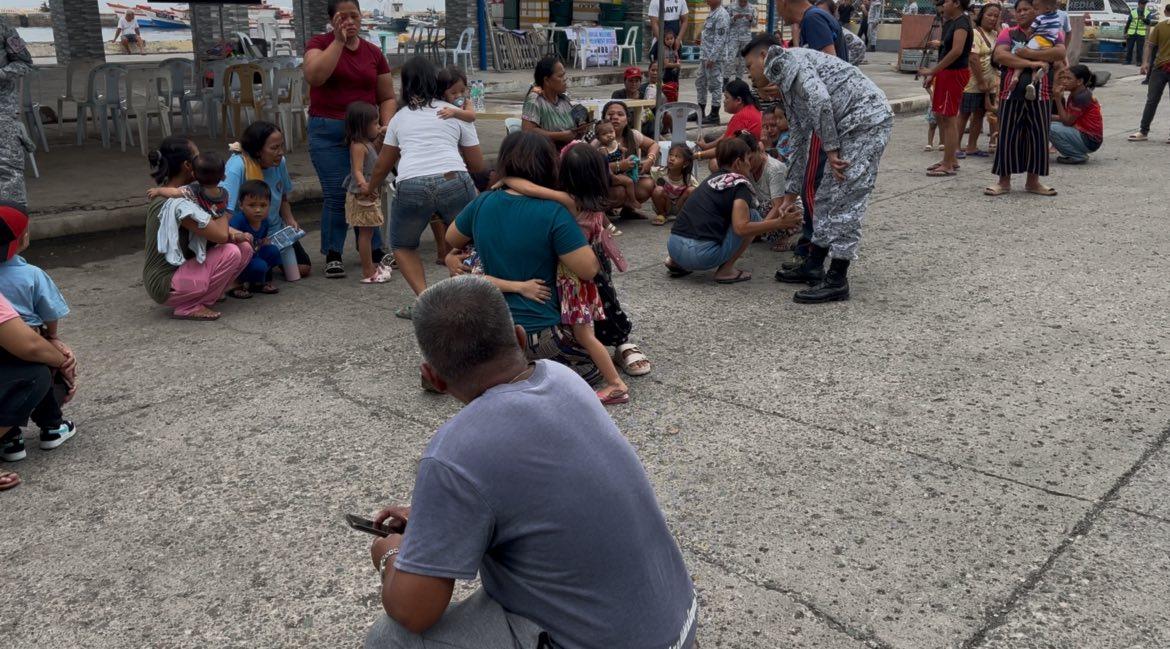
Nearly 500 aftershocks were recorded following separate offshore earthquakes that struck Manay, Davao Oriental, on Friday morning and evening, the Philippine Institute of Volcanology and Seismology (PHIVOLCS) said.
LIVE UPDATES: Davao Oriental earthquake
PHIVOLCS said that it would be difficult to determine which seismic event caused the aftershocks following the evening earthquake.
“Yung aftershocks na mage-generate ng magnitude 7.4 at yung aftershocks na maiko-correlate natin sa [magnitude] 6.8 ay mahihirapan na tayong i-distinguish silang dalawa, dahil magkalapit lang sila. So ang gagawin natin, lahat ng aftershocks na mago-occur doon sa area na ‘yun, bibilangin na lang natin sila as one,” said Winchelle Ian Sevilla, chief of PHIVOLCS Seismological Observation and Earthquake Prediction Division, at a press briefing.
(The aftershocks that will be generated by the magnitude 7.4 and the aftershocks that we can correlate with the magnitude 6.8 will be difficult for us to distinguish from each other because they are close together. So what we will do is, all the aftershocks that occur in that area, we will just count them as one.)
The magnitude 7.4 earthquake that hit 43 kilometers east of Manay generated 425 aftershocks as of 7:11 p.m., PHIVOLCS said. However, a magnitude 6.8 earthquake occurred 36 kilometers south of Manay at 7:12 p.m.
As of 9 p.m., Sevilla said that there were 498 aftershocks recorded from both earthquakes.
According to PHIVOLCS, aftershocks are “small earthquakes that follow a larger earthquake (mainshock). The aftershocks may continue to occur for several days and weeks, some of which may be felt."
“Sa ganito po kalakas, base na rin po sa historical data, makakaasa po tayo ng at least days or weeks…Habang tumatagal po, kumukonti ang bilang nito. Pero posible pa rin na kahit kumukonti ang bilang makaka-experience tayo ng aftershocks na may kalakasan na mararamdaman po ng ating mga kababayan, lalong lalo na po roon sa mga malapit sa epicenter ng lindol,” said Sevilla.
(For earthquakes this strong, based on historical data, we can expect aftershocks to last for at least days or weeks...As time passes, the number will decrease. But it is still possible, even as the number decreases, that we will experience aftershocks that are strong, especially near the epicenter of the earthquake.)
Teresito Bacolcol, PHIVOLCS director, said that a movement in the Philippine Trench was the cause of both earthquakes. He added that these are not related to the September 30 earthquake in Bogo City, Cebu, which was caused by a movement in the Bogo Bay Fault. —VBL, GMA Integrated News

