

 GMA Brandtalk
 Tracking
 Archives

Tino leaves at least 48 dead in Cebu
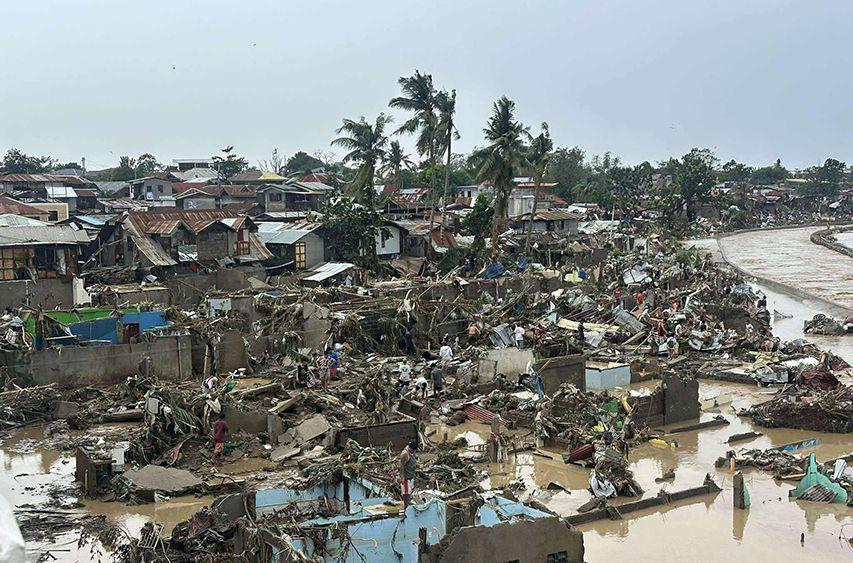
At least 48 people were confirmed dead in Cebu following the onslaught of Typhoon Tino on Tuesday, November 4, 2025, that triggered flooding authorities described as one of the worst in the island’s recent history.
Data from Provincial Disaster Risk Reducation and Management Office (PDRRMO) as of November 4 showed that at least 39 people in the province died from the typhoon:
- Compostela - 15
- Danao - 8
- Mandaue City - 9
- Talisay City - 7
At least 33,661 families (105,588 individuals) were evacuated, according to the Capitol in a live update on its Facebook page.
At least nine others died in Cebu City, as reported by the CCDRRMO, also as of November 4. The nine victims are from different barangays.
Cebu City is classified as an independent city and, therefore, not under Cebu Province.
An estimated 300 houses were affected in the city.
A video taken by a resident of Villa del Rio 1 in Cebu City showed floodwaters carrying vehicles away when Tino unleashed its wrath for about three hours, from 4 a.m. to 7 a.m.
According to residents, the torrential rain caused the creek nearby to overflow and triggered the flooding. Floodwaters in the subdivision reached up to 12 feet.
“Hingkalit ingon ani ang tubig, wala mi magdahom moabot ang tubig og ingon ani,” said Junjun Declaros, a resident.
According to residents, they did not expect floodwaters to be this deep because they did not experience the same when supertyphoon Odette lashed at Cebu in December 2021.
Another video taken by a resident of a residential compound in Umapad, Mandaue City showed vehicles getting submerged in floodwaters.
A video posted by the Philippine Red Cross on its Facebook page showed residents of Barangay Jubay in Liloan town going up the roof of their houses to avoid getting carried away by floodwaters.
State of calamity
In Cebu Province, Governor Pamela Baricuatro has signed an executive order placing the province under a state of calamity due to the devastating effects of Typhoon Tino.
Capitol said assessment has confirmed “widespread damage, loss of lives, continuous imminent threats to life and safety, disruption of essential services, and urgent need of emergency response.”
The EO was issued so that the provincial government can access its calamity funds quickly, control prices of goods, and expedite relief and rehabilitation efforts, pursuant to the Philippine Disaster Risk Reduction and Management Act of 2010.
In the same EO, Baricuatro directed the province’s Local Price Coordination Council to implement a price freeze, in coordination with the Department of Trade and Industry (DTI).
“Pursuant to Republic Act No. 7581, also known as the Price Act, the Local Price Coordination Council, in coordination with the Department of Trade and Industry, is hereby directed to implement a price freeze and monitor the prices of basic necessities and prime commodities “to protect consumers and ensure access to basic goods and commodities during the emergency period,” reads part of EO No. 68.
Tino first made landfall Silago, Leyte at midnight before it made landfall in Cebu and eventually in Sagay City in Negros Occidental, in San Lorenzo in Guimaras, and in Iloilo City, bringing with it heavy rains and dangerous winds. —GMA Regional TV

