

 GMA Brandtalk
 Tracking
 Archives

The roofkeepers of Uyugan, Batanes: Keeping the Ivatan home alive
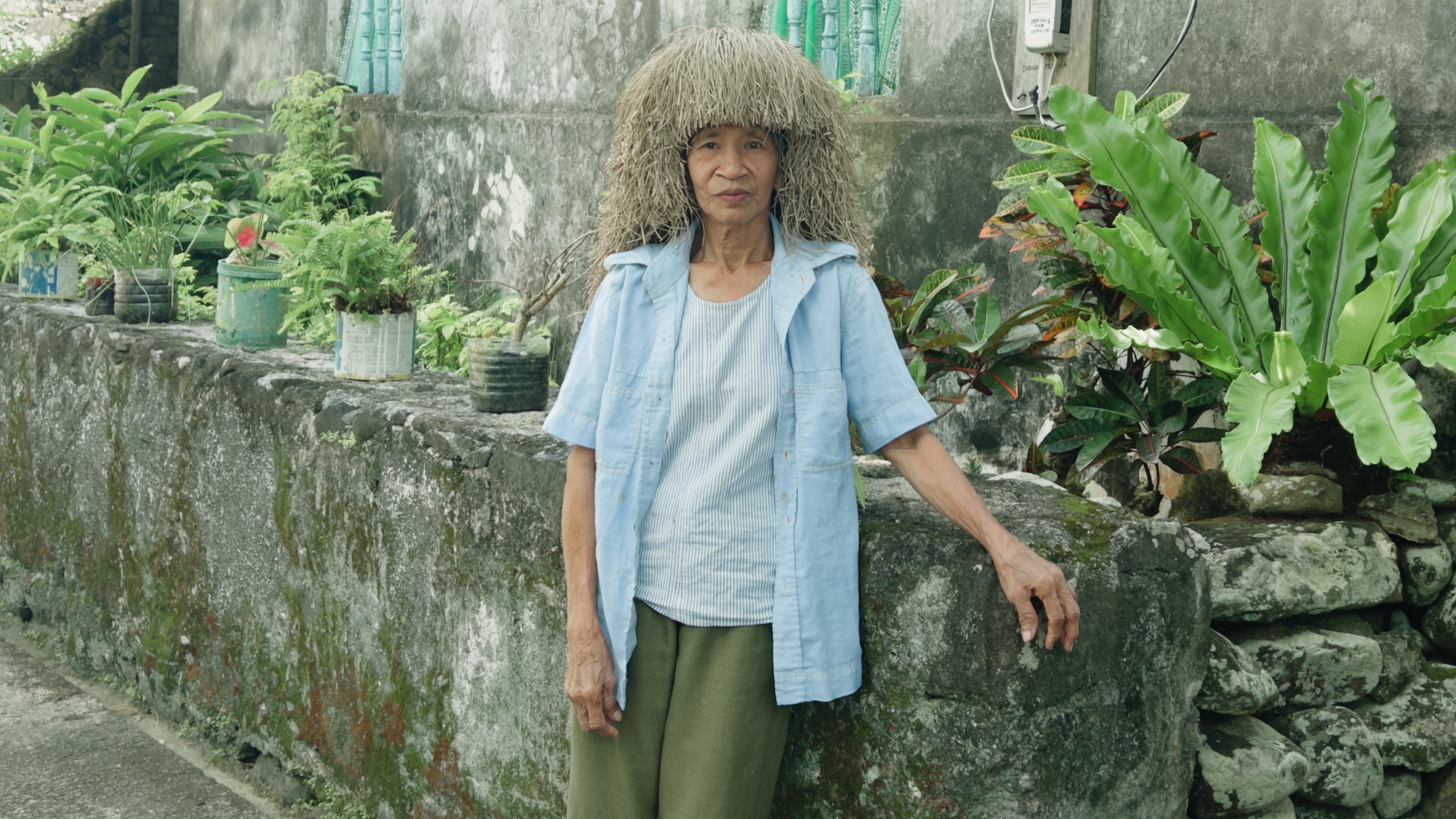
UYUGAN, Batanes - In Barangay Kayuganan in Uyugan, Batanes, the wind arrived first. It rolled in from the sea, brushed the hills and threaded itself through the layers of cogon that crowned the island’s traditional houses.
For 76-year-old Priscilla Cabugao, the sound had always been familiar, a reminder that she was still home in the same Ivatan house where her family had lived for more than a century.
During our interview at the launch of the Modern Ivatan House, "Nana Cela" sat in her kitchen wearing a vakul, the traditional headgear woven from native banana leaves.
“Ito ang panangga namin para hindi nababasa kahit umulan,” she said.
(This is our shield so we don't get wet from the rain.)
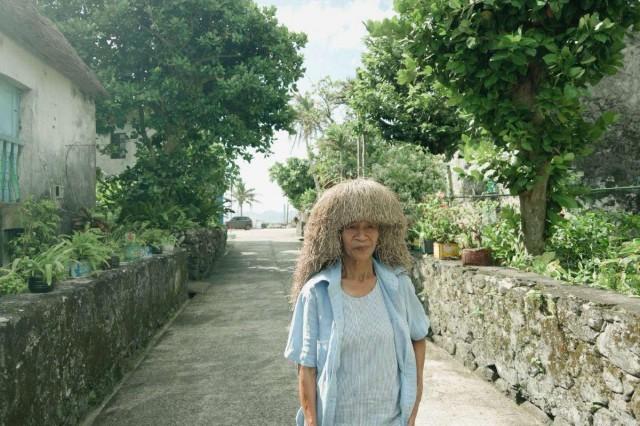
On her, the vakul did not feel like a costume or a relic; it felt like continuity.
But when the conversation shifted to the future of houses like hers, her tone changed. The smile softened, her eyes sharpened. She spoke quietly but firmly, her stories flowing from the house she grew up in to the life she built within its stone walls.
“Mahalaga kasi para makita kung saan tayo galing,” she said.
(It’s important so we can see where we came from.)
To her, the house behind her was not just stone and thatch.
It was identity. It was proof that their grandparents had stood firm in this place long before tourism, paved roads, or guided tours ever reached Uyugan.
She believed parts of the structure — especially the low kitchen — had existed since her father’s birth in 1911.
Inside, she pointed to a few hairline cracks on the upper storey.
“Yung apog na ginamit, medyo mahina na,” she explained, describing how their elders once cooked limestone and wood overnight to make traditional lime mortar.
(The lime they used is already a bit weak.)
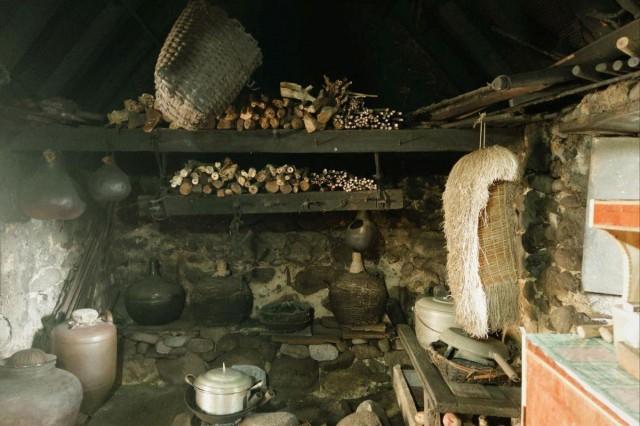
“Meron pa kami, pinagluto ni Tatay. Nakasalba ng bahay.”
(We still have some, which was used by my father. It saved the house.)
Wind was something the Ivatan houses understood. “Alam mo, hindi pa nasisira ng hangin ang bahay native basta nakatali. Walang bahay akong nakita na nasira talaga na traditional dahil sa bagyo or hangin. Repair lang talaga minsan. Pero 'yung sira talaga? Wala, hindi pa nangyayari 'yun kaya matibay talaga (ang mga) traditional houses,” she said.
(You know, a native house doesn’t get destroyed by wind as long as it’s properly tied. I’ve never seen a traditional house truly destroyed by storms or wind. Sometimes they just need repairs, but completely damaged? None. It hasn’t happened — traditional houses are really strong.)
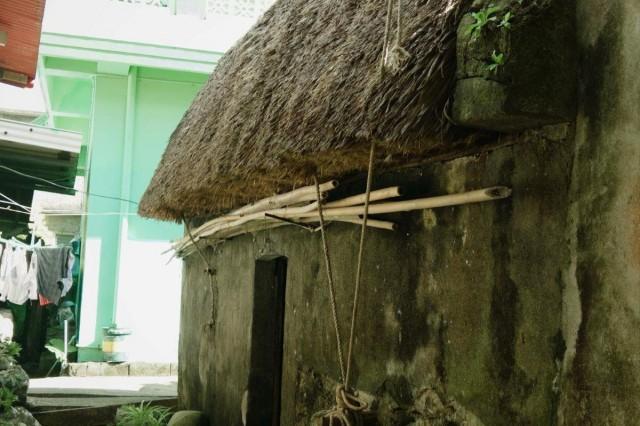
But water was another story. Her house sat about fifty meters from the shoreline.
She recalled storms that pushed waves over the seawall and into her kitchen.
“Tatlong beses pumasok ang tubig dagat,” she said. During one storm, a neighbor’s newborn did not survive rising water.
(Three times seawater entered the house.)
“Ang kinakatakutan ko talaga, yung alon.”
(What I really fear is the waves.)

Yet she never considered moving into a modern cement house. The fear that mattered more was the disappearance of the tradition itself. Only around 25 cogon-roofed homes remained in Uyugan’s center.
Others had been repurposed as storage, tourist props or had vanished entirely.
“Parang masakit makita, pawala nang pawala, pakonti nang pakonti,” she said.
(It hurts to see them disappearing, becoming fewer and fewer.)
A community woven together
If Ivatan houses survived this long, Priscilla said, it was because they were never built or maintained alone.
She is serving as the secretary of the Uyugan Kamañidungan Association, a group of about 26 families bound by sidong — the Ivatan ethic of mutual help. The association’s name derived from that word. It was not ceremonial. It was practical. A functioning survival system.
“'Pag may isa sa amin kailangan ng tulong mag-repair ng bubong, doon kami pupunta," she explained.
(If one of us needs help repairing a roof, that’s where we all go.)
Skilled and unskilled laborers alike — men who knew the tying technique, older women who prepared bundles and food, younger ones who carried ladders, children who gathered small reeds.
Everyone brought cogon from their fields. Others contributed tansi nylon or rope, replacing materials that were once abundant but had become scarce.
“Kahit hindi mo kaano-ano, tutulungan ka nila,” she said.
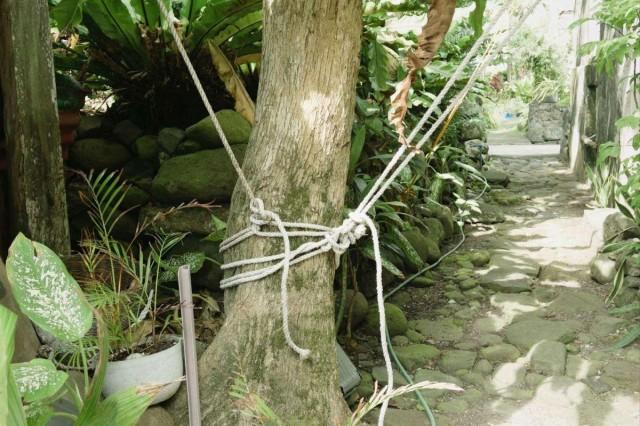
The Kamañidungan followed a seasonal rhythm. Re-roofing took place between March 15 and September 15, the months when most residents were not tied up with farming. Timing mattered because the house could not be left partially covered when the storms approached.
The association could re-roof two living rooms or two kitchens in a season, depending on material availability.
But the system had begun to strain.
“Noon halos lahat may field. Ngayon, kaunti na lang,” she said. Cogon fields once symbolized self-sufficiency.
(Before, almost everyone had fields. Now, only a few do.)
Now many households had given them up or lost access to land. Some members had to buy cogon from within Uyugan.
Others resorted to nylon, which held but did not have the same longevity. Reeds that used to arrive fresh from the cliffs often came weaker, possibly harvested too early or affected by changing weather.
The decline of raw materials was one problem. The decline of skilled labor was another. The local high school had once introduced a roofing module, allowing students to join the re-roofing process and learn directly from elders. But participation dwindled.
“Hindi sila interesado,” she said, with a bit of sadness in her eyes.
(They're not interested.)
She wasn’t blaming them; the younger generation worked in Basco, Manila, or other provinces, often coming home only for short breaks.
However, without new hands learning the techniques, the rope between generations loosened.
“Kaya ngayon wala nang bagong mga traditional houses. Lumang bubong na lang ang pinapalitan, repair, ganoon,” she said.
(That’s why now there are no new traditional houses — only the old roofs are being replaced, just repairs like that.)
Holding the line
Priscilla understood modern needs clearly. Younger families wanted quicker builds, smoother walls, bright paint, outlets, easy repairs. Conservation rules limited harvesting of certain materials inside the protected area. And the storms of recent years tested even the patience of elders.
“Iba na ang bagyo ngayon,” she said. “Mas malalakas at mas madalas.”
(Storms today are different — stronger and more frequent.)
Still, she believed tradition could work alongside innovation.
She said she attended the launch of the DOST–Cagayan State University modern Ivatan house prototype.
“Kung maging successful, baka gayahin na yan,” she said.
(If it becomes successful, maybe people will follow it.)
She appreciated how the hybrid structure mimicked the old silhouette while promising stronger resilience.
But she feared that if traditional homes vanished entirely, Batanes would lose more than an architectural style.
“Kasi kung hindi mapanatili, Batanes pa ba siya?” she asked.
(Because if it isn’t preserved, would it still be Batanes?)
“Pag sinabi mong Batanes, 'yun agad ang nasa isip — mga bahay na bato.”
(When you say Batanes, that’s the first thing that comes to mind — the stone houses.)
A life shaped by service
Before devoting her later years to heritage work, Priscilla had taught Grade 1 for thirty-seven years. “Grade 1 talaga ako nagtagal,” she said, describing how she guided hundreds of children through their first days of school.
(I was a Grade 1 teacher.)
She spent her final years in service piloting the Mother Tongue-Based Multilingual Education program, helping cement Ivatan as a language of learning.
Her personal life mirrored her professional one: full of caregiving. She recounted raising a student whose family was struggling.
That girl finished school under Priscilla’s care, became a nurse, married and had two children who still visited Priscilla often.
“Hanggang ngayon, pumupunta pa sila,” she said with a quiet warmth.
(Until now, they still come here.)
The changing community
Priscilla spoke openly about how Uyugan had transformed. More people from the mainland had settled in Batanes — teachers, civil servants, workers, retirees. “Marami nang taga-mainland,” she said.
(There are now many people from the mainland.)
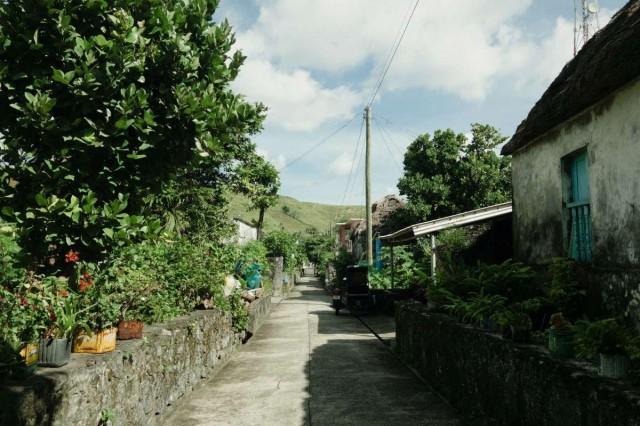
The community remained safe, though not untouched by change.
She laughed while mentioning the one persistent truth: “Marami dito magaling sa inuman.”
(A lot of people here are good drinkers.)
In earlier years, families had sugarcane fields and made their own native wine. Now, only a few did.
Tourists were part of the transformation as well. “Natutuwa kami na nagugustuhan nila 'yung Batanes, kasi di ba, bahay namin ito, palasyo naming mga Ivatan kaya nakakatuwa na nakikita nila ang ganda ng palasyo namin,” she said.
(We’re glad that they love Batanes because, you know, this is our home — the palace of us Ivatans, so it makes us happy that they see the beauty of our palace.)
She appreciated their admiration but wished more understood the reality beyond the scenic viewpoints — the storms, the isolation, the unpredictability of travel.
“Kawawa 'yung maabutan ng bagyo dito,” she said, noting how visitors should always consult weather patterns.
(Those who get caught in a storm here — they’re the ones who suffer.)
She told stories about tourists surprised by how open and trusting locals were. People left doors unlocked, motorcycles parked outside.
Safety persisted, though she noted a shift with new arrivals and changes in behavior. Still, the core values remained visible.
What remained
In the late afternoon, as the sun lowered behind the hills, Priscilla’s house glowed with a muted warmth during her visit. The stones held decades of salt. The roofline carried knots tied by her father, uncles, neighbors, and now by her.
The vakul on her head caught the afternoon light, its fibers matte and strong as she visited her home during the Howie Severino Series shoot.
She said she often stood by the doorway looking toward the sea, listening for changes in the wind.
“Sana hindi mamatay ang tradisyon,” she expressed quietly — less a plea, more a reminder.
(I hope the tradition doesn’t die.)
And so she kept working. She tightened knots, cleared debris, checked the lime mortar that her father once cooked, and prepared the home for the next season of wind.
Nothing about her movements was ceremonial. They were simply necessary.
For as long as her hands could climb, braid and secure each bundle of cogon, Priscilla Cabugao remained one of the roofkeepers of Batanes, maintaining not only her home, but the memory it carried.
The author accompanied the podcast team of Howie Severino that’s producing the episode, “Stone by Stone — Saving the heritage houses of Batanes. —KG/RF/JMA, GMA Integrated News

