

 GMA Brandtalk
 Tracking
 Archives

PHIVOLCS: Over 130 rockfalls at Mayon Volcano in 24 hours as lava dome grows
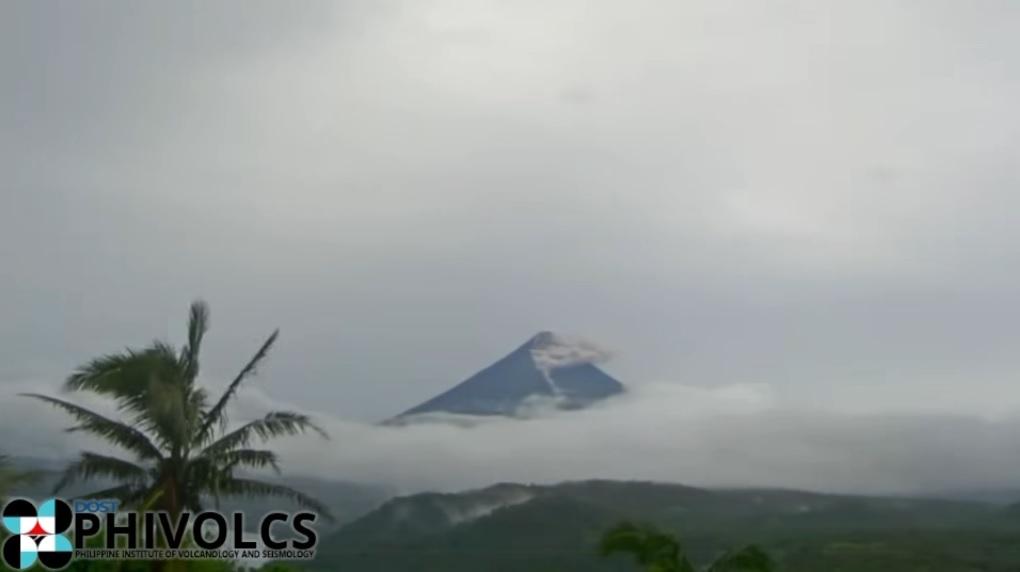
PHIVOLCS is keeping round-the-clock watch over Mayon Volcano in Albay via its live video stream at the agency’s headquarters, as it recorded more than 130 rockfall events in the past 24 hours.
The monitoring agency explained that rockfall events refer to falling rocks from the upper portion of the volcano, triggered by the effects of increasing lava.
PHIVOLCS Director Teresito Bacolcol said they have been monitoring the rise in rockfall activity since November, but noted that the numbers climbed further in the last week of December and the first week of 2026.
“Meron tayong lava dome growth. Ito yung makapal at malapot na lava sa ibabaw ng bulkan ang naiipon siya duon, so lumalaki siya, so ibig sabihin nadagdagan ang lava,” he said.
(There is lava dome growth. This is the thick and viscous lava at the top of the volcano and it collects there, so the lava dome grows.)
LOOK: Time-lapse footage of pyroclastic density currents (PDC) generated by lava dome collapse from the summit of Mayon...
Posted by Philippine Institute of Volcanology and Seismology (PHIVOLCS-DOST) on Wednesday, January 7, 2026
Mayon was last raised to Alert Level 3 in 2023 for six months before being lowered to Alert Level 2. The volcano is currently back at Alert Level 3.
EXPLAINER: Meaning of PHIVOLCS alert levels per active volcano
Bacolcol said Mayon’s current signals appear similar to what was observed in 2023, but pointed to a key difference this year: signs of swelling or ground deformation at the volcano.
“Ibig sabihin may material ka na gumigitgit, tumataas so kaya siya namamaga. Signal ito na may pressurization doon sa bulkan so if this will follow the 2023 template this would be longer than the 2023 kasi nga meron kang magma,” he said.
This means that there is material that is forcing itself, so it's rising and swelling. This is a signal that there is pressurization in the volcano, so if this will follow the 2023 template this would be longer than the 2023 event because there is magma.)
PAGASA has also forecast there could be three to four days of rainy weather in the area, increasing the risk of lahar flows.
PHIVOLCS said it hopes Mayon will not reach Alert Level 4. Under Alert Level 3, PHIVOLCS said the volcano is already showing what it calls Pyroclastic Density Currents (PDC), which may be associated with lava dome growth, rockfall events, and other parameters.
However, Bacolcol stressed that conditions can still change. “Anything can happen. Pwedeng magbago yung parameters natin kung biglang dumami yung volcanic earthquakes natin kapag may lava flow na at mas mahahaba kapag meron na tayong lava fountaining. Yun na yung itaas na natin sa Alert Level 4.”
(Our parameters could change if the number of volcanic earthquakes suddenly rises when there is lava flow, and when they become longer when there is lava fountaining. That is when we will raise the alert level to 4.)
PHIVOLCS warned that the most dangerous areas under Alert Level 4 are communities near the Permanent Danger Zone (PDZ), where volcanic gases, ash, and hot rocks could rush down from the volcano within an hour.
“It can incinerate everything in its path: bahay, tao [houses, people], vegetation,” Bacolcol said.
Other volcanoes being monitored
PHIVOLCS also emphasized that Mayon is not the only volcano being monitored closely. There are 24 active volcanoes in the Philippines, but PHIVOLCS said it is also monitoring three others due to existing alert levels: Mount Kanlaon on Negros Island, Mount Bulusan in Sorsogon, and Taal Volcano in Batangas.
Kanlaon showed ash emissions this afternoon, but PHIVOLCS described this as consistent—or within what may be considered normal—given the volcano’s Alert Level 2 status.
PHIVOLCS also addressed misinformation spreading online, stressing that claims that Mayon will erupt this year due to developments at Kanlaon are false.
“Walang relationship yung dalawa,” Bacolcol said. “Yung mga bulkan natin ay independent; magkaiba ang mga magma chambers nila, magkakalayo.”
(There is no relationship between the two. The volcanoes are independent; they have different magma chambers that are far from each other.) — BM, GMA Integrated News

