

 GMA Brandtalk
 Tracking
 Archives

600 Isabela, Basilan residents undergo basic CPR training
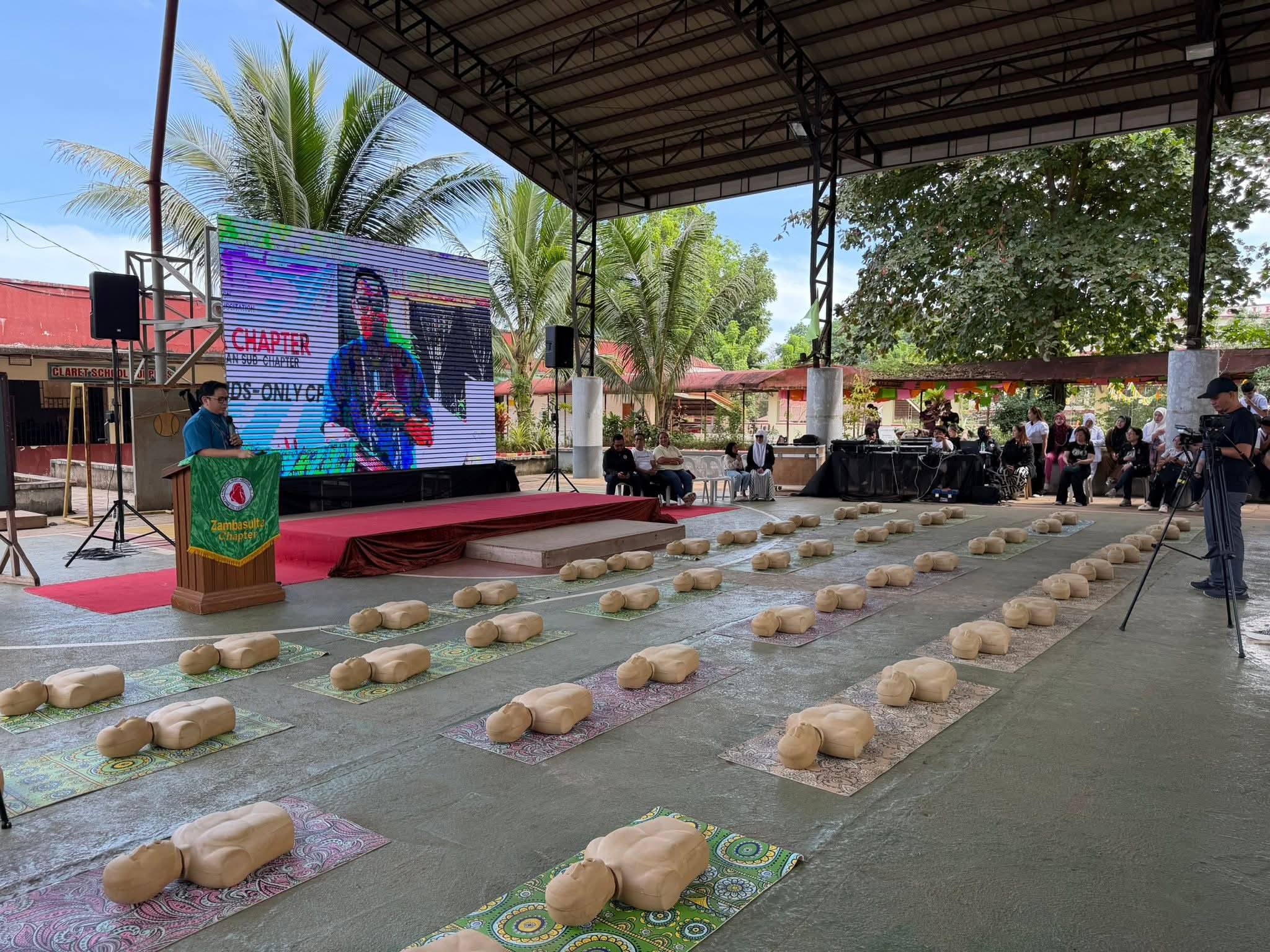
At least 600 residents of Isabela City, Basilan underwent intensified hands-only cardiopulmonary resuscitation (CPR) training in an effort to boost first response in areas with limited access to cardiologists.
The local government of Isabela City and the Philippine Heart Association (PHA) trained students, teachers, barangay health workers, barangay police officers, and government employees.
Basilan Board Member for District 2 Dr. Nur Khari Istarul emphasized the need for CPR training, noting that cardiac emergencies are a “race against time.”
“In these areas, primary care providers, health workers, our nurses, midwives and the community themselves often become the first—and sometimes, the only—line of response during medical emergencies,” he said.
He added that due to the limited access to cardiologists in the area, most emergencies were delayed by distance, geography, and resource constraints.
Dr. Kristine Bantala Supnet, a Zamboanga-based cardiologist, holds clinic in Isabela once a week.
Istarul said the most critical minutes after cardiac emergencies are usually "far from an ICU, far from advanced equipment, and far from a specialist."
In these cases, the community must assemble to become the first line of responders by learning how to correctly conduct life-saving, hands-only CPR, he said.
“Being CPR-ready empowers communities to respond immediately. It bridges the gap between cardiac arrest and definitive care, transforming bystanders into first responders and communities into lifelines,” he added.
Meanwhile, PHA president Dr. Walid Amil emphasized the need to expand and further promote CPR training.
“Malaking benefit ang makukuha ng ating mga pasyente, ating mga community kasi mapapataas ang chances na mabuhay ang isang pasyente pag na-cardiac arrest,” he said.
(There is a huge benefit for our patients and our communities because it increases the chances for a patient that had cardiac arrest to survive.)
Amil earlier stressed the crucial five-minute period needed for first response in cardiac attacks.
He said that correct CPR was needed to be done immediately to save the life of a cardiac patient, which was why PHA was batting for training and community learning to promote basic first aid response.
In November 2025, PHA called for basic CPR training and the establishment of basic life support (BLS) teams in communities nationwide to align with efforts to improve emergency response.
“If you do CPR at the right time, at the right place, at the right time, the chances of survival goes up to 30% at least. Dugtong buhay po talaga 'yan (That can actually extend lives),” said PHA Council on Cardiopulmonary Resuscitation chair Dr. Robespierre Reyes.
They noted that BLS teams should include policemen, barangay health workers, barangay tanods, and other key members of the community.
They also renewed their call for the implementation of the Republic Act 10871 or the Basic Life Support Training in Schools Act, or the “Samboy Lim Law”, which mandated basic life support such as CPR to be taught in schools as part of the curriculum. —Jiselle Anne C. Casucian/AOL, GMA Integrated News

