

 GMA Brandtalk
 Tracking
 Archives

Mayon Volcano’s sulfur dioxide emission hits 15-year high
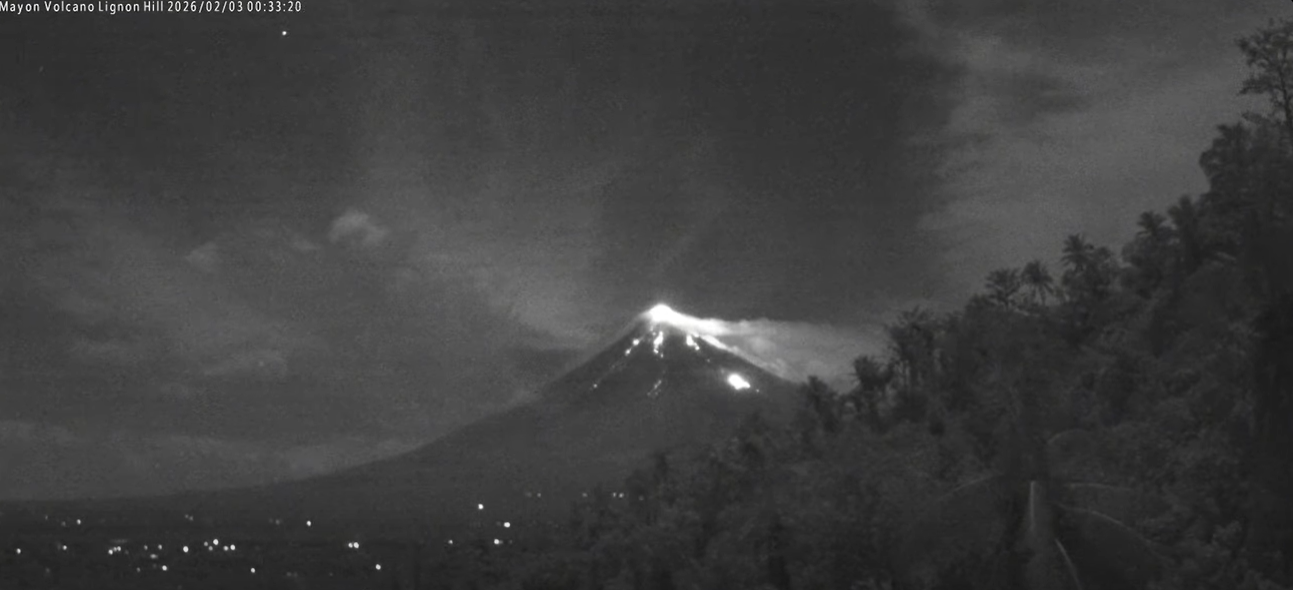
The Philippine Institute of Volcanology and Seismology (PHIVOLCS) on Wednesday logged over 6,500 tonnes of volcanic sulfur dioxide (SO2) emission from the Mayon Volcano, the highest SO2 emission recorded in the past 15 years.
In an advisory on Wednesday night, state volcanologists said it observed an increasing trend in volcanic SO2 this February through campaign spectrometry methods.
“Volcanic SO2 flux today averaged 6,569 tonnes/day, the highest emission recorded in the past 15 years. The running average for the current month has increased to 5,503 tonnes/day from that of January 2026 which averaged 2,571 tonnes/day,” PHIVOLCS said.
Despite the surge in volcanic SO2 emissions, PHIVOLCS did not observe “similar increases in the rate of rockfall and pyroclastic density current or PDC (uson) activity or other indications of a rise in the rates of lava eruption at the summit crater.”
It said “strong degassing from the summit with aseismic ash emission was also visually observed during the day.”
“Rising volcanic SO2 concentrations, albeit for a relatively short period of time, could forewarn of new intrusions into the Mayon edifice that could lead to further eruptive activity,” PHIVOLCS added.
State volcanologists reminded the public anew that Alert Level 3 is still hoisted over the Mayon Volcano, which continued its effusive eruption for the 29th consecutive day.
They added that “the chances of lava fountaining or moderately explosive eruption occurring has risen once again.”
“This means that while ongoing lava effusion continues to generate new lava flows and collapse-fed rockfall and pyroclastic density currents (PDCs) or ‘uson’ onto the southern and eastern upper slopes, potential lava fountaining or moderate explosions could generate similar lava flows, PDCs and rockfall on all sectors of the volcano,” PHIVOLCS said.
The agency strongly cautioned the public against entering the six-kilometer permanent danger zone (PDZ) due to these volcanic hazards, while residents within the eight-kilometer radius should be also prepared for evacuation in case the situation escalates to Alert Level 4.
PHIVOLCS also recommended increased vigilance and preemptive response actions against lahars and sediment-laden streamflow along channels draining the edifice in case of prolonged heavy rains due to Tropical Storm Basyang.
“Civil aviation authorities must also advise pilots to avoid flying close to the volcano’s summit as ash from any sudden eruption can be hazardous to aircraft,” it added. — JMA, GMA Integrated News

