

 GMA Brandtalk
 Tracking
 Archives

Bulusan Volcano alert status lowered to zero —PHIVOLCS
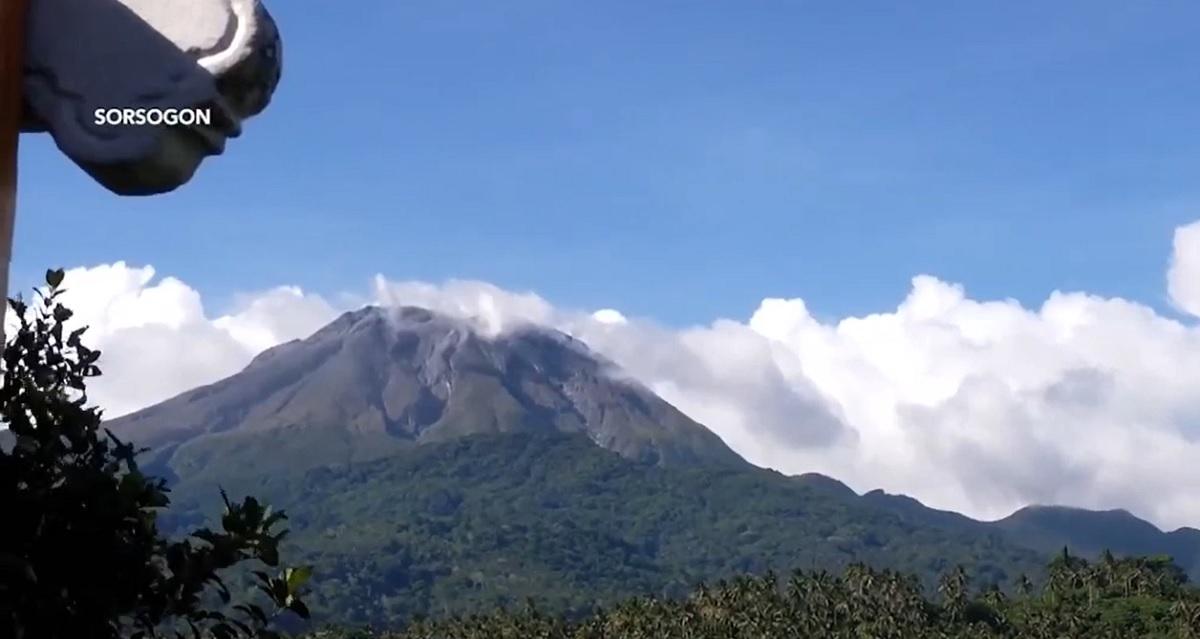
The Philippine Institute of Volcanology and Seismology (PHIVOLCS) on Friday night lowered the alert level status of Bulusan Volcano in Sorsogon from Level 1 (Low-Level of Unrest) to Level 0 (Normal).
"Bulusan Volcano has returned to relative quiescence following a general decline in monitoring parameters," PHIVOLCS said in its bulletin.
BULUSAN VOLCANO BULLETIN
— PHIVOLCS-DOST (@phivolcs_dost) February 6, 2026
6 February 2026
11:00 PM
This serves as notice for the lowering of the alert status of Bulusan Volcano from Alert Level 1 (Low-Level of Unrest) to Alert Level 0 (Normal).
Infographics: https://t.co/5GK1m4mLHa#BulusanVolcano pic.twitter.com/1hdNIgtlbp
The number of volcanic earthquakes went down to baseline levels of zero to five a day since the first week of December 2025, as monitored by the Bulusan Volcano Network, PHIVOLCS said.
The volcanic earthquakes monitored "occurred at a shallow depth of less than 6 kilometers beneath the southeastern edifice," it added.
"This decline indicates that rock-fracturing processes within the volcano associated with shallow hydrothermal activity has diminished," PHIVOLCS said.
It also said the volcano's general southern and eastern sectors have been deflating since the third week of November 2025 and October 2025, respectively, as observed through continuous GPS and electronic tilt measurements. This indicates a "depressurization of the volcanic system," the agency said.
The volcano has also been emitting lesser sulfur dioxide, averaging 122 tonnes/day since June 2025 and has since returned to background levels, it said.
"Moreover, most monitored springs around the edifice have exhibited decreases in diffuse volcanic carbon dioxide concentrations since November 2025. These geochemical parameters indicate that input from the shallow hydrothermal system has remained within baseline level with only minor contributions if any from deep magma sources," PHIVOLCS said.
Plumes observed being emitted from the active vents of t he volcano at its summit were also very weak to moderate, which signifies baseline volcanic degassing, it added.
"In view of the above, PHIVOLCS-DOST is now lowering the alert status of Bulusan from Alert Level 1 to Alert Level 0. This means observational parameters have returned to baseline or background levels and no magmatic eruption is foreseen in the immediate future," the agency said.
The volcano alert status may be raised to Alert Level 1 though "in the event of a renewed increase in any one or combination of the above monitoring parameters," PHIVOLCS saiid.
Despite the volcano being at Alert Level 0, PHIVOLCS said entry into the four-km radius Permanent Danger Zone (PDZ) — especially near the vents on the south-southeastern slopes — should be prohibited.
There is still the possibility of Bulusan Volcano having sudden and hazardous steam-driven or phreatic eruption, or generating rockfall and landslide, it said.
Likewise, flying aircraft close to the volcano's summit should be avoided as ash from sudden phreatic eruption may pose danger to aircraft.
"Furthermore, people living within valleys and along river/stream channels should be vigilant against sediment-laden stream flows and lahars in the event of prolonged torrential rainfall," PHIVOLCS said.
"DOST-PHIVOLCS is closely monitoring Bulusan Volcano’s condition and any new development will be relayed to all concerned," it added.
In October 2025, Bulusan Volcano showed signs of increased seismic activity with volcanic earthquakes and degassing. —KG, GMA Integrated News

