

 GMA Brandtalk
 Tracking
 Archives

PHIVOLCS: 32 Albay barangays affected by Mayon Volcano ashfall
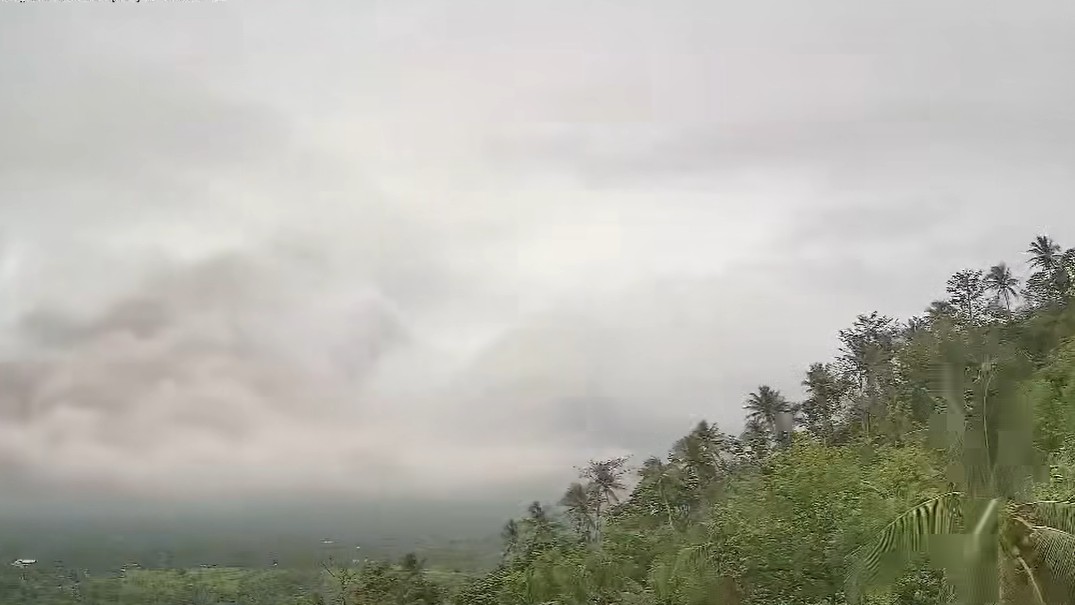
Thirty-two barangays in Camalig and Guinobatan, Albay experienced heavy and occasionally wet to trace ashfall after Mayon Volcano generated the largest pyroclastic density current (PDC) or “uson” on Monday, the Philippine Institute of Volcanology and Seismology (PHIVOLCS) said.
In an update posted on its social media accounts on early Tuesday morning, PHIVOLCS said the affected barangays are:
Camalig, Albay
- Sua
- Cabangan
- Tumpa
- Brgys. 1-7
- Quirangay
- Sumlang
- Ligban
- Libod
- Bariw
- Salugan
- Anoling
- Gapo
Guinobatan, Albay
- Travesia
- Sinungtan
- Maninila
- Quitago
- Ilawod
- Inamnan Pequeño
- Lower Binogsacan
- Doña Mercedes
- Malipo
- Poblacion
- Quibongbongan
- Tandarora
- San Rafael
- Masarawag
State volcanologists noted that after a phase of relative low-level activity, Mayon Volcano’s rockfall increased to a peak count of 469 events on February 8, Sunday.
On Monday, the largest PDC events so far were generated by lava collapse.
“Three major PDC events occurred between 2:30 a.m. and 2:44 a.m. but these were obscured for the greater part by cloud cover. Ashfall around this time was reported by residents of Tumpa, Guinobatan, Albay to the PHIVOLCS Quick Response Team (QRT) on routine reconnaissance on the western slopes later in the morning,” PHIVOLCS said.
It added that from 10:35 a.m. to 11:37 a.m., a series of at least 12 successive major PDC events occurred with the largest event at 10:59 a.m., lasting seven minutes based on the seismic record.
“This series was poorly visible as well but produced prominent >2 kilometer-tall brownish to grayish ash clouds that were blown by ~40 kph winds extensively to the west of the volcano,” PHIVOLCS said.
“Based on total seismic energy release, the 9 February 2026 major PDC activity represents a only brief intensification of unrest at Mayon, which has progressed in near-steady conditions since the onset of eruption,” it added.
It added that since Mayon Volcano entered a period of magmatic eruption on January 6, its activity has been characterized by effusion or non-explosive eruption of lava from the summit crater, generating lava flows and collapse-fed rockfall and “uson,” which are hazardous mixtures of hot volcanic gas, ash and fragmented rock.
These volcanic hazards have continually affected three major drainage systems on the southern to eastern slopes – the Mi-isi, Bonga and Basud Gullies – including minor drainages in between that are well within the six-kilometer radius Permanent Danger Zone (PDZ).
“As of 8 February 2026, lava flows have advanced to radial distances of 1.3 km, 1.6 km and 3.8 km on the Mi-isi, Bonga and Basud Gullies, respectively, while rockfall and PDC runouts remained within the 3-kilometer radial distance from the summit crater. The total volume of magma erupted based on these deposits was estimated to be 22 million cubic meters (m3),” PHIVOLCS said.
The 10:59 a.m. PDC and subsequent major PDC events on Monday were observed to have traveled down the four-kilometer radial distance in the Mi-isi Gully, the farthest PDC runouts so far recorded for this year’s eruption.
The agency added that partial views showed the PDC sources to be were collapse events originating in the proximity of the crater and that likely disintegrated deposits of oxidized and degassed lava that contributed brownish ash in the PDC ash clouds.
“These observations, including the prior increase in rockfall activity, indicate that major PDC activity on 9 February 2026 was triggered by a substantial volume of lava fed to the Mi-isi lava flows, causing shedding of relatively larger volumes of pre-erupted material and potentially significant advancement of the Mi-isi lava flow front. Together with smaller-volume PDC and rockfall activity preceding and following these major PDC phases, 52 and 396 events, respectively, were recorded on 9 February 2026,” PHIVOLCS said.
The agency said Alert Level 3 will be maintained over Mayon Volcano amid its ongoing effusive eruption, noting that the volcano “continues to feed new lava flows, PDCs and rockfall on the southern and eastern slopes.”
The public is barred from entering the six-kilometer PDZ due to the dangers of PDCs, lava flows, rockfalls and other volcanic hazards.
Residents within the eight-kilometer radius, especially on the southern and eastern slopes of Mayon, were also advised to prepare for evacuation in case the situation escalates to Alert Level 4.
“Increased vigilance against lahars and sediment-laden streamflow along channels draining the edifice, particularly those headed on the Mi-isi, Bonga and Basud Gullies, is also advised in the event that intense rains occur over the summit area. Civil aviation authorities must also advise pilots to avoid flying close to the volcano’s summit as ash from any sudden eruption can be hazardous to aircraft,” PHIVOLCS added. — JMA, GMA Integrated News

