

 GMA Brandtalk
 Tracking
 Archives

PHIVOLCS warns of ash emissions, other hazards after Kanlaon’s explosive eruption
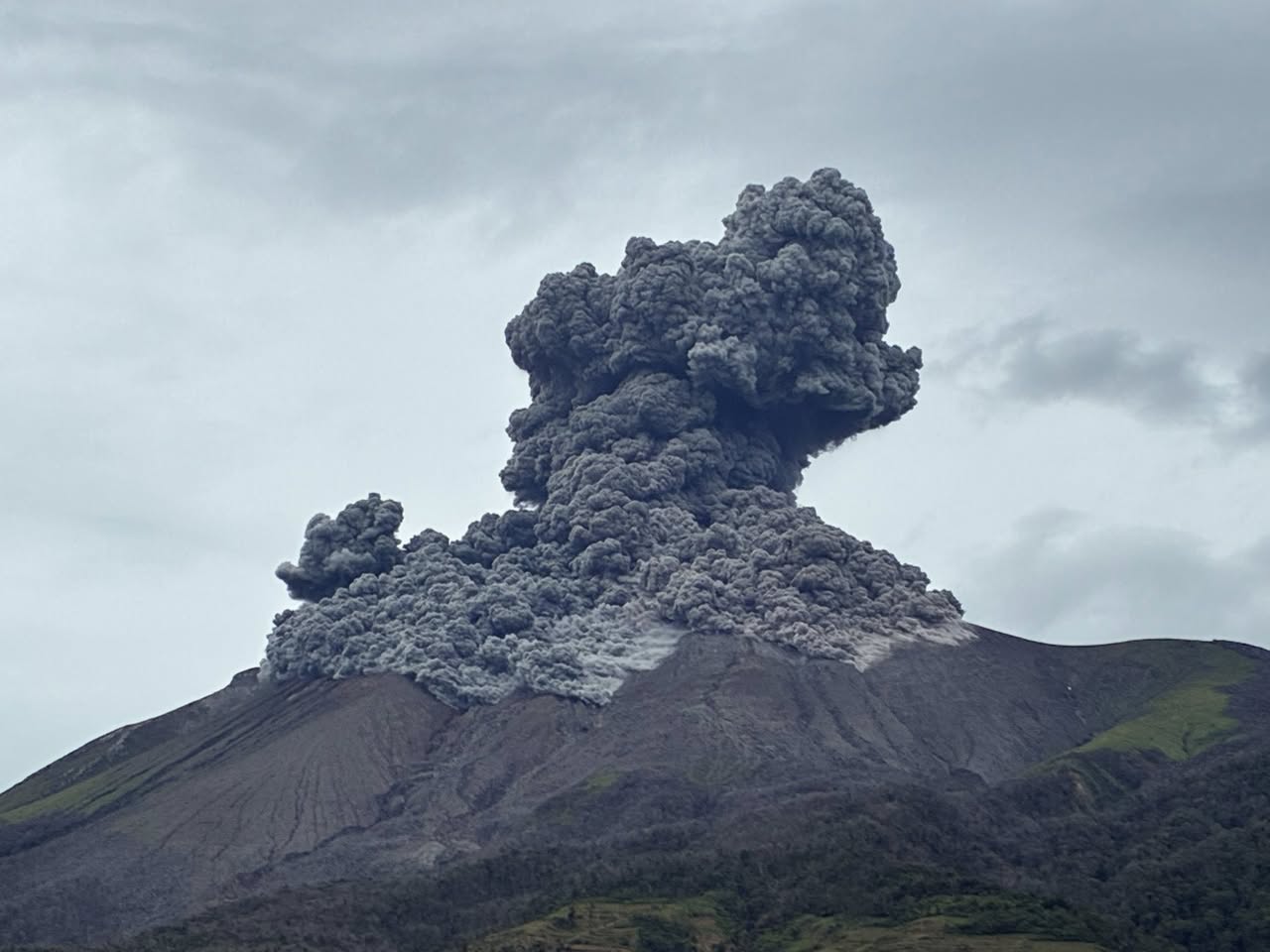
The “moderately explosive eruption” of the Kanlaon Volcano on Thursday afternoon may be followed by ash emissions or similar short-lived explosive eruptions that could pose risks within its four-kilometer radius permanent danger zone (PDZ), the Philippine Institute of Volcanology and Seismology (PHIVOLCS) said.
In an eruption bulletin as of 11:45 p.m. Thursday, PHIVOLCS said “no pronounced increases in volcanic earthquake and ground deformation parameters have followed the eruption as of present.”
It maintained the Alert Level 2 status over the volcano, which means a moderate level of unrest.
“This means that this most recent explosive eruption may be followed by further moderate intensity activity such as ash emission events or similar short-lived explosive eruptions,” state volcanologists said.
“Such eruptions could produce dangerous volcanic hazards within the 4-kilometer radius Permanent Danger Zone or PDZ, disperse ash over the general west of the volcano and produce material that could feed lahars in affected drainage channels,” they added.
PHIVOLCS said the two-minute explosive eruption of Kanlaon Volcano – which was logged at 4:38 p.m. Thursday – was preceded by 10 volcanic earthquakes.
This included seven low frequency events associated with volcanic gas activity, “but all-in-all by relatively low seismic activity and volcanic gas emission in the past weeks.”
It noted that sulfur dioxide or SO2 emission dropped to an “exceedingly low average of 174 tonnes/day immediately prior to the eruption” and a short-term average SO2 emission of 752 tonnes/day was recorded for the week.
In comparison, the volcano’s SO2 average emission was at 2,823 tonnes/day since June 3, 2024 or when its eruptive unrest began.
PHIVOLCS added that the Kanlaon edifice has been “swelling or inflating at very low and fluctuating rates since 2022 due to magma intrusion at great depths beneath the volcano.”
Citing electronic tilt and GPS data, state volcanologists noted that the short-term inflation of the edifice began in late January 2026 preceding the explosive eruption on Thursday afternoon.
“These parameters indicate that blockage of already established volcanic gas pathways of a deep magma source (or closed-system degassing) and resulting pressurization and swelling of the edifice generated today’s moderately explosive eruption,” PHIVOLCS said.
“This has been a repeating eruption mechanism since the volcano’s first moderately explosive activity in June 2024, producing nearly similar seismic characteristics and volcanic hazards,” it added.
LOOK: Towns around Kanlaon Volcano experience ashfall after eruption
Meanwhile, sulfurous fumes were reported in the barangays of La Carlota City, Bago City, and Moises Padilla in Negros Occidental.
“In addition, the eruption generated a shock wave which was heard as a booming sound and felt beyond thirty kilometers of the crater. The shockwave was recorded at a maximum of 225 Pascals by an infrasound station approximately four kilometers southeast of the crater,” PHIVOLCS said.
State volcanologists recommended that communities within the PDZ remain evacuated due to life-threatening hazards such as pyroclastic density currents (PDCs), ballistic projectiles, rockfalls, volcanic gas and others “that could be generated by similar minor explosive eruptions.”
The agency also advised local government units (LGUs) to prepare their communities for subsequent evacuation in case unrest suddenly escalates towards a “hazardous worst-case explosive eruption.”
PHIVOLCS likewise warned against the possibility of hot lahars in case of intense rains that may erode newly-deposited loose ash or pyroclastic material on the upper slopes.
Pilots were also told to avoid flying close to the volcano’s summit as ash and ballistic fragments from sudden explosive eruptions can be extremely hazardous to aircraft. — JMA, GMA Integrated News

