

 GMA Brandtalk
 Tracking
 Archives

Eastern Visayas towns named justice zones to combat child online exploitation
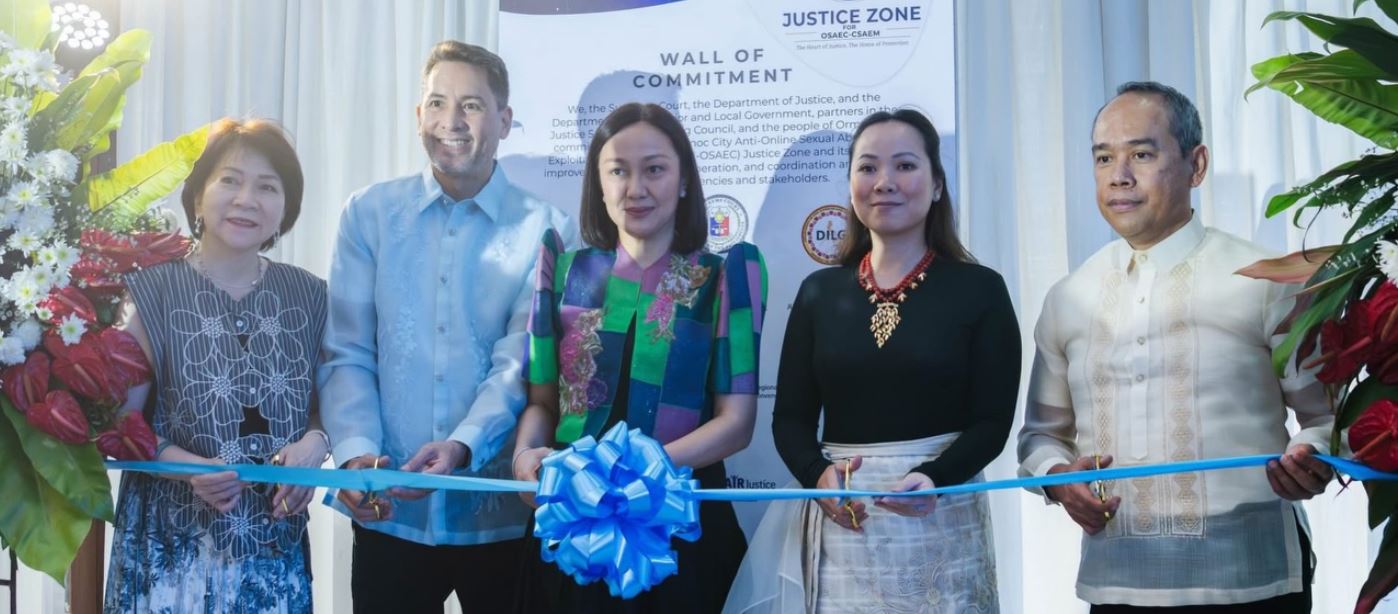
Three towns in the Eastern Visayas region were named justice zones in combatting online sexual abuse and exploitation of children (OSAEC), the Inter-Agency Council Against Trafficking (IACAT) said on Monday.
“Ang layunin ng Justice Zone ay magkaroon ng mga siyudad or ng mga lugar kung saan mas mapapaganda pa ang pakikipag-ugnayan ng mga iba-ibang mga miyembro ng Justice Sector [Coordinating Council],” said Department of Justice Undersecretary-in-Charge for IACAT Nicholas Felix Ty in “Bagong Pilipinas Ngayon.”
(The goal of the Justice Zone is to establish cities or areas where coordination among the various members of the Justice Sector [Coordinating Council] can be further improved.)
The latest tri-city justice zones are Tacloban, Ormoc, and Calbayog.
According to an earlier statement by Justice Sector Coordinating Council (JSCC), the said cities are considered “hotspots” for cases of online sexual abuse and exploitation of children.
But the IACAT pointed out that such cases are not only exclusive in designated tri-city justice zones.
“Kung bakit naman napili ang tatlong siyudad na ito para maging OSAEC justice zone, hindi naman ibig sabihin na may problema doon ng ating OSAEC. Ang problema naman natin sa OSAEC nationwide ‘yan…But nakita lang namin ang potensyal ng tatlong siyudad na ito na maging specialized justice zones laban sa OSAEC,” said Ty.
(As for why these three cities were chosen to be OSAEC justice zones, it doesn't necessarily mean there is a problem with OSAEC there. Our problem with OSAEC is nationwide... But we simply saw the potential of these three cities to become specialized justice zones against OSAEC.)
The Justice Zone initiative serves JSCC’s flagship program at the local level, designed to streamline collaboration between its various member agencies.
IACAT explained that being designated as justice zones would also mean faster processing of cases.
“Yung video in-depth interview, malaking bagay ‘to dahil nandiyan na yung social worker, nandiyan na yung fiscal, nandiyan na yung law enforcer noh. At isang beses na lang maririnig yung kwento ng bata, di na marere-traumatize yung bata sa pinagdaanan nila,” said Ty.
(The video in-depth interview is a big deal because the social worker, the fiscal, and the law enforcer are all right there. The child’s story only needs to be heard once, so the child is no longer re-traumatized by what they went through.)
Further, IACAT said rescued children from OSAEC cases can either be put under the guardianship of other relatives or under the state for adoption.
“So pagtapos masalba yung bata, ay dapat medyo malayo ‘yan sa pamilya niya…So kadalasan ang ginagawa niya ay naghahanap ng care, maaring sa mga kamag-anak tula ng lolo at lola. O kung mahirap na talaga, ay magiging ward sila ng state at eventually ipu-put for adoption,” said Ty.
(So after the child is rescued, they should be kept somewhat away from their family... So usually, what is done is looking for care, perhaps from relatives like grandfathers or grandmothers. Or if it is really difficult, they will become wards of the state and eventually be put up for adoption.)
GMA News Online reached out to the three cities for a comment. —LDF, GMA Integrated News

