

 GMA Brandtalk
 Tracking
 Archives

Mayon Volcano logs lava-collapse PDC
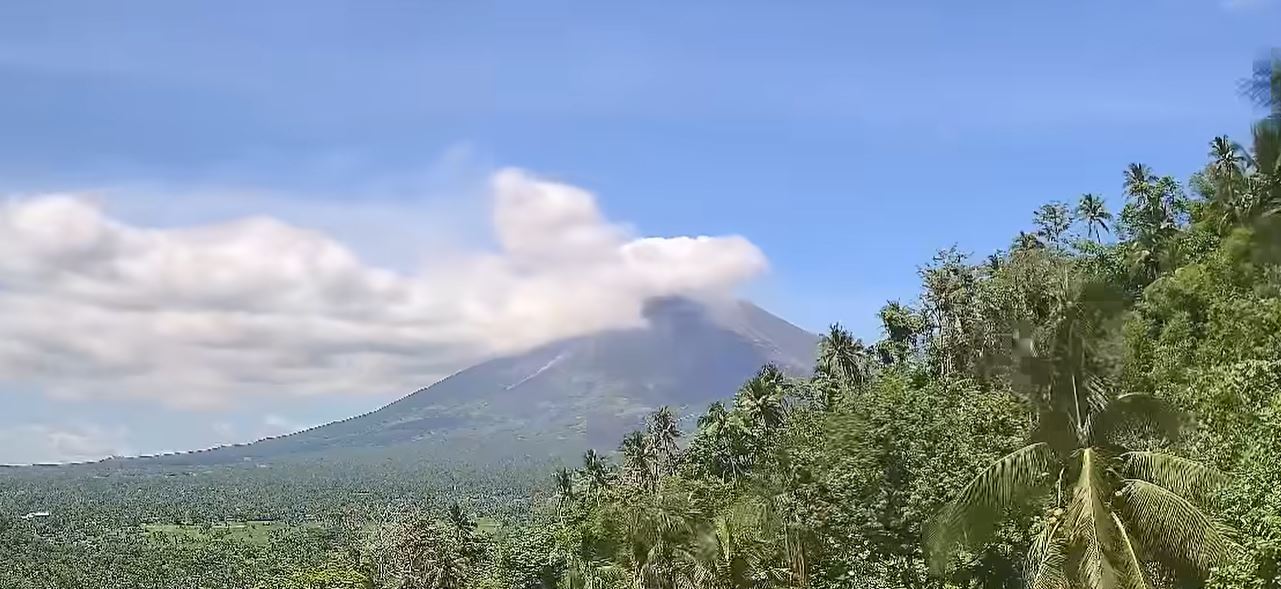
The Philippine Institute of Volcanology and Seismology (PHIVOLCS) on Friday afternoon reported two lava-collapse pyroclastic density current events (PDCs) at Mayon Volcano in Albay.
“At the moment: Ongoing lava-collapse pyroclastic density current (PDC) at Mayon Volcano in Albay. Alert Level 3 prevails over Mayon Volcano,” PHIVOLCS said.
PHIVOLCS shared time-lapse footage of the volcanic events.
“LOOK: Time-lapse footage of two (2) pyroclastic density current (PDC) events at Mayon Volcano that began at 12:40PM and 02:05PM respectively, today, 27 February 2026, as recorded at the Mayon Volcano Observatory,” it said.
“Both events lasted for about 1 minute and generated runouts of ~300 meters from a lava front collapse along the Bonga Gully (southeast) and brownish-gray plumes that rose 3000 meters before drifting southwest,” it added.
PDCs are mixtures of fragmented volcanic particles (pyroclastics), hot gases, and ash that rush down the volcanic slopes or rapidly outward from a source vent at high speeds, according to PHIVOLCS.
These can be generated by the gravitational collapse of the base of eruption columns or the explosion of a lava dome, or by spalling or gravitational collapse of a lava dome or of lava flow margins, it added.
Under Alert Level 3, the volcano shows intensified unrest or magmatic unrest.
Authorities strictly prohibit entry into the six-kilometer permanent danger zone (PDZ) and warn against unnecessary activity in the extended danger zone (EDZ).
Flying any aircraft close to the volcano is also prohibited due to potential ash and ballistic hazards.
Mayon could generate rockfalls or landslides or avalanches; ballistic fragments; lava flows and lava fountaining; pyroclastic density currents; moderate-sized explosions; and lahars during heavy and prolonged rainfall.
Based on its bulletin covering 12 a.m. Thursday to 12 a.m. Friday, PHIVOLCS said there have been lava effusions generating flows reaching 3.8 kilometers in Basud, 2.6 kilometers in Bonga, and 1.3 kilometers in Mi-isi gullies.
A total of seven volcanic earthquakes, 344 rockfall events, and 13 PDC signals were observed. A fair crater glow was visible to the naked eye.
Sulfur dioxide emission from the volcano was measured at 2,199 tonnes.
A moderate emission plume rising about 100 meters above the crater was observed drifting west-southwest and southwest.
Meanwhile, PHIVOLCS said ground deformation data indicated that the volcano’s edifice remains inflated. —VAL, GMA Integrated News

