

 GMA Brandtalk
 Tracking
 Archives

Mayon Volcano logs 7 volcanic earthquakes
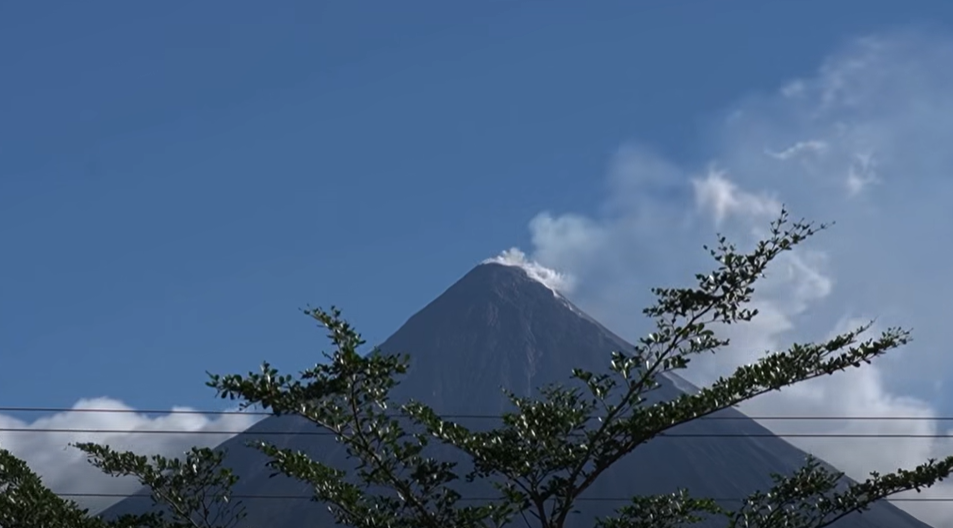
The Philippine Institute of Volcanology and Seismology (PHIVOLCS) on Saturday reported 7 volcanic earthquakes at Mayon Volcano in Albay.
"For the past 24 hours, nakapagtala tayo ng 7 volcanic earthquakes, and kahapon, makapagtala tayo ng 308 rockfall events, and ‘yung uson, nare-record pa rin natin; kahapon umabot ito ng 18," said PHIVOLCS Director Dr. Teresito Bacolcol in an interview on Super Radyo dzBB.
(For the past 24 hours, we recorded 7 volcanic earthquakes, and yesterday, we recorded 308 rockfall events, and the current one, we are still recording; yesterday it reached 18.)
"So far, again, ongoing pa rin ‘yung effusive eruption and nasa Alert Level 3 pa rin ang Mayon Volcano... Wala tayong nakikitang pag-decline. Wala rin tayong nakikitang nagwo-worsen... Lahat naman ito sakop pa rin sa kanyang Alert Level 3 status," added Bacolcol.
(So far, again, the effusive eruption is still ongoing, and Mayon Volcano is still at Alert Level 3... We don't see any decline. We don't see any worsening either... All of this is still under its Alert Level 3 status.)
PHIVOLCS said they expect the volcanic activities in Mayon to continue in the following weeks.
"More than 50 days na since nagstart itong effusive activities, and we expect it to last a few more weeks, katulad nung nangyari nung 2023. Basically, the same nung 2023, and it lasted for 6 months," explained Bacolcol.
(It's been more than 50 days since this effusive activity started, and we expect it to last a few more weeks, similar to what happened in 2023. Basically, it was the same in 2023 and lasted for 6 months.)
Under Alert Level 3, the volcano shows intensified unrest or magmatic unrest.
Authorities strictly prohibit entry into the six-kilometer permanent danger zone (PDZ) and warn against unnecessary activity in the extended danger zone (EDZ).
Flying any aircraft close to the volcano is also prohibited due to potential ash and ballistic hazards.
Mayon could generate rockfalls or landslides or avalanches; ballistic fragments; lava flows and lava fountaining; pyroclastic density currents; moderate-sized explosions; and lahars during heavy and prolonged rainfall. —VAL, GMA Integrated News

