

 GMA Brandtalk
 Tracking
 Archives

Lessons from Singapore: A story on transportation
Whenever Maria Cristina Pablo, an overseas Filipino worker in Singapore, books a flight back to the Philippines, she makes sure to get the earliest flight. This sometimes means going directly to the airport from work even if she hasn’t had a wink of sleep. This, she does in order to avoid one of the most difficult things in Metro Manila—traffic.
But just when many thought traffic could not get any worse, it did since August of this year when motorists started to get stuck on EDSA for four hours instead of the usual two. And with Christmas just around the corner, the Metro Manila Development Authority (MMDA) says the situation might become even more unbearable as traffic is expected to increase by 20%.
So, for 45-year-old Maria Cristina who has been a site manager in Singapore for 12 years, going home to her family is always bittersweet. “When it’s time to go back [to Singapore] instead of having an extra two hours with my family, I leave earlier because I don’t want to be stuck in traffic,” she says.
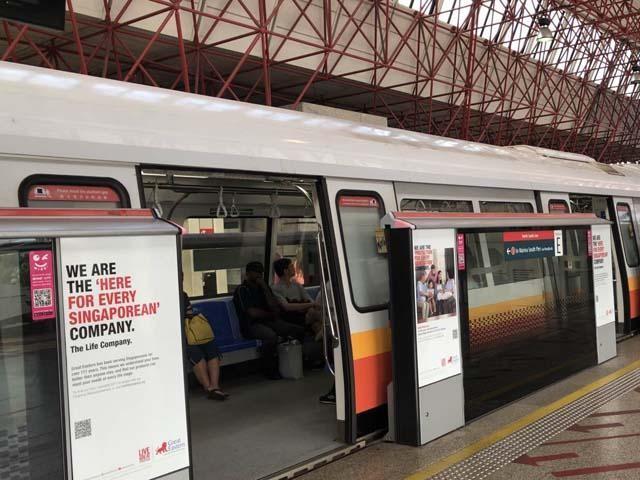
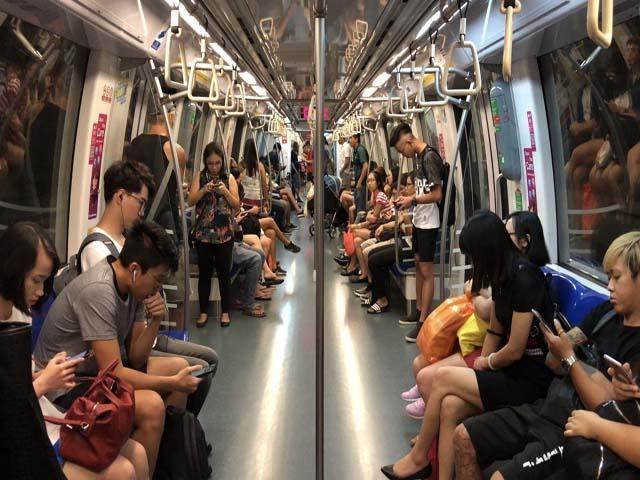
“In contrast, it is very convenient and disciplined in Singapore,” she adds. “If I want to go to the airport, I can use the bus or MRT, which are very comfortable and clean. The fare is just two Singaporean dollars.”
In 2018, consulting firm McKinsey reported that in a study of 24 cities around the world, Singapore ranked second in terms of having the most effective and affordable public transport system.
Transportation in the Philippines, on the other hand, leaves much to be desired but there may be lessons to be learned from Singapore’s story.
Singapore: a connected city-state
With a total land area of 724.2 square kilometers, Singapore is just slightly bigger than Metro Manila, an administrative region in the Philippines which is made up of 17 cities including the capital, Manila.
But, what Singapore lacks in size, it makes up for convenience and connectivity. The Mass Rail Transit (MRT) and Light Rail Transit (LRT) span 227.9 kilometers and have 156 stations; the trains make 3.3 million trips a day and services more than half of the 5.7 million population of the country.
The public also relies heavily on buses with 19,379 units plying the country in 2018.
Government subsidizes fares so bus rides range from 0.73 to 1.66 Singaporean dollars, while MRT fares are from S$0.83 to S$1.95.
Transportation has not always been seamless, however, especially when Singapore gained independence back in 1965. There was severe traffic congestion and an inept bus system that could not meet the needs of a rapidly growing population and economy.
Han Fook Kwang, a former Director of Land Transport who is currently Editor-at-Large of the Straits Times, says the government decided early on to limit the number of cars by imposing different fees.
On top of paying for the price of the car, car owners also needed to pay for an “additional registration fee” or ARF, which is equivalent to 100% up to 180% the original price of a car.
A Vehicle Quota System was also implemented. Because of this, car owners needed to get a certificate of entitlement or COE. But, because the government only released a limited number of COEs per month, the public had to bid.
“Every month we will only issue, let’s say, 200 certificates,” says Han. “So you have to say, bid 20,000 or 30,000 dollars. There are different categories. Big cars you bid among yourselves. Then motorcycles. Of course people were saying, ‘then rich people will benefit.’ There were all these reactions but the government was quite firm. This is the fairest way.”
Car owners also needed to pay to use the road. Aside from the annual road tax, they were charged extra whenever they entered the central business district because of the Area Licensing Scheme, now known as ERP or Electronic Road Pricing system.
The government also saw the need to prohibit old cars to avoid pollution. It mandated the use of cars for a maximum of 10 years. But if car owners scrapped the car early, they got a rebate.
All these measures, says Han, were possible because the government exercised political will.
“We have the most restrictive policies on car ownership,” admits Han. “In Singapore the cheapest Japanese car for example will cost 80,000 dollars whereas the same car in the US will cost you maybe 20,000 dollars.”
“We have a law called the Land Acquisition Act which allows a government to acquire any land for public purposes,” says Han. “The compensation they paid you was at that time very low. Of course so many people are unhappy. But the government said for national interest. Over the years the government has improved the compensation a lot so now they do compensate you market rate.”
With these strict policies, the government needed to make sure alternative mass transportation was reliable. Hence, a revamp on buses was initiated. All bus companies were merged into a single private entity called the Singapore Bus Service in 1973. Bus routes were integrated, fares were standardized and government officials were sent in to improve the services.
The idea of a having a mass rapid transit or MRT was also laid out but it received opposition. Building an MRT back in the 1970s meant shelling out S$5 billion during a time when much money was required for housing, education and defense.
The government conducted several studies in the 70s and a team of foreign consultants from Harvard University came and lobbied for an all-bus system.
Soon after came the great MRT debate which was presided over by Prime Minister Lee Kuan Yew himself. Bruno Wildermuth, a Swiss planner and consultant disagreed with the Harvard team and pushed for a bus-rail system.
“The Harvard team had kind of said that buses could go much faster than they did in the days then,” recalls Bruno. “And I questioned that and I kept, so it was like I kept on pushing for them to explain how and they didn’t know how so they didn’t want to answer. Luckily, Lee Kuan Yew was willing enough to see that the benefits ultimately will be substantial and therefore arguing that can’t afford it at this time is not a good argument.”
In 1982, the green light was given for the construction of a 67-kilometer MRT consisting of the north-south line, east-west line and western line.
In 1987, the MRT began its operations and in just three weeks, it reached its millionth ridership.
Glitches, too
Although superior to the Philippines’, Singapore’s rail system is not immune from breakdowns and accidents.
On December 15, 2011, the MRT north-south line suddenly lost power. Some commuters were trapped inside the trains and were forced to smash the windows.
Two days after this, the same line broke down again for seven hours.
An investigation was launched and SMRT, one of the two companies that ran the MRT, was fined S$2 million after it was discovered that it had lapses in maintenance.
Several other problems came up, but today, the reliability of Singapore’s rail network has improved through investments and proper maintenance. Delays have been reduced with the first half of 2019 clocking in a mean distance of 786,000 train-kilometer between delays, according to the Land Transportation Authority. This figure is higher than the 690,000 train-kilometer between delays in 2018.
The mean distance calculates the length trains travel before encountering a delay that lasts for more than five minutes. According to Timothy John Batan, Undersecretary for Railways of the Department of Transportation (DOTr), they have adapted this concept to determine the reliability of the MRT3, LRT and the Philippine National Railway.
They are also relying heavily on various infrastructure projects and improvements on the rail network under the Build Build Build program to improve transportation.
Overhauling the system
In May 2019, the 26-month rehabilitation of the MRT-3 began under the supervision of the Sumitomo Corporation, Mitsubishi Heavy Industries (MHI), and TES Philippines (TESP) consortium.
“What we expect to happen between that time is for all of the tracks to be replaced,” says Batan. “All of our 72 light rail vehicles to be overhauled, upgrading of our signaling system and ultimately what we expect is after 26 months we will be able to double our operating speed from 30 to 60 kilometers per hour, slash our headway from 7 to 10 minutes down to 3.5 minutes and of course increase our capacity from the current 350,000 people per day to 650,000 people per day in July 2021. So that will include increasing the number of operational trains from 15 to 20 during peak hours.”
Despite opposition from some transport groups, the DOTr is also pushing through with their plan to use the 48 controversial Dalian trains from China which were delivered in 2017, but were said to be incompatible with the system. Once finished with the testing, commissioning and validation of the Dalian trains, the number of MRT3 trains will increase to 120.
“The issues surrounding the weight, the signaling, the compatibility came up during 2017,” explains Batan. “We were able to get our independent certifier on board in January of 2018. It took them five to six months, around May of 2018 to finish their audit and to issue their report. Based on their report, the Dalian trains were compatible and they can be used but they had some observations on some additional adjustments that can be made.”
The LRT, on the other hand, is reportedly performing better with lesser glitches and more trains. From 77 in 2015, LRT1 now has 114.
Improvements are also planned for the Philippine National Railways (PNR), the oldest train system in the country. The DOTr is expecting new trains from Indonesia to arrive in the third quarter of 2019. Batan says the PNR was neglected in the past with the lack of investment on maintenance and upgrades leading to degradation.
Construction of the first subway in the country is also on the way with tunnel digging expected to begin in November. Partial operations will be in 2022 and project completion is targeted by 2025. The 36-kilometer line will have 15 stations from Quezon City to Pasay and Taguig; travel time to the business districts is expected to only take 30 minutes.
There is also the ongoing construction of the MRT7, the Skyway Project and the NLEX-SLEX connector.
But because all these projects are still in the pipeline, the public will need, at the moment, to still contend with major traffic jams particularly along the infamous parking lot that is EDSA.
According to MMDA spokesperson Celine Pialago, one of the reasons why there is so much congestion along EDSA is because it is way over its carrying capacity. The highway is designed for 275,000 vehicles per day, but accommodates 402,000 daily. Car volume increases by 10,000 per month but, unlike Singapore, there is no policy to regulate this.
Hence, a vehicle’s maximum speed during the morning rush is a mere 11 kilometers per hour. At night, vehicles crawl at 14 kilometers per hour.
Traffic in inner streets is just as bad with hundreds of vehicle owners using the road as their personal parking space.
In 2018, the Japan International Cooperation Agency or JICA said the Philippines loses P3.5 billion a day because of the traffic problem.
Moving forward
Although already connected, Singapore seeks to further expand its transportation; the Master Plan 2040 envisions the city-state to be a place which requires only 20 minutes to reach the nearest neighborhood center and 45 minutes to complete a travel during peak hours.
For the Philippines, however, it might still be a long ride before it even eases congestion along EDSA. Pialago says the MMDA has tried and suggested different ways to address the problem including the yellow lane policy, carpooling, road diet, no contact apprehension, and banning of provincial buses but the problem still persists. The agency is putting its hope on infrastructure projects as well to solve the traffic problem in all roads.
Asked for advice on what a developing country like the Philippines should do in order to address the transportation problems, Han says, “I think the most important feature of a government that wants to plan its public transportation well is to do very long range planning. An MRT system, like in many cities, takes more than a decade to plan and to build so you need a government that is very farsighted to be able to plan for 10, 20 years that will not be hindered by political developments.”
“Secondly, you need to have competent professional public agencies staffed by professional people who are just interested in getting the job done,” adds Han. “You need a system of government which is able to put all these things together both competent, professional people, non-corrupt, which has the interest of the population at hand.” —KBK, GMA News
------------------------------------------------------------------------
GMA Senior News Correspondent Victoria Camille Tulad is a fellow of the Asia Journalism Fellowship in Singapore which is funded by the Temasek Foundation and hosted by the Institute of Policy Studies

