

 GMA Brandtalk
 Tracking
 Archives

Visita iglesia, penitensya in the eyes of science, history
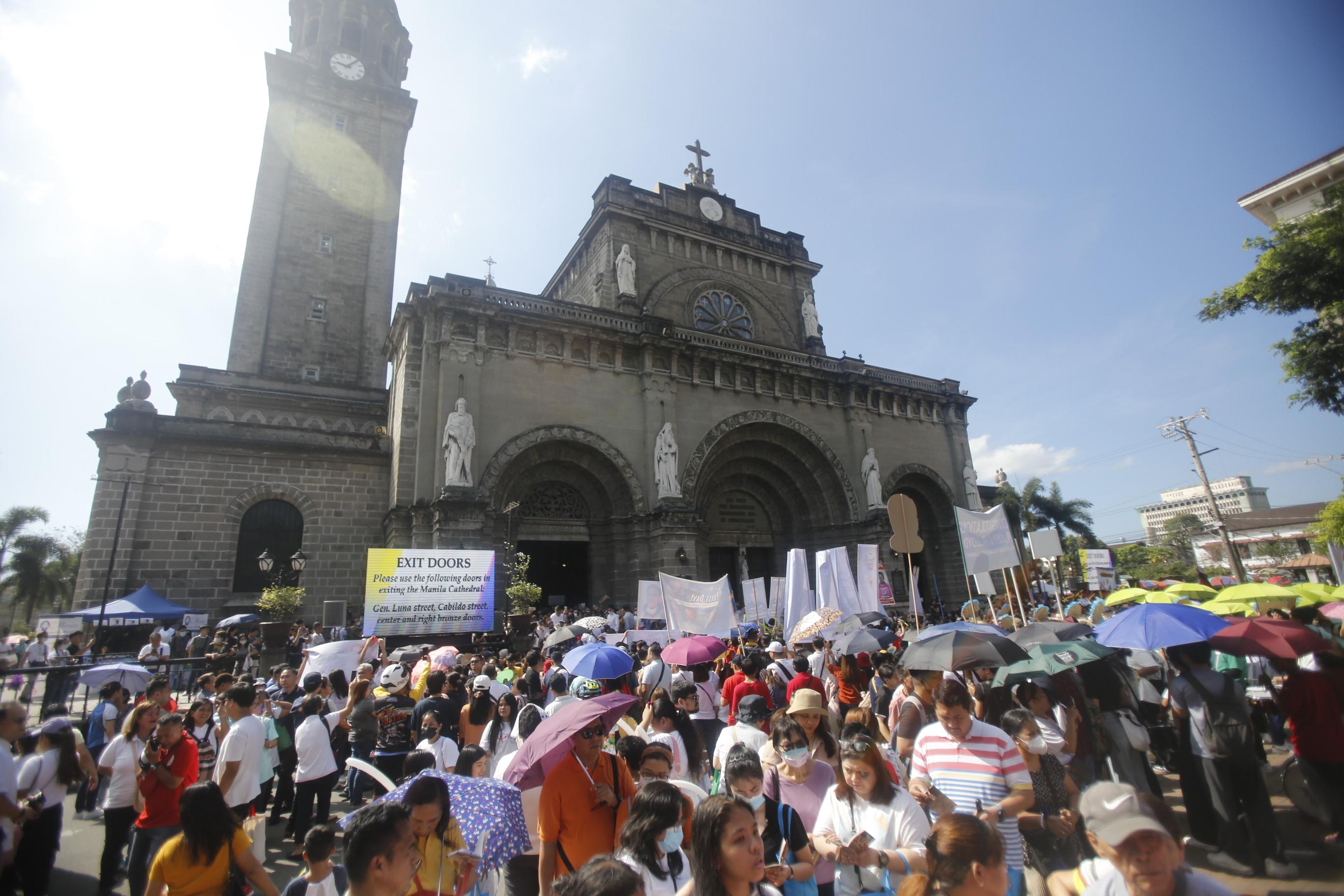
Every Holy Week in the Philippines, many Catholics observe traditions and rituals to mark the Lord's sacrifice on the cross.
Among them is the visita iglesia, a pious practice of visiting at least seven churches to reflect on the Passion of Christ.
For those who strongly feel about repentance, there is the penitensya or acts of sacrifice done by devotees. In some areas, it involves self-flagellation or even crucifixion.
Since the Philippines is a predominantly Catholic country, some see that these practices exist due to the immense belief of the Filipinos. There may be other reasons behind the traditions other than faith.
Holy Week according to Science
Filipinos are inherently spiritual individuals, which means the sense of achievement they get after completing the Holy Week traditions is important to their well-being, according to Philippine Psychiatric Association (PPA) president Dr. Joan Perez-Rifareal.
To be specific, doing the Visita Iglesia and penitensya triggers the release of hormones in devotees that help improve their mood and well-being.
“They feel the boost of endorphins, which is the happy hormone… Oxytocin, bonding hormones, especially if they do it with friends and family… Dopamine, if they finish their goal, and of course, serotonin, when they are able to feel good hormones,” she shared.
“It brings that sense that we are able to accomplish something, do something nice, happy with the family. It makes us feel renewed inside, spiritually… The spiritual renewal, it allows us to reflect during this time… They go into self-reflection to boost their self-awareness and hopefully, it will help translate to a better person, renewed individual by Easter Sunday,” she added.
Despite the risks posed by penitensya or the fatigue they might get from the visita, devotees continue to do it to reflect on themselves, Rifareal said.
In turn, it gives further meaning and purpose to life as they understand it.
“It helps them become more aware of their flaws, of their sins… Weaknesses, for example. It helps them during this time of Lent, it puts us in a space wherein there are minimal distractions, no work, no school, and it helps us do self-reflection to be more reflective. And when we do that, we become more aware of ourselves, of our weaknesses, and we are able to find meaning, the meaning and purpose of why we are here. So that's spirituality,” she shared.
Culture, environment, social situations and education continue to affect the people's mindset, spirituality, and devotion, Rifareal said.
“We are one of the countries that is a devout Catholic and we have this very solid belief in our faith. We've seen that when we have that faith, things happen. Christian living from our, not just from our lolos-lolas, from classes which focus on religion or spirituality, values, education, these are all included. All of these things help influence yung ating (our) growth in terms of our spirituality,” she noted.
“Religion is very formal. Spirituality, meaning it's really about finding or knowing ourselves, knowing the meaning of what we are doing, and looking at the purpose. Why are we here? Why are we doing this? Why are we in this profession? Why are we a father? Why are we mothers? So it's really encompassing. When we say spirituality, it's not bound by formal structures but really finding our purpose and meaning in life,” Rifareal added.
She further explained that behind an imperfect life and challenges along the way, Filipinos often knew not to lose faith.
“We always maintain that then [that] this is something which will come to pass, and we always remain hopeful that things will be better soon and this is just a phase… So hope is there, which is again, inner strength, the resilience of an individual to just keep going, bounce back. It's deeply rooted also from our faith that there is a higher being somewhere in the universe which somehow is able to help us get through whatever trauma, adversity, challenge, or stress which we may be facing. So [our] resilience, which is our inner strength, also is rooted in faith,” she explained.
Rifareal said practices during Holy Week will endure as they affect positively the individual's well-being.
“From our forebears, forefathers, it has been passed on in traditions… As the younger generations, we also embody those traditions, especially if they are deeply ingrained in our spirituality,” she continued.
Holy Week according to history
University of Santo Tomas faculty member for History and Asian Studies Dr. Tyrone Nepomuceno said that Holy Week rituals like the visita iglesia and penitensya resulted from a historical phenomenon called “syncretism," or the combination of different forms of beliefs and practices.
Visita iglesia started around the 1300s and was brought over by the Augustinians to the country in 1565.
“Nagsimula kasi taong 1300 si Papa Bonifacio VIII, sabi niya kung sino man yung magpupunta sa mga simbahang St. Paul Outside the Walls at St. Peter's Basilica ay makatanggap ng indulhensya. Dito sa Pilipinas, noong dumating ang mga misyonerong Kastila, 1565 pa lang. Yung mga Agustino na yan, sila yung unang nagturo sa atin ng Katolisismo at tungkol sa Mahal na Araw,” he shared.
(It started in the 1300s when Pope Bonifacio VIII said that whoever goes to the churches of St. Paul Outside the Walls and St. Peter’s Basilica will receive an indulgence. In the Philippines, it was only in 1565 when the Spanish missionaries arrived. These Augustinians are the ones who taught us about Catholicism and the Holy Week.)
The tradition in the Philippines began with the seven churches of Intramuros, and featured the “alta sociedad” or the upper class.
Eventually, it was adapted by the “indios” outside the walls of Intramuros and later brought to provinces outside Manila.
“Ang Pilipino mas mabigat sa psyche niya ang spirituality kaysa sa social, sa physical, and the mental. Kaya hindi maiiwasan na kung simulan man ng mga nasa upper class because they received firsthand yung evangelization of the friars, susunod at susunod talaga yung for example yung kasambahay nila o yung mga nagtatrabaho sa kanila, at lahat naman kasi welcome sa simbahan kahit naman noon,” he explained.
(The Filipino psyche places more importance on spirituality over the social, physical and mental aspect. That is why it’s inevitable that even if the tradition started from the upper class because they received the evangelization of the friars firsthand, their help or employees, for example, would follow. And everybody was welcomed by the Church back then.)
Penitensya, meanwhile, has always been practiced in the country long before Catholicism came.
“Kahit bago pa dumating ang Kastila may ginagawa ng ganyan ang mga sinaunang Pilipino, pero siyempre iba pa ang diyos na pinag-aalayan nila bago dumating ang mga Kastila. In short, nagkaroon din ng syncretism na tinatawag, kung saan naihalo yung katuruan tungkol sa Mahal na Araw doon sa supposed to be pagan practices ng mga ninuno natin,” he shared.
(Even before the Spanish arrived, the Filipinos were already doing something similar, but they were giving offerings to different gods before the Spaniards arrived. In short, what they called syncretism happened, when the teachings of the Holy Week mixed with the supposed pagan practices of our ancestors.)
Nepomuceno explained that in historical times, Filipinos often conducted experiments that required a bit of pain or “sacrifice” to repent for their sins, believing that calamities were a result of the anger of the gods.
When Catholicism began, it was adopted to the new culture.
The same syncretism was applied to other Holy Week practices, giving birth to other rituals such as the pasyon, or the epic narrative of Jesus Christ's life.
For both penitensya and Visita Iglesia, the traditions later evolved to different forms, such as changing the number of churches to be visited from seven to 14, or carrying heavy crosses during the Visita to integrate it with the penitensya.
Nepomuceno also clarified that while some rituals were not recommended by the Catholic Church, such as self-flagellation or crucifixion, they were also not outrightly rejected as Catholics were given free will to choose how they would do their penitence.
He emphasized that while the Holy Week traditions existed due to the immense faith that Filipinos have in God, they prevailed due to history and traditions.
“Lagi nating tatandaan may mga tradisyon kasi na dinidikta ng collective behavior of the people, ng kanilang environment, at kung ano'y naipasa sa kanila, naturo…. Talagang ang mga tradisyon sa mga relihiyon sa bansang katulad ng Pilipinas ay talagang magpe-persist, magtatagal dahil naipapasa ito mula sa isang generasyon papunta sa bagong generasyon, pero hindi natin may iwasan na yung bagong generasyon may kaunting pagbabago na gagawin kasi kailangan ang isang tradisyon ay mag-adapt sa pagbabago ng panahon,” he said.
(We must always remember that there are traditions that are being dictated by the collective behavior of the people, their environment, and whatever was passed and taught to them… Religious traditions in countries such as the Philippines would persist and last long because they are passed from a generation to the next generation, but we can’t avoid slight changes with the younger generation because tradition adapts with time.)
“Cultures are not rigid. Traditions are not rigid. There has to be an adaptation to keep the tradition alive," Nepomuceno said.—LDF/NB, GMA Integrated News

