

 GMA Brandtalk
 Tracking
 Archives

When hope wore yellow: Remembering Pope Francis in Tacloban
I
t’s been more than ten years since Pope Francis graced Philippine soil, yet for many, including myself, that memory remains as vivid as yesterday.
Back in January 2015, Pope Francis was scheduled to visit Tacloban City in Leyte—ground zero of the devastation left by Super Typhoon Yolanda (Haiyan). Just 14 months earlier, over thousands of lives were lost, entire communities were flattened, and an entire province was left grieving and rebuilding.
I was a junior reporter at the time. I wasn’t even supposed to be there—just a last-minute assignment due to a media accreditation mix-up. My only task was to cover the Pope’s takeoff from Villamor Air Base, but I ended up on a solo trip to Tacloban, armed with nothing but a press ID and a shaky sense of purpose.
Even a year after Yolanda, the signs of devastation were still everywhere. Trees stood crooked like broken arms frozen in pain. The inn I stayed in had watermarks on the walls, a quiet reminder of what had passed. The air in Tacloban felt heavy, as if grief had settled in and never truly left.
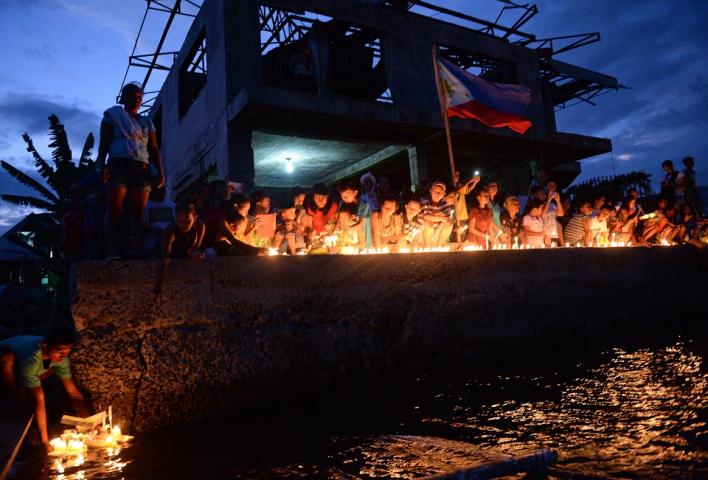
I thought I was prepared. I had covered enough tragedy to numb the senses. But talking to survivors, listening to their stories—how they lost husbands, children, entire families—I found myself crying with them. One woman selling Pope Francis souvenirs wiped her eyes and said, "It’s been so hard, but we’re trying to survive." For the first time in a long time, she said, she felt hope. The Pope was coming.
Despite the gray skies and the looming threat of Tropical Storm Amang, thousands gathered at the Daniel Z. Romualdez Airport a day before the Pope's arrival. They camped out in the cold rain, huddled under umbrellas, plastic ponchos, and even shower caps—anything to shield themselves from the storm. Some children were crying. People were shivering. Still, they stayed.
As the cold rain poured steadily, thin yellow plastic ponchos were passed around.
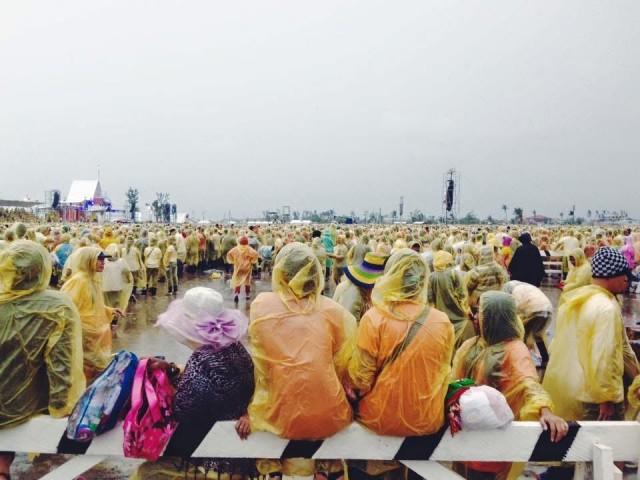
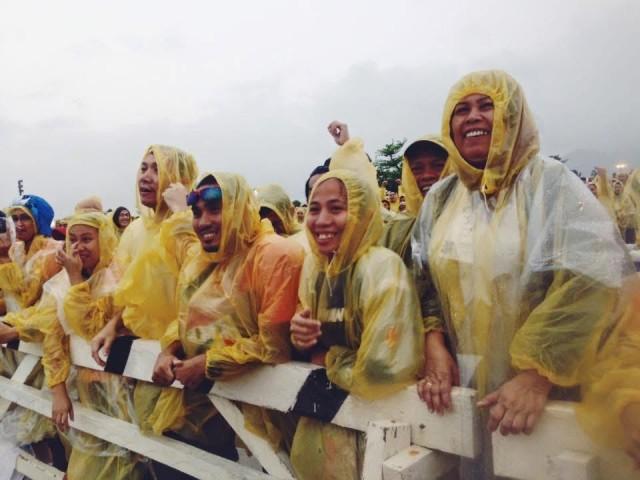
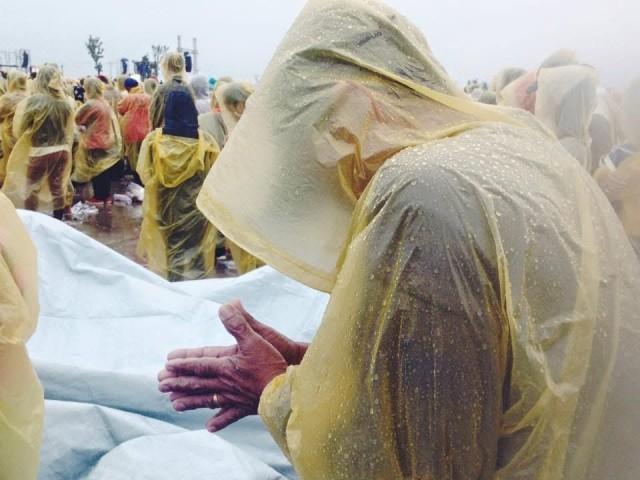
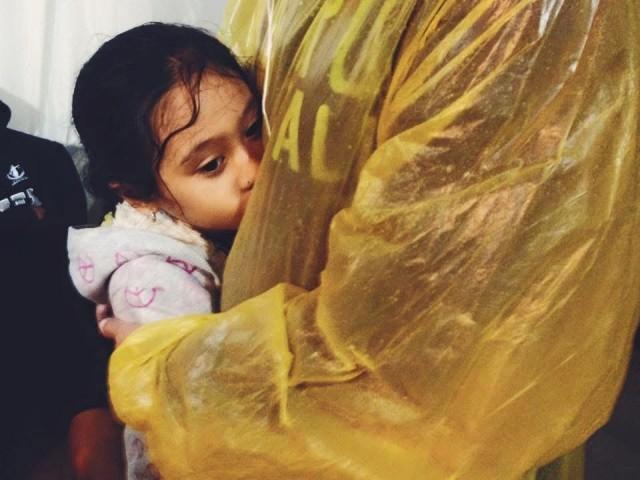
By dawn, the mood was tense but determined. The crowd had not thinned. No one moved from their spots behind the barricades. When I asked someone if she feared another storm, she replied without hesitation, "We’ve waited too long already. We’ll wait for him."
Then, just past midmorning, after nearly twelve hours of enduring the cold and rain, someone yelled, "Ayan na ang eroplano!" Cheers erupted as a plane came into view, slicing through the thick gray sky. For a moment, it felt like the wait had ended.
Then the cheering faded. Silence swept over the crowd.
People wept. They hugged. Some knelt on the muddy ground.
The Pope had arrived.
I
t felt like a collective exhale after years of holding grief in. It didn’t matter that they were soaked. At that moment, they were seen.
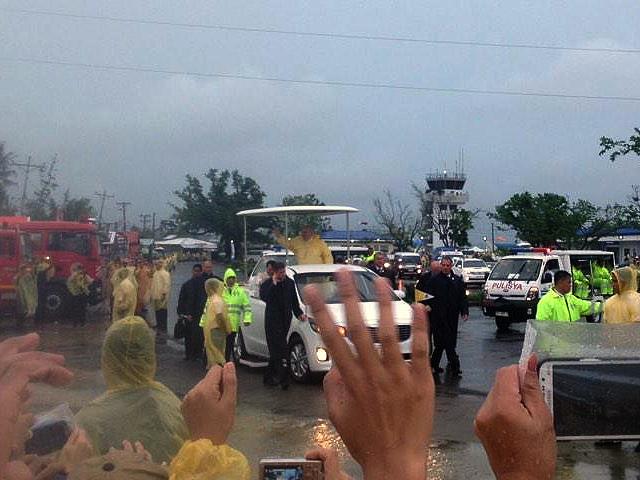
Then came the most unforgettable image—Pope Francis, emerging aboard a Popemobile, wearing the same thin yellow plastic raincoat as everyone else. He didn’t just arrive. He joined them.
He waved from the Popemobile as it snaked through spaces I hadn’t understood before—those gaps in the crowd weren’t random. They were for him. For the Holy Father to pass through like a shepherd among his flock.
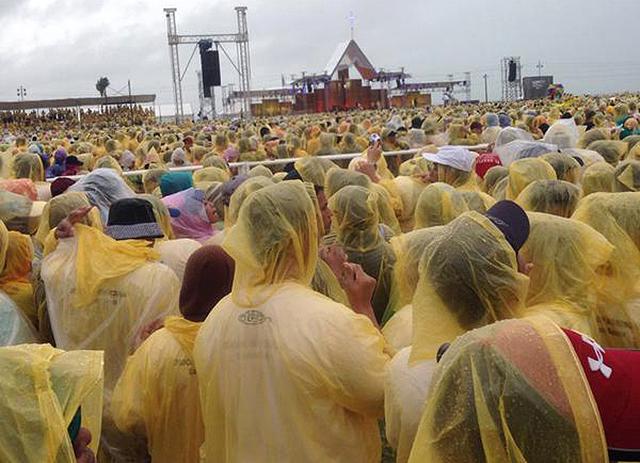
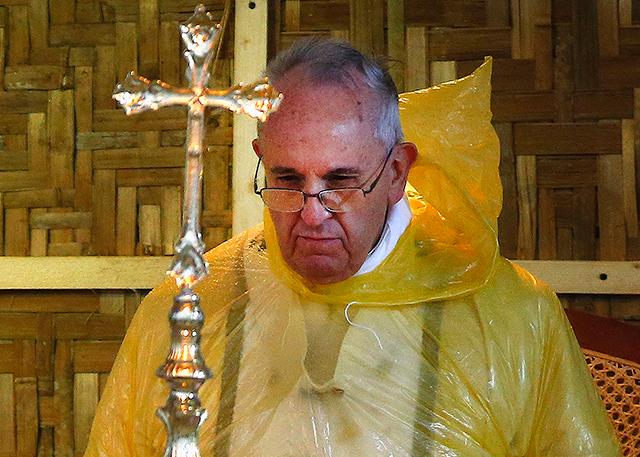
His homily, shortened by the worsening weather, became one of the most powerful moments I’ve ever witnessed. It wasn’t just a Mass. It was a moment of shared grief between a man who cared and a crowd that had carried too much pain for too long.
"So many of you have lost everything. I don’t know what to say to you. But the Lord does know what to say to you," he said in Spanish, his voice trembling with emotion.
He paused, visibly holding back tears. In front of him stood thousands who had buried loved ones, who had lost homes, who had known hunger and fear far more intimately than most ever will.
"Jesus is Lord. And he never lets us down."
He continued, through a translator: "Let us look to the Christ on the cross. He understands us because He endured everything. And beside the cross is His mother. We are like that little child, just there… holding on to her."
"Father, you might say to me, ‘I was let down because I lost everything—my house, my livelihood.’ It’s true. But Jesus, nailed to the cross, does not let us down. He experienced all the calamities that we experience."
Pope Francis consoles Yolanda victims: Jesus is there for you


E
ven though the Pope’s visit was cut short, he left behind something the storm couldn’t take: HOPE. Not in spectacle or speeches, but in presence. A kind of hope that lingered quietly, long after the rain had stopped.
Now, as the world mourns the passing of Pope Francis at 88, he is remembered not only as the leader of the Catholic Church, but as a figure who embodied compassion and humility. He was a man who stood with those in pain, who listened, and who did not shy away from suffering.
In one of his final public addresses, he said: “Hope and kindness make the world more beautiful... We choose love, and love makes our hearts fervent and hopeful.”
And so we remember him—yellow raincoat and all—not as a distant figure in white, but as a brother who stood in the rain. Pope Francis was the calm in our storm. And he reminded us, then and always, that no one is ever truly alone.
Amanda Tan Fernandez covered Pope Francis's visit to Tacloban City during his visit to the Philippines in January 2015 for GMA News Online.

